
Increased toxins from excessive algae in Lake Wiser prompts warning from Whatcom County
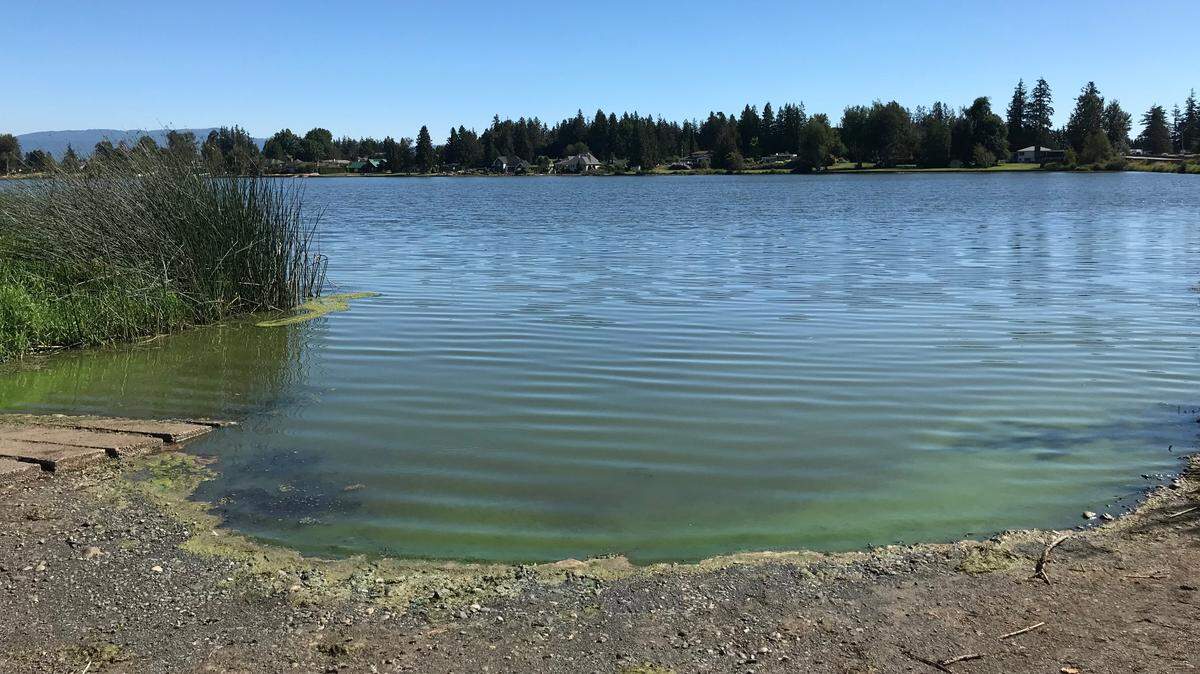
Toxic algae has has existed in above-average levels at Wiser Lake in Whatcom County for nearly a decade, and health specialists are currently working to find a cause.
Whatcom County warned people to avoid contact with Wiser Lake in advisory issued Friday, Aug. 11. Whatcom County Health and Community Services had posted a caution sign in 2019 at Wiser Lake warning people of the elevated toxin levels.
Now, people and their pets are being told to avoid contact with the water in Wiser Lake.
Blue-green algae, also known as cyanobacteria, produces multiple toxins, two of which — microcystin and anatoxin-a — can be found in unsafe levels at Wiser Lake, according to standards set by the U.S. Environmental Protection Agency.
Microcystin can cause liver damage in people and pets, while anatoxin-a can damage the nervous system. Both toxins are harmful to people and can be fatal to pets. The toxins are most commonly introduced by ingesting lake water, Anna Mostovetsky, environmental health specialist with Whatcom County Health and Community Services told The Bellingham Herald in an interview.
Symptoms of microcystin can take 30 minutes to 24 hours to appear. They include abdominal pain, severe thirst and vomiting. Anatoxin-a symptoms including muscle twitching, staggering and paralysis, especially in animals were death may occur within a few minutes to a few hours depending on the size of the animal and the amount of exposure, according to study from the Washington State Department of Health.
The first phase of this study is a year long to find the cause of the increased levels of toxic algae. This study started in May and will continue into April 2024. Once the cause of the increased algae is identified, the second step of the project will be recommend remediation options to reduce the algae, Mostovetsky said.
“That is different from what we are studying now,” Mostovetsky said. “What we are studying now is a lot more comprehensive and the goal is to figure out what is driving these blooms.”
. Algae blooms are naturally occurring in many lakes. However, the toxin producing blue-green algae levels at Wiser Lake have been consistently elevated since 2014 and have reached unsafe levels according to Mostovetsky.
The study will focus on discovering the cause of the increased algae blooms that produce these toxins. Funding for the project is through a Washington State Department of Ecology grant, Mostovetsky said.
Until this grant, samples were taken from the lake only when local residents filed complaints about it. The earliest data point on samples from Wiser Lake go back to 2014.
“Wiser Lake, is really the only body of water (in the area) that has had consistent, elevated cyanotoxin levels since we started sampling,” Mostovetsky said. “So we wanted to look at this problem and investigate it further.”
An information session will be held Sept. 21 to inform residents and the public about the algae blooms and the toxins produced. The location of the meeting is still being decided, but the public can keep updated through the Wiser Lake page of the Whatcom County website.
This story was originally published August 11, 2023 at 3:28 PM.
.jpg)