Superintendent says school programs, free meal programs continue to be affected by budget cuts
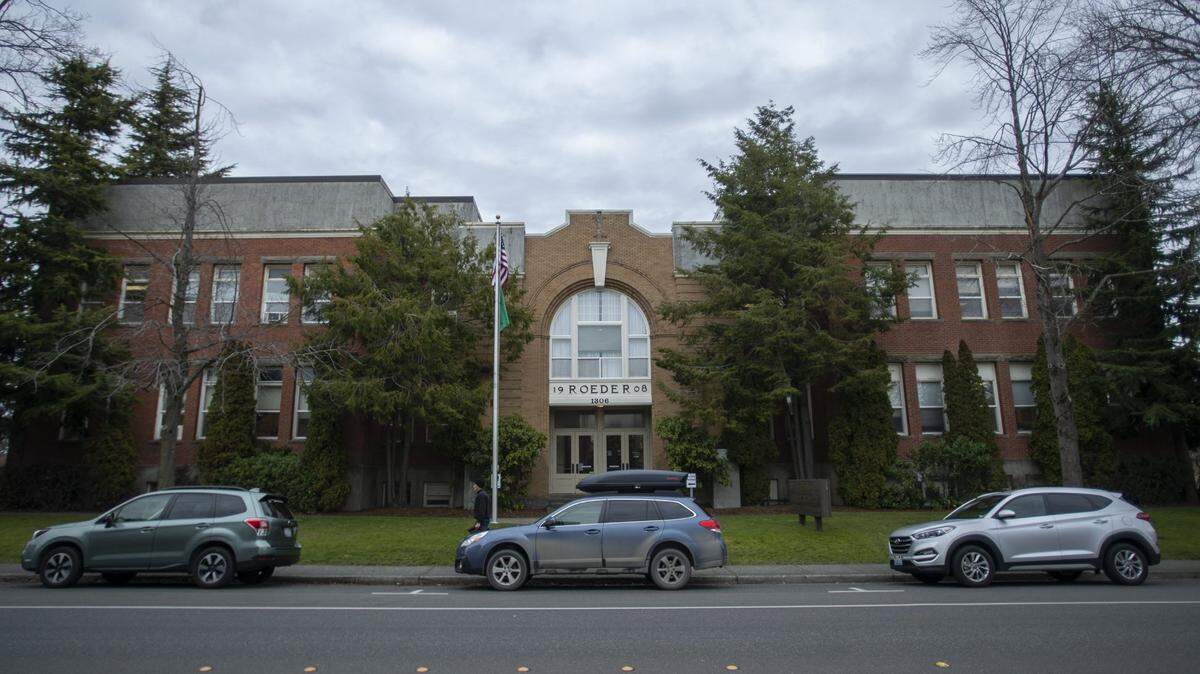
As the beginning of the academic school year approaches, Superintendent Greg Baker detailed during a school board meeting last week how a reduced budget will continue to affect school clubs and meal programs.
Bellingham Public Schools announced in April that $16 million from their budget was being cut, saying that a reduction in COVID funding and decreased enrollment were primary reasons, according to a previous Bellingham Herald article.
At the July 20 meeting, Baker gave an overview of how much the district spends on materials, supplies and operating costs versus what it receives for those expenses from the state of Washington. Baker said that the state funds Bellingham Public Schools with $14.5 million and the district spends about $18 million on their MSOCs. During the overview, he showed how they supplement this funding through their enrichment levy.
“The state hasn’t fully funded education,” Baker said during the meeting.
The state of Washington is required to pay for the education for every student from K-12 through its general fund, and for the 2023-24 school year it is $214 million.
Baker said some additional ways the district has created additional revenue is through grants, the Juul Settlement, Medicaid reimbursement and safety net dollars that the state gives to districts who have a high rate of students with expensive needs.
Future Problem Solvers
At the July 20 meeting, several students and parents commented about their disappointment that Future Problem Solvers was being cut at Fairhaven Middle School for the 2023-24 school year. This program teaches students to apply problem-solving skills to hypothetical future situations.
Dana Smith, spokesperson for Bellingham Public Schools, said that due to the continued costs of FPS, especially compared to other similar activities, FMS had to discontinue the program, especially in the context of their greater budget cuts.
One student at FMS said that the cancellation of FPS would make it difficult for students to access a higher level of learning.
Another student from FMS said that she, along with other members of the program, had a “truly amazing” time at the competitions where they earned 11th place this year.
Rebecca Kruger, the mother of a middle school student who was a member of FPS, lamented the loss of the program..
“When we take these quality, challenging opportunities out of our public schools, people who do not have financial means go to private sources for those programs that we could have provided within our buildings,” she said during the meeting.
Baker said that the budget changes every day as they continue to wrestle with it. They are also getting ready for the Washington State legislative session, where they can request more funding for the school. They are also monitoring enrollment numbers, which is the driving factor for funding.
According to the Washington Office of Superintendent of Public Instruction, about 11,632 students were enrolled in the school district for the 2022-23 school year. This is a decrease from the 2018-19, when 12,066 students were enrolled.
Free School Meals
During the Covid-19 pandemic, Baker said, the district received federal funding so that students in the entire district could receive free meals. Once Covid-19 relief dollars dried up, they had to make changes. Since August 2022 and continuing on in the new school year, free lunches are offered to every student at 13 of 22 Bellingham schools through the Community Eligibility Provision. For the rest of the schools, free lunches are offered only to students who qualify based on income.
CEP allows schools with a large number of low-income students to serve free meals to all students without collecting school meal applications.
Students at non-CEP schools can still qualify for free meals; families just need to fill out the federal free and reduced price application, said Bellingham Public Schools spokeswoman Dana Smith.
Smith said in an email to the Bellingham Herald that due to district policy and procedure, no child is ever turned away for a meal regardless of status or outstanding meal debt.
Smith said it would cost around $350,000 per semester, or $700,000 per school year, to cover universal meals at the nine non-CEP schools.
Baker said that they hope to eventually receive enough funding so that free meals will again be available to all schools in the district.
This story was originally published July 26, 2023 at 3:25 PM.