Bellingham officials disclose results of citywide rental inspections
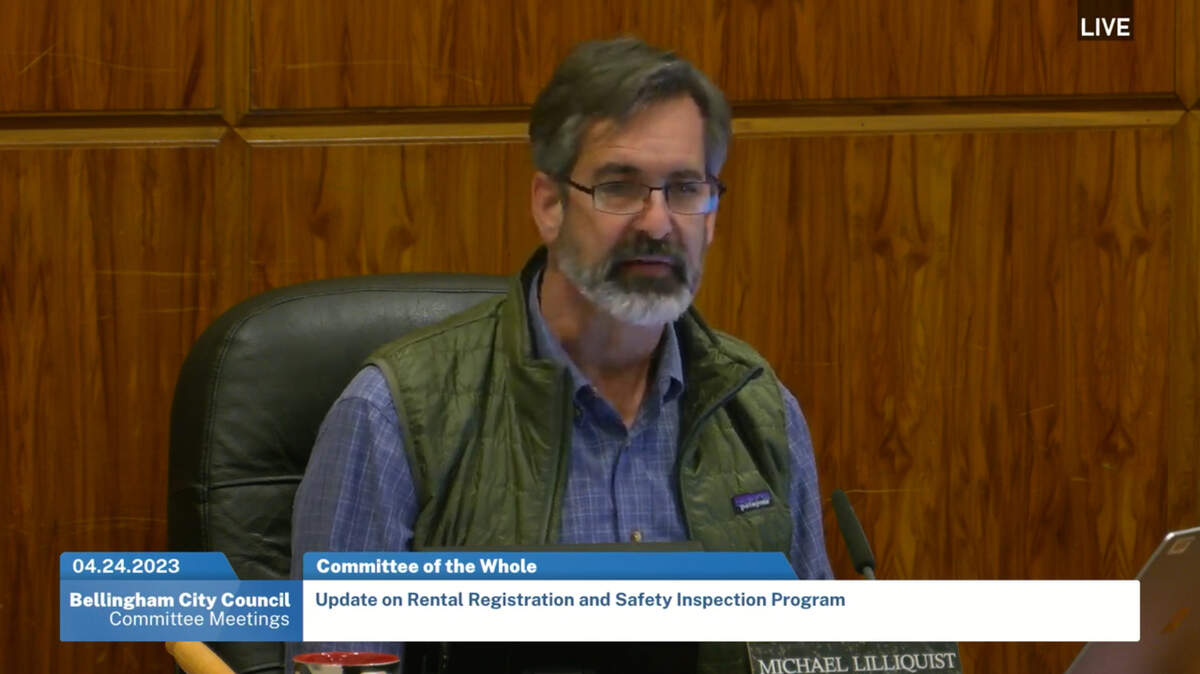
Landlords who pay for a private assessment of their rental properties in Bellingham almost never fail, according to a report on the citywide registration and inspection program.
That compares to a 15% failure rate among property owners who allow city of Bellingham officials to examine their rental units for compliance with health and safety standards.
“When I read this I was shocked. There seems to be a lot of holes in our rental inspection program,” Councilman Skip Williams said during a Committee of the Whole meeting Monday, April 24.
Williams said the council must toughen the measure and “hold landlords accountable.”
By state law, landlords can opt for a private inspection of their rental properties, said Kurt Nabbefeld, development services manager in the city’s Department of Planning and Community Development.
According to city records, about 30% of landlords pay for a private inspection and about 70% of landlords let the city’s Planning and Community Development Department conduct the evaluations.
“I don’t have much in the way of temerity for self-regulating industry,” Councilman Dan Hammill said.
Councilwoman Kristina Michele Martens — the only renter on the seven-member council — said she attended an inspection recently to provide moral support at the request of a tenant and the inspector “was very condescending” toward them.
Tenants are frequently afraid to tell a landlord about an issue that needs fixing, said Councilwoman Lisa Anderson, whose 5th Ward includes Western Washington University and parts of the renter-heavy York, Sehome and Happy Valley neighborhoods.
“They all expressed fear of retaliation,” Anderson said.
Nabbefeld said the most common violations include:
▪ Faulty decks and stair railings.
▪ Windows that are painted shut.
▪ Exposed wiring.
Bellingham’s rental inspection program was enacted in 2015 and registration and inspections began in 2016.
To assess all 20,000 rental units registered on 5,000 properties within the city, the two inspectors examine units in geographic sectors, over a period of a few years, Nabbefeld told the council in a briefing Monday.
A initial round of inspections was completed in 2019 and a second round was just completed this year, delayed by the COVID-19 pandemic.
Inspectors are looking for violations such as doors that won’t lock, windows that won’t open, evidence of vermin, exposed wiring, water leaks and lack of adequate heating.
Landlords are given a chance to correct violations that are found, but many are finding it difficult to schedule repairs because the skilled trades are overwhelmed with work, Nabbefeld told the council.
“You can see it in the overall construction industry,” he said.