
Pandemic was hard for people with disabilities. This Bellingham center met the challenge
Max Higbee Center, Bellingham’s community recreation center for people with developmental disabilities, has expanded its capacity and programs.
It’s been offering those services since 1984, but it wasn’t until last year that the center began operating in a new facility at 1400 N. State St. that allowed it to expand.
“This space has been transformative because it’s fully accessible, much larger and we’re just able to meet the needs of a variety of individuals,” said Max Higbee Center’s Executive Director Kait Whiteside.
Construction began on the center’s new 5,000-square-foot facility in 2020. Staff began offering services there for Max Higbee members in April of 2021.
Virtual programs
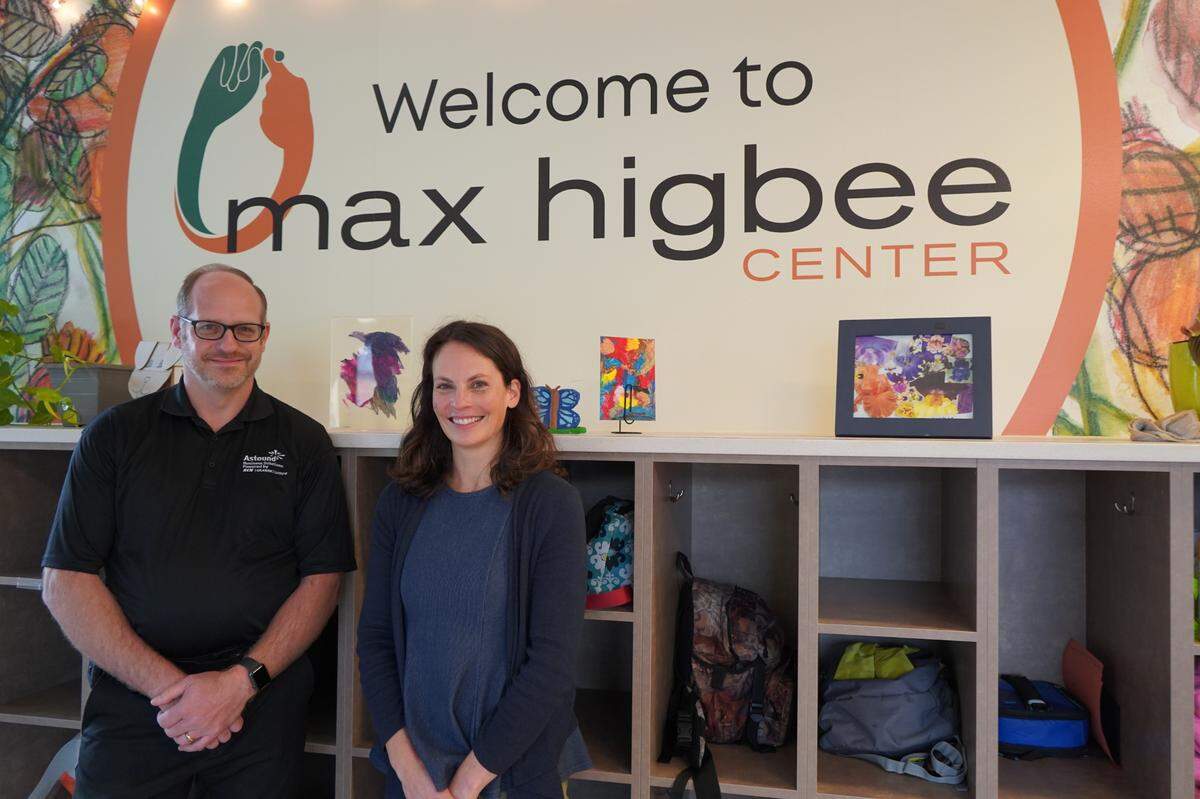
Before returning to in-person activities, the center began offering virtual programs for members during the pandemic, according to Whiteside. To make this possible, Max Higbee partnered with the telecommunications company Astound to bring in stronger, faster internet access and connectivity to the center.
Whiteside said this was a huge improvement for members during the center’s closure, as it offered a way for people to connect with their friends again and feel less isolated.
“We’re able to enable a lot of these things to happen so it’s very meaningful for me,” said Astound’s Regional Manager Chris Fitzgerald.
Ryan is a Max Higbee Center member who started going there over a decade ago, when he was just 14 years old. The Herald is using only his first name as he’s a vulnerable person. According to a story shared by Whiteside, and written by Ryan’s mother and caregiver, his intellectual disability made it difficult for him to cognitively process the widespread effects of the pandemic.
He thought he was the only person who had to stay home.
For him, going to virtual programs for over a year helped him understand that he wasn’t alone.
Now those programs are here to stay. Today, Whiteside said they eliminate a transportation barrier for many people with disabilities. It also creates an option for people with health concerns who still aren’t comfortable in a crowded public space.
“I think that would have been a huge barrier in our last space with the internet connectivity. That wouldn’t have worked,” Whiteside said.
Astound set up an additional open wireless network for members to connect to at the facility. Members can use the network through the center’s new internet cafe or on their own devices.
“It has allowed our staff who are working in the office to still have really high-speed internet and do our jobs, without having that impacted by what’s going on in programs,” Whiteside said.

Facility updates
The center operated out of its old 1,600-square-foot facility on Bay Street for about 10 years. According to Whiteside, it never quite met the needs of the members.
It wasn’t large enough to serve all of the people in the county who wanted to access recreation. It also wasn’t fully accessible, with staff offices on the second floor.
“If a member or family member was in a wheelchair, they couldn’t meet with us and that felt terrible. We weren’t able to live our values of inclusion,” Whiteside said.
With the new building, the center can operate at almost triple the capacity with these updates:
▪ An entry area with secure storage cubbies.
▪ A full kitchen.
▪ Extra bathrooms.
▪ A larger and multi-functional recreation area.
▪ A separate craft room/quiet area.
▪ Ground level staff offices.
Expansion
According to Whiteside, the Max Higbee Center has accepted 30 people off the 50-person waiting list since last year.
The facility now serves 140 people annually in the space. That number continues to grow along with staff, which has doubled in size since the beginning of the pandemic.
The center offers yoga, dance and arts and crafts. Max Higbee also organizes book clubs and schedules outings with members.
Whiteside said the new facility is finally inclusive and functional.
“Now, more than ever, we understand how important it is to have those connections, to have those friendships and to have those recreation experiences available,” Whiteside said.
Members pay a small fee to participate in programs but financial assistance is available. Grants, donations and fundraising events are covering increased staff and facility costs as they continue to grow.
Main funding partners for the new facility included the city of Bellingham, the Rotary Club of Bellingham, Whatcom County, First Federal Foundation and Chuckanut Health Foundation.