New Whatcom medical examiner has goals to modernize the office
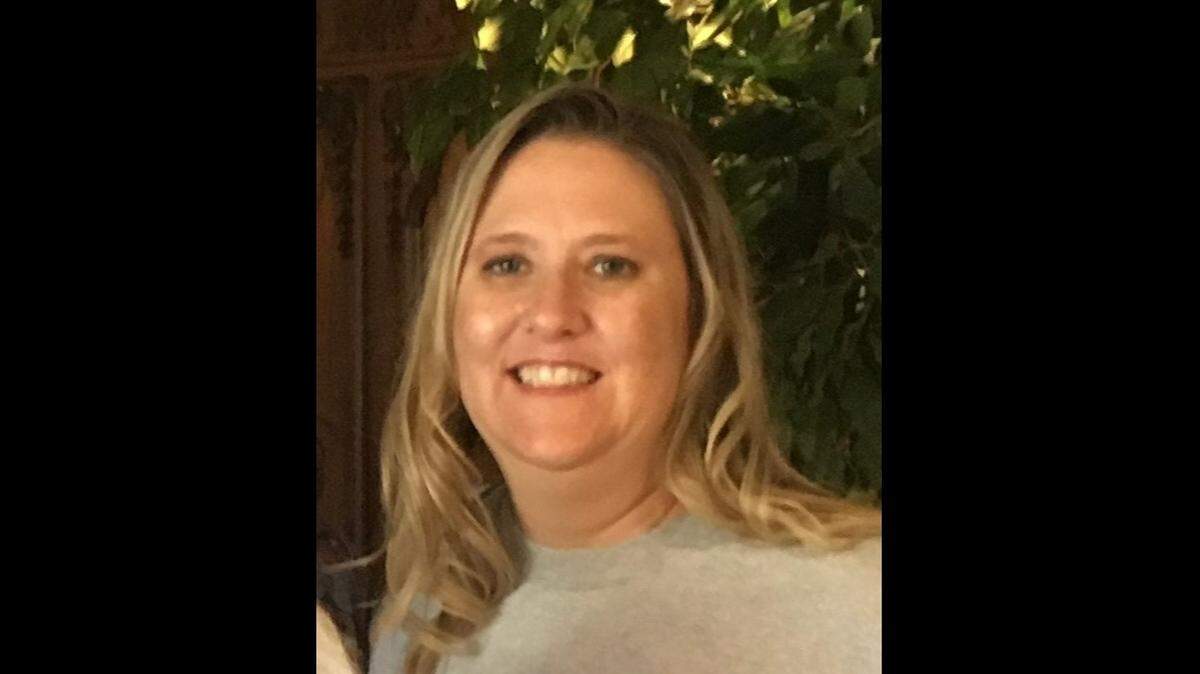
In her first year in Whatcom County, the new medical examiner is bringing technology and a new philosophy to the position.
Dr. Allison Hunt became the chief medical examiner in January, taking over the position formerly held by Dr. Gary Goldfogel.
“I love the work that I do, and I feel that it’s more of a calling,” she said in an interview with The Bellingham Herald in July.
Hunt is a contractor with Whatcom County. Her business, Hunt Forensics, was authorized for a $2,463,153 contract beginning in 2022 and ending in 2025. The final contract between Whatcom County and the former business, Bayside Pathology Inc., involved a year of service for $605,000.
Hunt has been a medical examiner in Miami and Southern California, coming to Bellingham with over a decade of experience. As she settles into her new position, her goals are plenty, but first is bringing the county medical examiner’s office into the future.
Medical examiners are different than coroners in that coroners are typically elected officials while medical examiners are appointed. Additionally, there are no requirements to become a coroner, but a medical examiner has to be a physician, typically trained in forensic pathology.
Washington has a “mixed system” of coroners and medical examiners, meaning each county has one or the other. The determining factor in each county is the population, with larger counties having medical examiners.
Hunt received her medical training from the University of Louisville in Kentucky. She completed a pathology residency and a forensic pathology fellowship before becoming a medical examiner.
One of her long-term goals is to have the medical examiner’s office accredited by 2025. To accomplish accreditation, Hunt has to ensure the entirety of the office is up to a certain standard. Then, a representative will come and check, line by line, a thick binder to ensure the standards are all met.
Accreditation is given through the National Association of Medical Examiners and ensures a proper environment for medical examiners to serve their area.
Beyond accreditation, Hunt hopes to bring the entirety of the office into the future by implementing and overhauling the technology used.
“We want to get fully electronic; I want all the reports, all the diagrams, all the correspondence, everything (electronic),” she said.
Updating office technology is a priority, easing the accessibility of records. But, it is not the only goal. So far, Hunt has hired new employees for Hunt Forensics, including death investigators, autopsy technicians and an office manager.
With things becoming busier, she needs every pair of hands she can get.
Hunt said she is on pace to do 200 autopsies this year, already having done 80 as of July. Forensic pathology regulatory agencies recommend a physician not go past 250 autopsies in a year, or risk the quality of the autopsies. Hunt said Whatcom County could potentially see these numbers, requiring the addition of another part-time medical examiner to take on cases.
“The most common (reason for an autopsy) is still unexpected natural death,” she said. “Especially with the Western diet, heart disease, lung disease and smoking,”
Although another major cause of death has been accidents, especially overdoses. Hunt said fentanyl has dramatically affected the number of overdoses, increasing significantly over the past few years.
“(Drug overdoses) are far-reaching, it invades all socioeconomic classes,” she said.
Outside of the autopsy room, Hunt has made it a priority to have her office visible to the public. Hunt sends an employee, or herself, to every death scene requiring a medical examiner.
To make her office known to professionals, she has sent one employee out to different emergency services to tell them the new office philosophy.
“(We tell them) what we’re about and what we do, and that they’re going to start seeing us at the death scenes,” she said.
The work done by Hunt and her staff is emotionally taxing and difficult, with workers likely to face the death of infants and working with grieving families.
“(Being a medical examiner is) one of those things, and you either know you can do it or know you can’t do it,” she said.
But Hunt sees her position as an opportunity to help the community and provide a public service. She strives to make sense of complicated medical issues for the families who have just lost someone.
“If I can help someone through that, and help them understand a little bit better, then that’s why I’m here,” she said.