This phenomenon in Bellingham Bay is still a mystery to researchers. They want your help
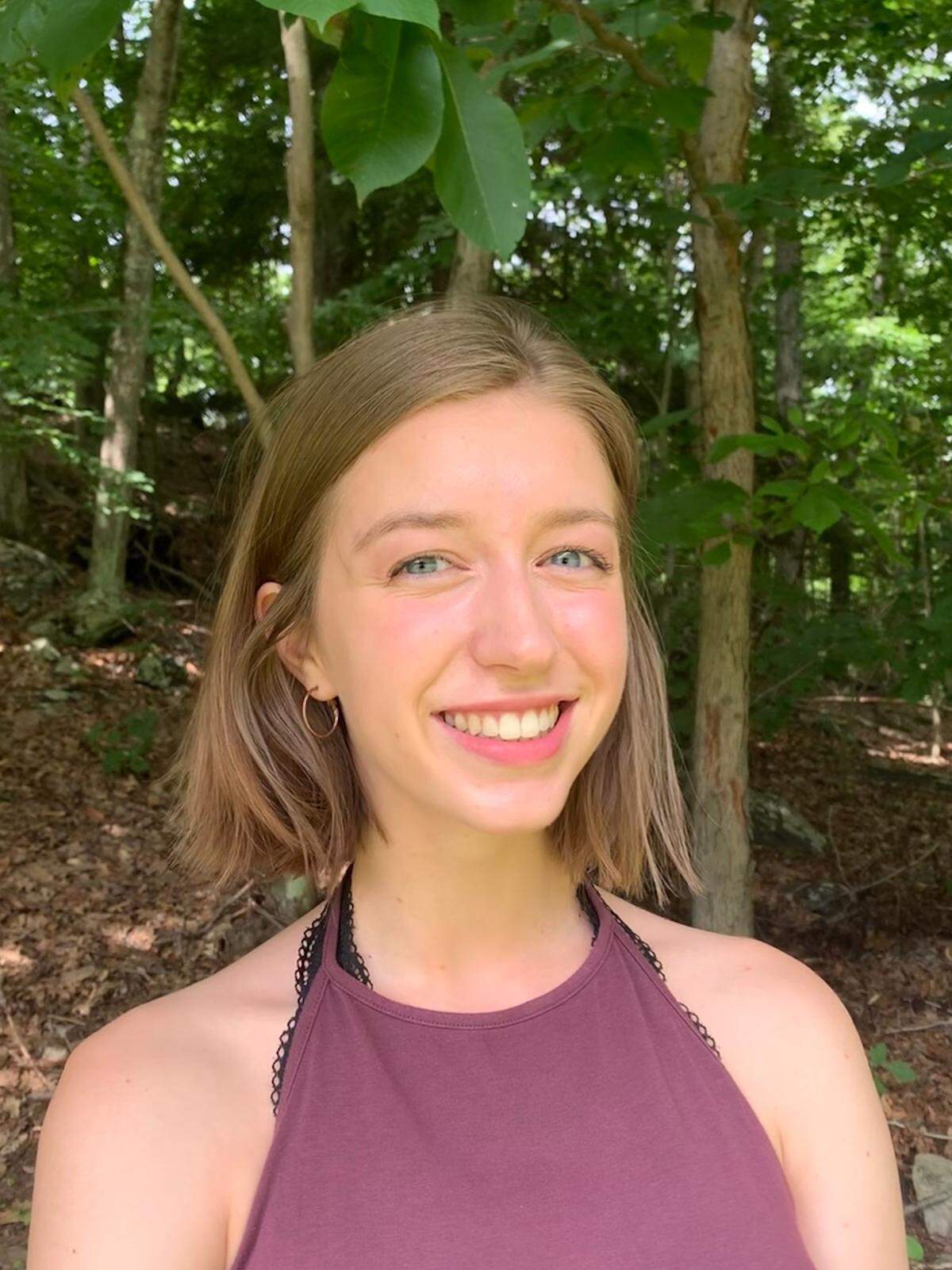
Lucy Greeley is going to spend her summer researching the glowing bioluminescence in Bellingham Bay, and you can too.
Bellingham’s Community Boating Center has teamed up with Western Washington University on a new citizen science initiative: Visitors who join the nonprofit’s bioluminescence paddle excursions this summer can help collect samples of the tiny plankton that create the mesmerizing phenomenon, measure the light being produced each night and identify plankton species using a video microscope.
Greeley, a WWU junior studying marine and coastal science, is the Community Boating Center’s environmental science intern this summer, and she will analyze collected samples to add to the relatively sparse knowledge about bioluminescence in the Salish Sea.
“There hasn’t been a ton of research on bioluminescence in this region,” said Greeley, who will also lead kayak tours. “We are trying to answer some of the more basic questions.”
Bioluminescence in the Salish Sea is primarily caused by microorganisms called zooplankton and dinoflagellates, she said.
“These plankton emit light when provoked by mechanical stimuli — when waves move through the surface, when a fish swims or when a paddle strokes through the water,” reads the Community Boating Center’s June 1 news release about the initiative.
Sunny days followed by dark nights are the best time to see bioluminescence, Greeley said: Bioluminescent plankton feed on phytoplankton, which are tiny plant-like organisms that rely on sunlight to produce their own nourishment.
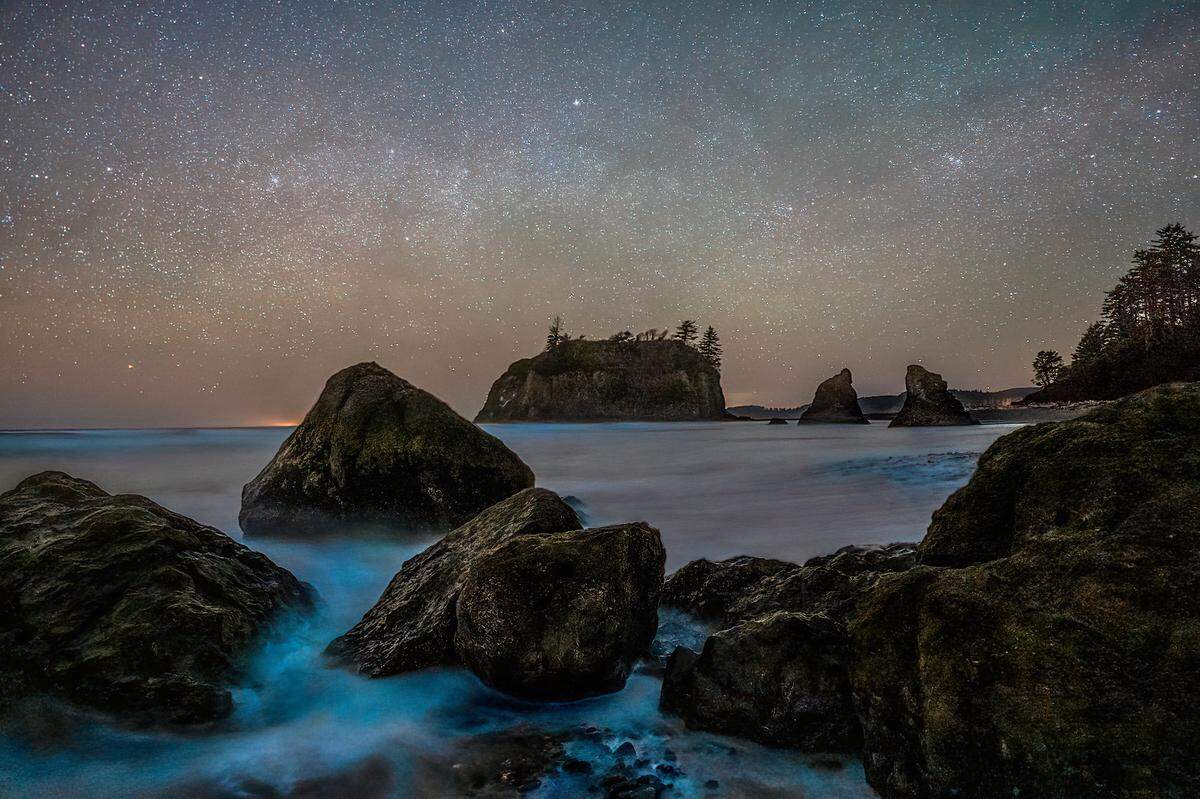
Fireflies use their bioluminescence for mating, and deep-sea organisms use it for communication or to lure unwitting prey, but it’s not exactly clear why plankton emit light, according to the Community Boating Center news release. Hypotheses are that they are trying to disorient predators or that the light attracts animals that prey on the plankton’s predators.
“If you light up a whole area that a fish is swimming in, maybe a seal comes and eats it,” Greeley said.
Greeley hopes to analyze DNA of the collected plankton to determine exactly which species make up bioluminescent communities in Bellingham Bay.
She’s particularly curious about noctiluca, one of the most common bioluminescent plankton in the world. Curiously, research suggests that noctiluca along the U.S. West Coast are not bioluminescent because they lack the substrate molecule luciferin. The chemical reaction of luciferin binding with the enzyme luciferase in an oxygenated environment is what causes bioluminescent organisms to glow.
But Greeley is “not totally convinced” that there are no bioluminescent noctiluca in the Salish Sea and hopes her research can offer more answers.
“It’s unknown exactly which species cause this brilliant phenomena here in Bellingham Bay,” the Community Boating Center’s news release said.
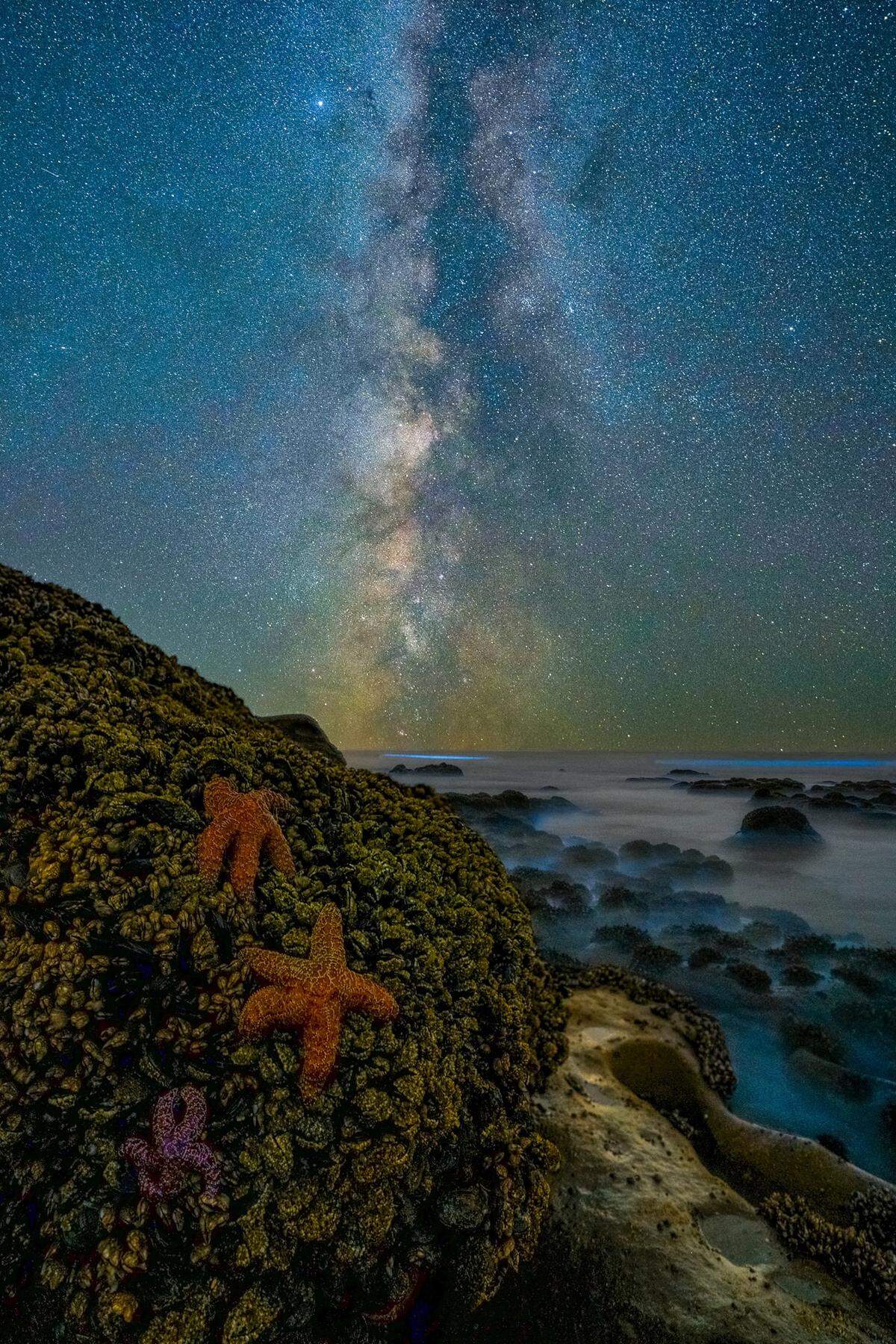
Greeley also wants to track how bioluminescence in the bay changes over the course of the summer. Kayak guides at the Community Boating Center have nonscientific, albeit charming, names for different phases of bioluminescence, Greeley said: “Sparkles, orbs and dust.”
Greeley will be advised by WWU Associate Professor Robin Kodner, who is well known for her research on algae that turns snow pink in the North Cascades.
Greeley hopes the citizen science element of the bioluminescence project can foster a stronger relationship between Whatcom residents and their surrounding environment.
“I think it’s important to know more about our natural world and maybe help invoke empathy in people to take care of it,” she said.
If you’re interested in learning more about bioluminescence in Bellingham Bay, Greeley is leading a free, virtual presentation 7-8 p.m. Thursday, June 16. She will speak about the history of humans and bioluminescence, past research and her summer study plan. Register online at boatingcenter.org/biotours.
The Community Boating Center’s three-hour bioluminescence paddle excursions cost $85 per person. All skill levels are welcome, and reservations can be made online at boatingcenter.org/biotours.
This story was originally published June 14, 2022 at 5:00 AM.