People ‘fear their food,’ Ferndale farmer says. He wants to show you why you shouldn’t
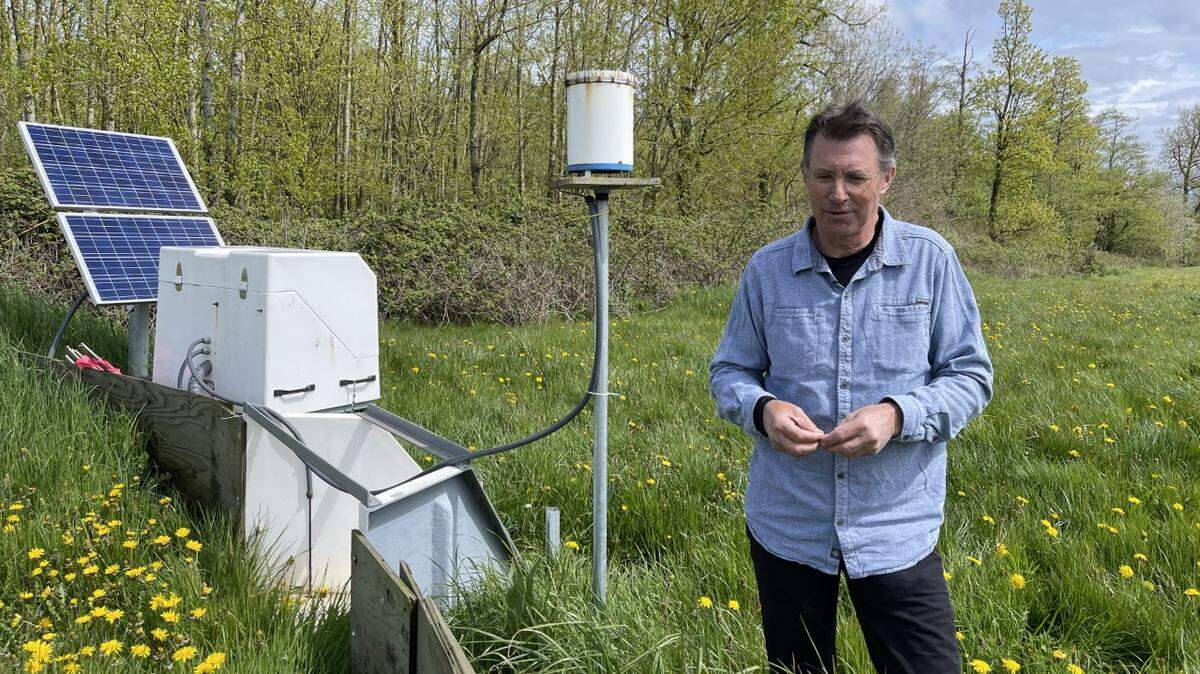
Dr. Bill Wavrin owns two dairy farms in very different parts of Washington: Western Waves is a 700-acre operation in rainy Whatcom known for producing artisan cheeses, while the 4,000-acre Sunny Dene Ranch operates in the desert landscape of Yakima County, east of the Cascades mountain range.
But it’s not just the climate that characterizes life on each farm, Wavrin said. He’s viewed differently by consumers depending on which one he’s representing.
“I feel like I’m leaving my farm in eastern Washington as a villain, but I’m handing people a piece of cheese in Ferndale, and I’m a hero,” said Wavrin, who has been a dairy farmer for about three decades and is also a veterinarian.
Wavrin is referring to what he describes as the negative perception many consumers have about large-scale farms, which often face criticism for their environmental impact. Wavrin and his family opened Western Waves in 2009, almost 20 years after founding Sunny Dene Ranch, hoping that a family brand and proximity to western Washington’s denser population would give them a chance to prove to people that their dairy operation isn’t the stuff of industrial agriculture nightmares.
“It’s frustrating to me that people fear their food,” Wavrin said. “That comes from critical documentaries that aren’t really representative of the average farm.”
“The beauty of farming in Whatcom County is you can just come see us,” he said.
Wavrin said he is constantly looking for ways to lower the farm’s environmental impact. That’s why he chose to be one of four Whatcom farms to participate in a local project examining how runoff from dairy farm fields impacts water quality.
“People aren’t aware of this system of discovery, scientific exploration and discovery into better ways to make food and protect our environment,” Wavrin said.
The project is done in partnership with the Whatcom Conservation District, a nonregulatory organization, and is federally funded by the Natural Resources Conservation Service.
How the water quality project works
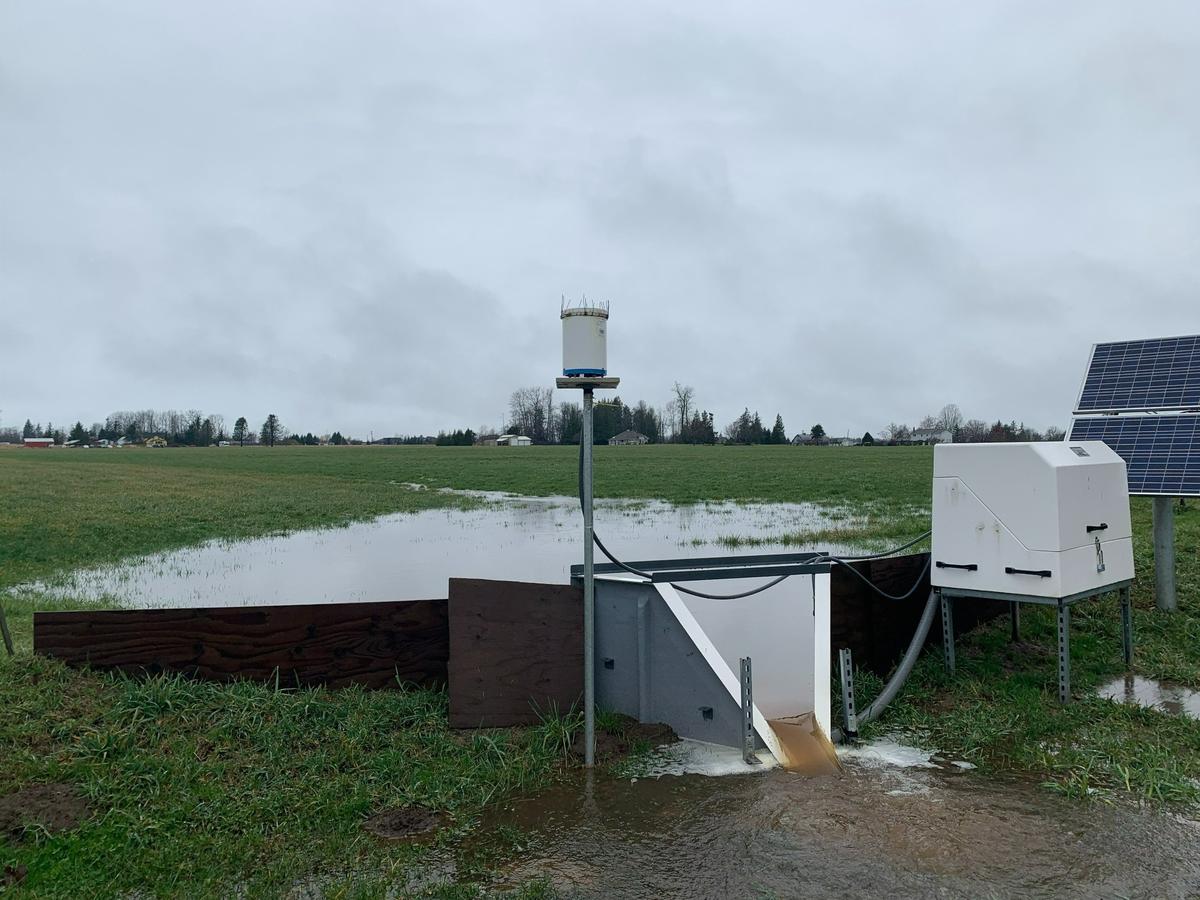
Three solar-powered monitoring stations are strategically placed around Wavrin’s farm to capture stormwater as it flows out of the areas where animals live and off the property. The stations — which are about $15,000 each — automatically sense when there is water running across the ground’s surface and store samples. Scarlett Graham, who is a conservation research specialist at Whatcom Conservation District, picks up the samples and brings them to a lab to be tested for sediment, nutrients and bacteria.
Monitoring these substances is important because they impact local water quality. Polluted waters can be harmful to fish and wildlife that rely on clean water and can impact the local economy if, for example, they cause shellfish beds to be closed for harvest.
Manure is the “central resource” at Wavrin’s farms, providing crops with nutrients, and he prefers to spread it on his fields instead of commercial chemical fertilizers. He called commercial fertilizers “more volatile,” since they can more easily move through layers of the soil and into groundwater.
“Those nutrients that we want to keep out of our water supply have value on our farm,” Wavrin said. “They don’t have value in Lummi Bay.”
The results of the seven-year project, which has about a year left of sampling, will be used by the conservation district to inform its recommendations to local farmers.
“If you are going to spend your money and time on something, we have the data to support that this is an effective practice,” Graham said.
Although government agencies also take water quality samples, they are “intermittent,” rather than “real-time,” Wavrin said, making it difficult to connect the results with specific practices.
His farm discovered through the monitoring that an engineered grass strip intended to filter water worked well most of the time, but was not as effective during big storms with lots of rain. Armed with that information, Western Waves installed a “media filter” of medium and large particles for water to move through before arriving at the grass strip.
The farm has also experimented with the safest times to spread manure, how much to use and its concentration.
Working together to improve agriculture
Local efforts to improve water quality can make a meaningful impact: After years of community actions to reduce bacteria levels in local waters, hundreds of acres of shellfish beds in Blaine’s Drayton Harbor have reopened to harvesting in recent years.
Western Waves has been recognized for its contribution to these successes — the conservation district gave the dairy farm the 2018 Drayton Harbor Watershed Steward award for its research and practices.
“I think we made a difference,” Wavrin said. “That’s as good as the milk check.”
Wavrin knows that there are people who are skeptical about the impact of dairy farms on the environment, especially as the impacts of human-caused climate change become more stark: Agriculture contributed about 11 percent of the country’s total greenhouse gas emissions in 2020, according to the U.S. Environmental Protection Agency. Wavrin acknowledged that dairy farming produces planet-warming emissions and there is a need for improvement, but said it’s important to note that dairy products have a high nutritional value relative to their carbon footprint.
.jpg "Farmsunrise97 (1).jpg")
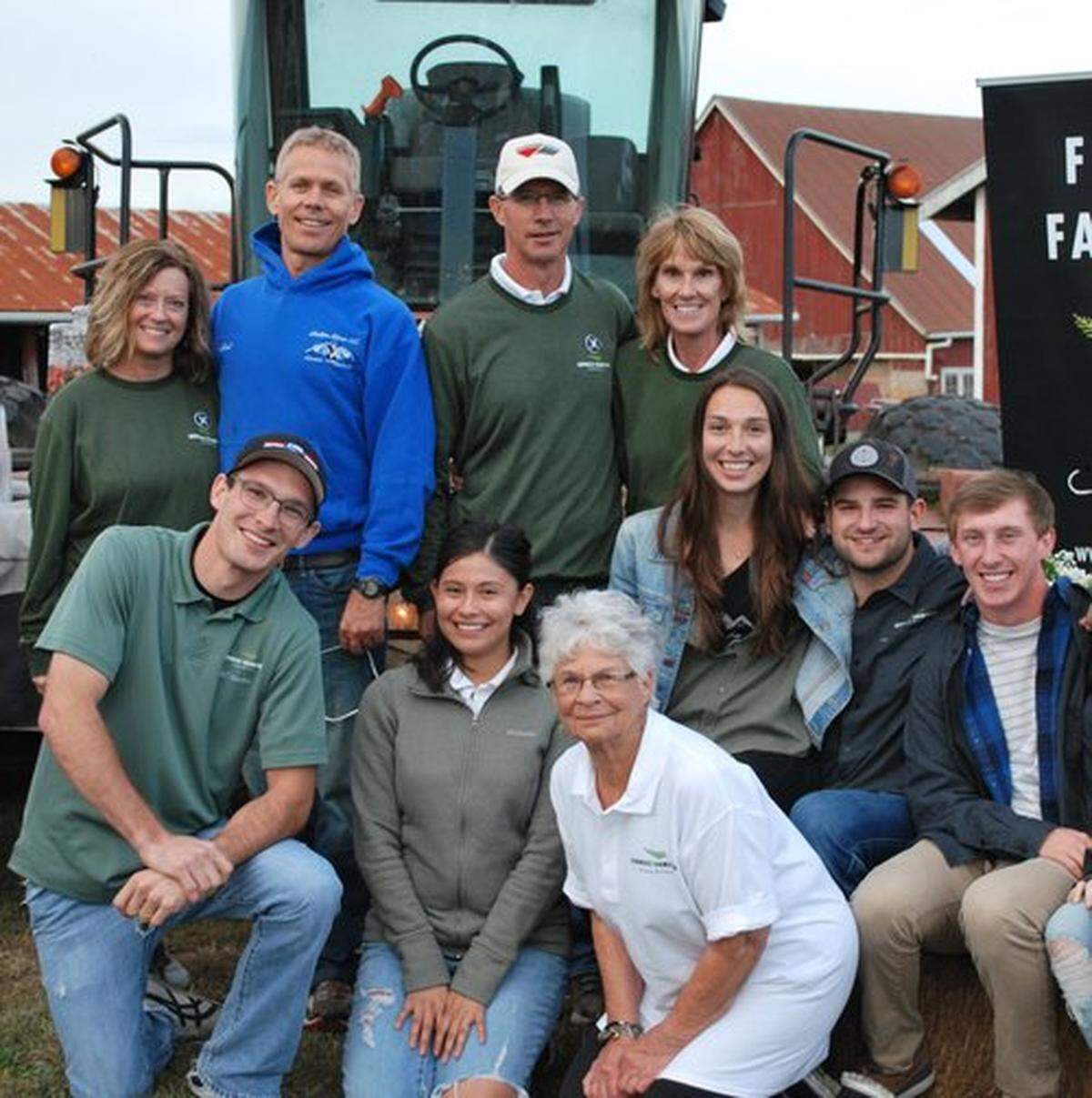
Wavrin sometimes sees visitors at Western Waves arrive in a “militant mood,” but he says they often relax when they see that his team are “humans and they care about the same thing we do,” Wavrin said.
Wavrin worries about the future of agriculture, but he hopes that farmers can continue to bridge the gap between consumers and the rural areas where their food is produced.
“We owe it to them, if not to ourselves, to make this conversation more two-way, more constructive,” Wavrin said. “They have good ideas too. They are right by definition, as your customer.”
“We are good at this, but we are not uncommon,” he continued. “Farmers are good people, and there are good ways of improving our systems.”
This story was originally published June 14, 2022 at 5:00 AM.