Decades of data show big shifts in Whatcom logging. What happened?
At a recent gathering of Whatcom tree farmers to celebrate the WA Tree Farmer of the Year, Tom Westergreen described their work planting and logging trees as a “way of life” that needs to be protected.
This way of life has changed immensely since white settlers began to flock to the region, in part for its valuable timber, around the 1850s. The story of the local timber industry is a complex one, marked by developing technology, shifting economies, environmental movements and changes to federal and state policy.
More than five decades of publicly available, county-level data tell the story of how this Whatcom industry has changed and continues to. Let’s take a look.
By 2017, the amount of timber taken from Whatcom forests was a fraction of what it was decades earlier. Timber is measured by the “board foot,” which is equivalent to a board one foot long, one foot wide and an inch thick. A typical 1,600-square-foot, wood-framed home requires about 10,000 board feet of wood, according to calculations using estimates by Connecticut-based company The House Designers.
There are a number of reasons why timber harvest in the county has dropped off over time, wrote Kenny Ocker, a spokesperson for the state Department of Natural Resources, in an email to The Bellingham Herald.
One factor is that humans have continuously expanded development on what used to be forested land, especially before laws were passed in the 1990s to better plan for local growth. This “incredible encroachment” of development onto forestland means that much of the areas previously available for harvest no longer are, Ocker wrote. Now, for the first time in history, less than half of the state is covered in forest.
A chunk of Whatcom’s forests have also been set aside over the last five decades for public parks. In 1968, North Cascades National Park was created, protecting hundreds of thousands of acres of the state’s alpine wilderness. The designation of Mount Baker Wilderness in 1984 removed federal lands from timber production, Ocker said. More recently, in 2014, Whatcom County obtained nearly 9,000 acres of forest previously managed by the state for timber harvest, turning the area into a park.
Ocker also points to a number of consequential decisions by the state and federal governments that have influenced local timber harvest over the years.
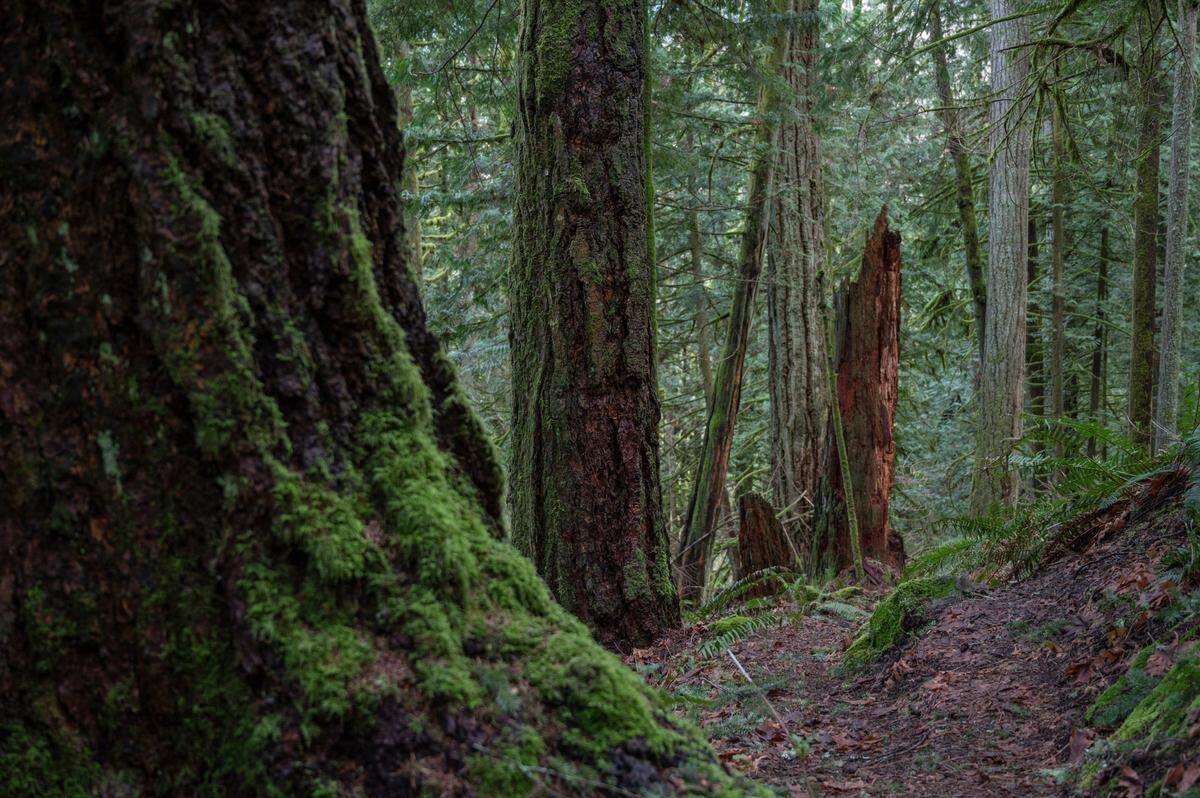
The “first meaningful protections for water quality and public safety” regarding timber harvest on state and private lands were passed by the Washington State Legislature in 1974, as the Forest Practices Act, Ocker wrote. Around the same period, a national recession dealt a particularly hard blow to the timber industry throughout the late 1970s and early 1980s, Ocker said. Numbers show Whatcom timber harvest declining in that time frame.
The amount of timber coming from the county bounced back up throughout the 1980s, until 1990, when the northern spotted owl was federally listed as a threatened species. This brown bird lives in the Pacific Northwest’s old-growth forests, and its listing meant stronger protection of its habitat was imminent.
Ocker’s explanation for the 1990 spike in timber harvest: The federal listing of the owl under the Endangered Species Act “provided a short-term incentive to harvest before the decision was finalized and then was a depressing factor on timber harvests in subsequent years.”
Private landowners drove that spike in logging in 1990, as the owl’s threatened listing was being finalized.
The Northwest Forest Plan was passed in 1994 to help the owl species recover, “severely” lowering how much timber could be harvested from federal lands, Ocker wrote. Essentially no timber has been harvested since on federal lands in Whatcom.
Several more policies were passed in the following years. The State Lands Habitat Conservation Plan was passed in 1997, requiring more state land to be left unharvested around water bodies and unstable slopes. These “buffers” protect water quality, preserve habitat and prevent landslides.
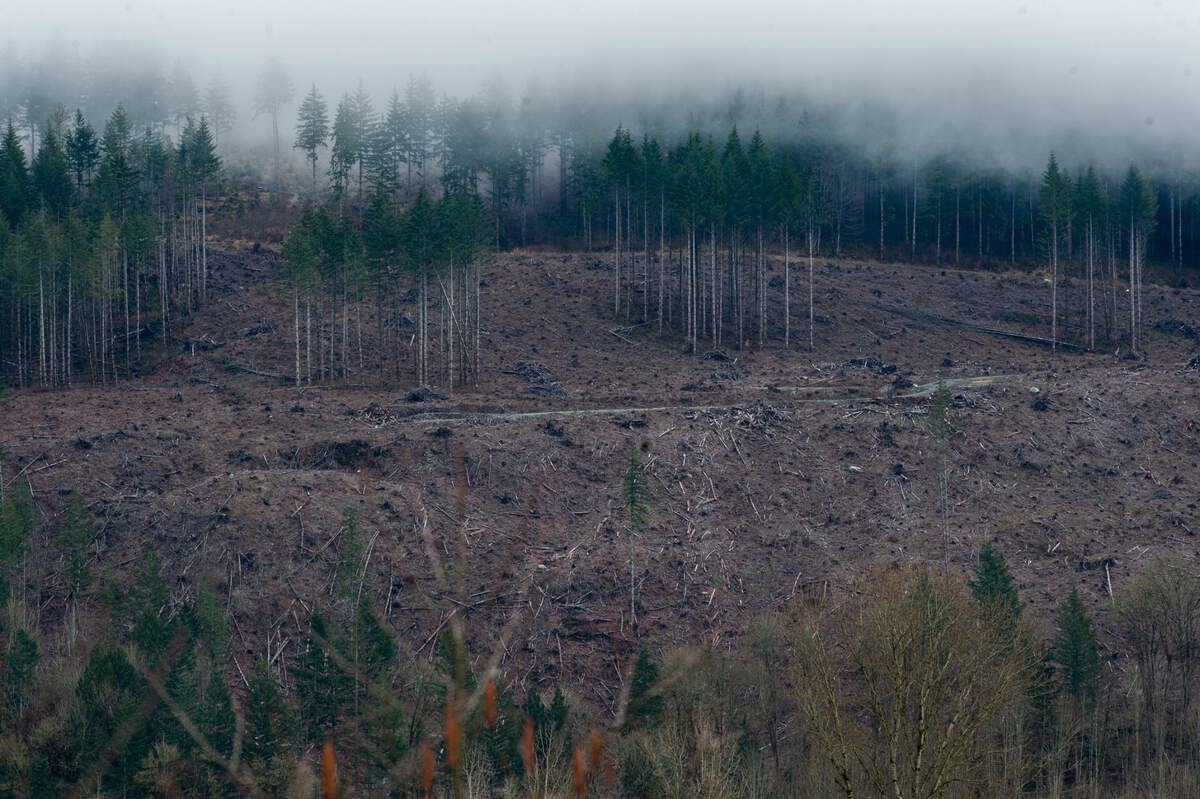
Two years later, in 1999, the state’s historic Forests and Fish Agreement increased the required stream and slope “buffers” on private lands, along with providing other environmental protections.
Then came the Lake Whatcom Landscape Plan in 2004, which regulates logging on state lands in the watershed of the lake, which is the drinking water source for about half the county’s population. In 2006, the Policy for Sustainable Forests codified the state’s decision not to harvest old-growth forests.
Most recently, in 2019, the state Department of Natural Resources adopted a long-term conservation strategy for the marbled murrelet, which the Audubon Society describes as “a strange, mysterious little seabird” that nests in old-growth forests.
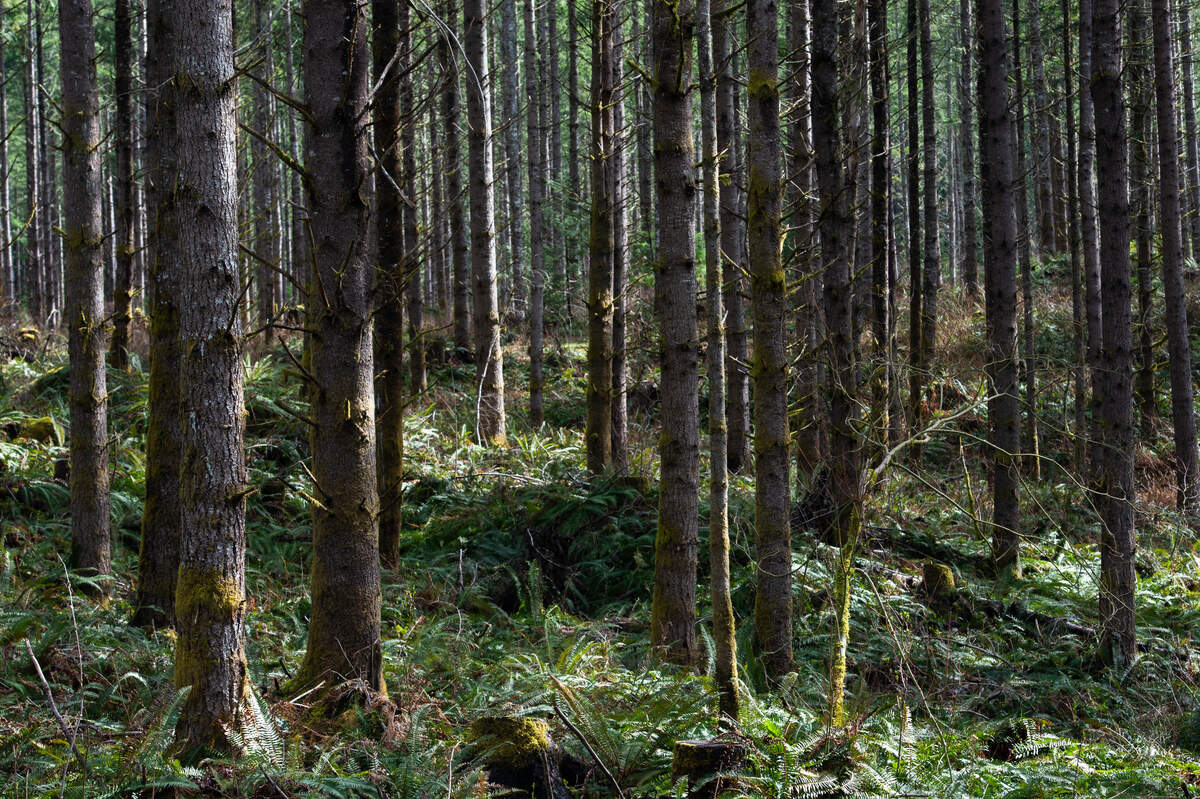
Whatcom timber harvest today
While timber remains a part of Whatcom’s economy and culture — just look at the Deming Logging Show — the county produces significantly less than others in the state, according to the state’s most recently published timber harvest report in 2017.
Whatcom produced roughly seven times less timber than Lewis County, which harvested the most in 2017.
When it comes to which trees are logged for timber in Whatcom, the clear frontrunner is the mighty Douglas fir, the most widespread of western trees and a popular building material.
This story was originally published May 30, 2022 at 5:00 AM.