Here’s how Bellingham plans to fight crime, graffiti and litter downtown
A new city-sponsored initiative aims to end the recent wave of graffiti in downtown Bellingham by covering vandals’ scrawls and tags with paint or removing them within hours, if possible.
That will be followed by aggressive prosecution of offenders, similar to anti-vandalism efforts in 2001, said Darby Galligan of the city’s Planning and Community Development Department.
Bellingham is using $30,000 of its federal pandemic-relief funds for the Downtown Bellingham Partnership to bolster its landscaping crew and turn its focus toward graffiti reporting and removal, Galligan told the City Council at its April 11 meeting.
City codes require property owners to remove or cover graffiti within 48 hours, said Kenny Austin, who supervises Downtown Bellingham’s landscaping and maintenance crew.
But that isn’t always practical, and Austin’s crew will be asking building owners and businesses to let them do it instead.
“The idea has been kicking around for a bit and people are really enthusiastic about it,” Austin told The Bellingham Herald.
Ultimately, the new program will speed the graffiti-removal process and help stop future vandalism, said Jenny Hagemann, Downtown Bellingham’s marketing director.
“One of the greatest deterrents is not giving taggers the pleasure of seeing their work very long,” Hagemann told The Herald.
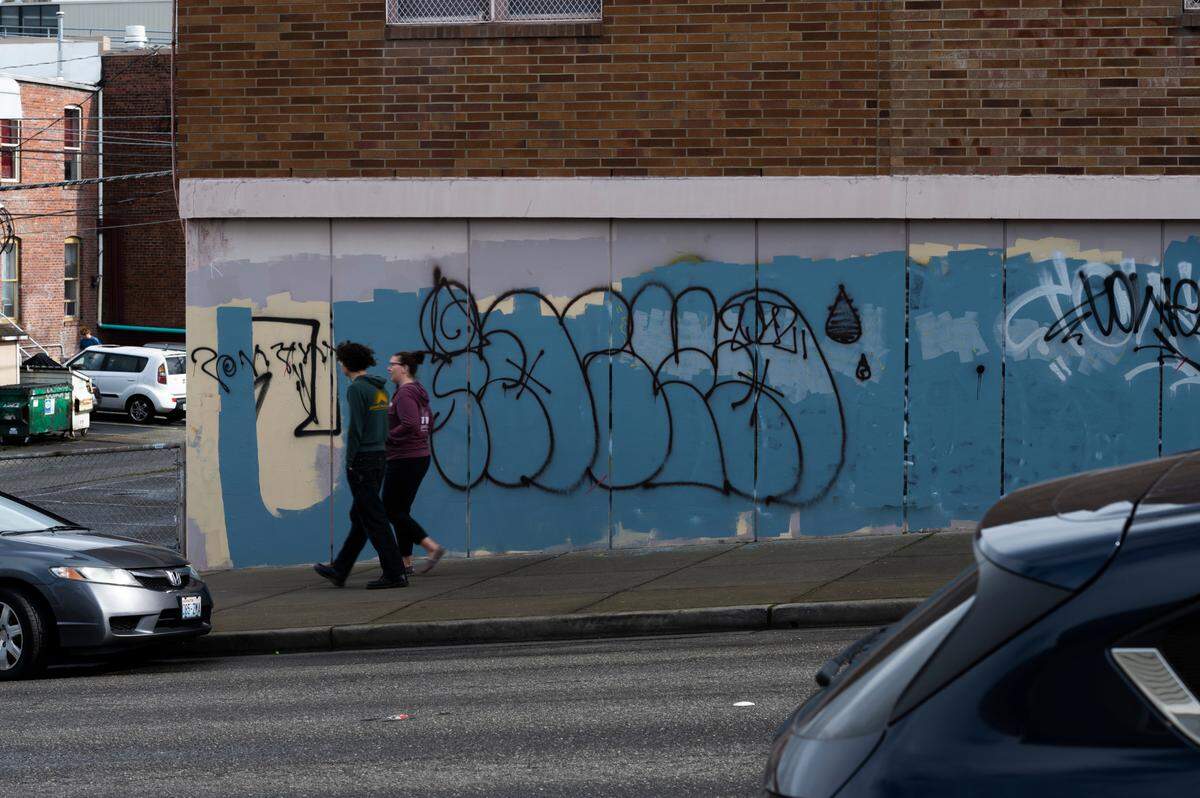
Real-estate broker John Templeton was the first person to join the new anti-graffiti program when he signed a waiver at a Downtown Bellingham meeting on Thursday evening, April 21.
“It’s terrible. It’s constant,” said Templeton, who owns an office building downtown — space that’s remained vacant for two years.
It’s cost him $200,000 in rent, he told The Herald.
At Thursday’s meeting, Mayor Seth Fleetwood acknowledged that litter, graffiti and crime has risen and more people are living on the streets with nowhere to go.
“This has been an unbelievably difficult couple of years. We live in an unjust society and inequity has been as bad as it ever has been in the modern era,” he told about 100 business owners and others.
“We’re trying to do what we can to increase morale downtown. We’ve got too special a place not to have some guarantee of an exciting future,” Fleetwood said.

To make downtown more welcoming for workers, shoppers and tourists, the city and Downtown Bellingham are joining forces in other ways to deter crime, help business owners and their employees, offer help to visitors and connect people to social services.
That includes the new Downtown Ambassador program and private security patrols to add “eyes and ears” as the city’s Police Department is suffering a shortage of officers to retirement, refusal of the COVID-19 vaccine, and other reasons,” Galligan told the council.
“The pandemic really did put a strain on our downtown community, not just with the economic downturn and the shuttered businesses, but the lack of foot traffic from not having the office workers downtown, stretched resources, and really more people in need,” she said.
At Thursday’s meeting, Downtown Bellingham officials introduced representatives of Street Plus, who will staff the ambassador program, and Risk Solutions Unlimited, the private security force.
Both programs use unarmed employees who are trained in de-escalation techniques and are familiar with social-service agencies that provide housing and help for those with drug and alcohol addiction or mental illness.

Ambassadors will walk and bike around downtown during daylight hours and Risk Solutions will patrol in cars and on foot overnight.
“They don’t replace the police, they work in coordination with the police and work with the service providers that we have out there,” said Alice Clark, executive director of Downtown Bellingham.
“If these programs weren’t happening I would feel a lot more upset and afraid,” Clark said.
Eva Bernal, manager of Avenue Bread’s location on Railroad Avenue, told The Herald that she was hopeful, but also skeptical.
“I see the problem increasing exponentially, and I wonder if (the new programs are) going to be enough,” Bernal said.
“I wonder if there’s going to be more shelter space or more programs for mental health and drug addiction,” she said. “I guess we’ll see.”
This story was originally published April 24, 2022 at 5:00 AM.