Here’s what a federal official learned about pandemic funds in Bellingham classroom visit
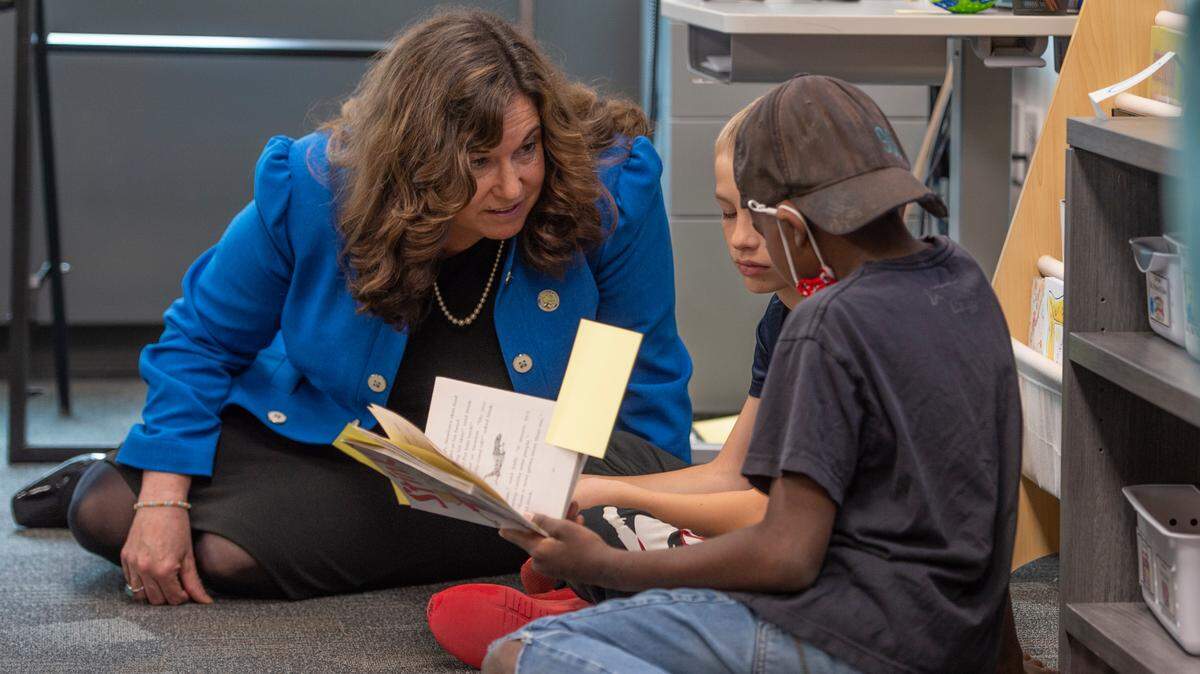
In a visit to two Bellingham School District sites, the deputy U.S. secretary of education said she was impressed with how federal coronavirus-relief money is being used locally to help students in both the classroom and in the community.
But more than that, Cindy Marten praised Bellingham school officials for developing “community partnerships” that helped teachers, administrators and staff adapt to online learning in March 2020 and ease a transition back to the classroom in early 2021.
“They weren’t caught flat-footed by the pandemic,” Marten told The Bellingham Herald in an interview on Tuesday, April 19.
Martens stopped Tuesday, April 19, in Bellingham as part of her nationwide “ARP Stars” tour, where she is seeing first-hand how schools across the country are using American Rescue Plan Act funds.
President Biden signed the $1.9 trillion American Rescue Plan Act a year ago, and the law included $130 billion to support recovery efforts at K-12 schools.
Through June 2021, Bellingham schools received about $24 million from the three federal Elementary and Secondary School Emergency Relief Fund initiatives, school spokeswoman Jackie Brawley told The Herald. The third initiative was part of the America Rescue Plan Act.
Initial federal economic-stimulus funding paid for pandemic-related supplies such as face masks and helped students and teachers adapt to online instruction.
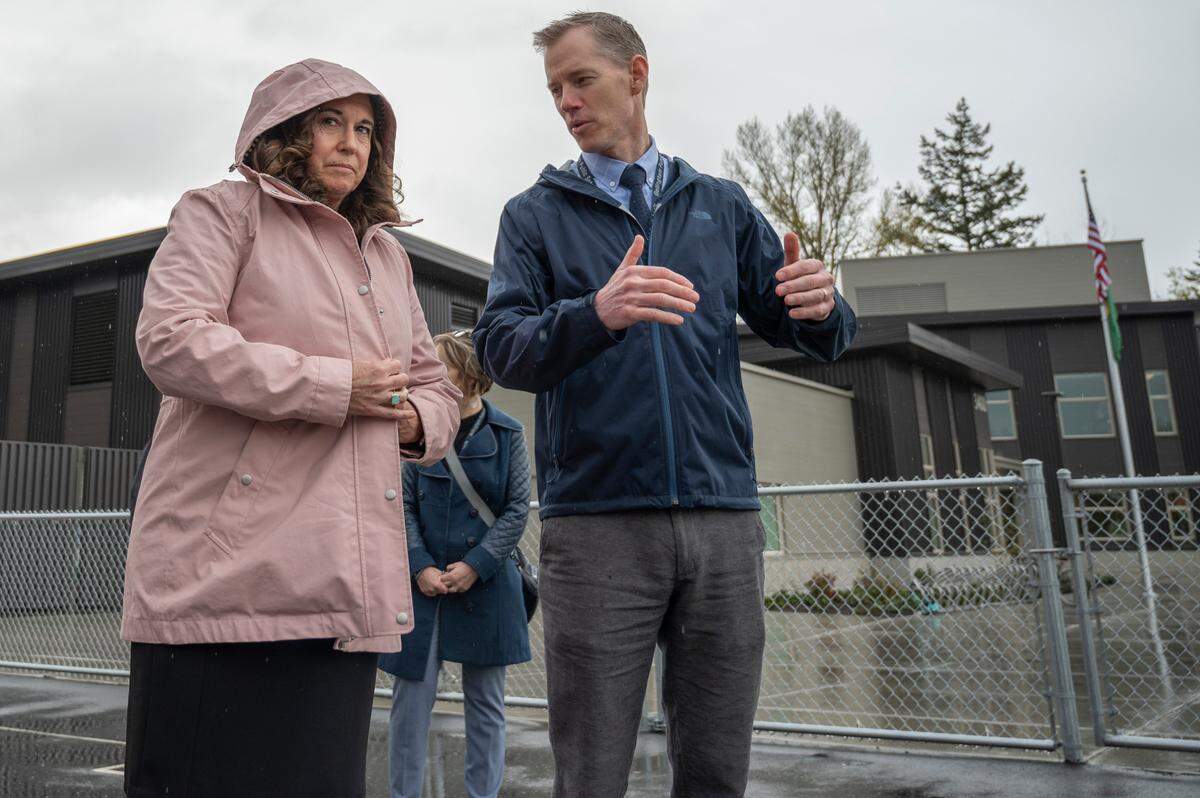
Pandemic-relief funds now are being used for “wraparound” services such as additional after-school programs and the school’s family liaison, along with a new mental-health coordinator and specialists, Brawley told The Herald.
On Tuesday, Marten talked to teachers and administrators at Alderwood Elementary and at Options High before heading to Sedro-Woolley. She was scheduled to visit Lummi Nation School on Wednesday, April 20, and the SAMI Science and Math Institute in Tacoma on Thursday, April 21.
“I know you’ve got this,” Marten told the staff at Options after listening to teachers, counselors and the principal describe the school’s educational mission.
Options High provides its 180 students with smaller class sizes, flexible schedules and child care for staff and students with young children. It also boasts an aerospace manufacturing curriculum as part of its career and technical education programs.
Pandemic-relief funds helped the district hire three mental-health professionals whose guidance is key to student success, Superintendent Greg Baker told Marten.
“Socio-emotional learning has been our focus for many years. Federal funds have helped enhance that,” Baker said.
Marten, a former teacher and most recently superintendent of the San Diego Unified School District, told Baker that Bellingham Schools staff should be proud of what they’ve accomplished.
“This American Rescue Plan was designed to do exactly what you’re doing. You took these funds and doubled down on the things that you care about,” she said.
Alderwood Elementary, an International Baccalaureate school with a focus on Spanish language and Latino culture, relies on community partnerships with organizations such as the YMCA, which provides after-school enrichment programs for students whose parents work outside the home.
It also has an “inclusive” playground with a soft surface instead of wood chips, allowing students who use wheelchairs or have other mobility issues to use the swings, slides and merry-go-round.
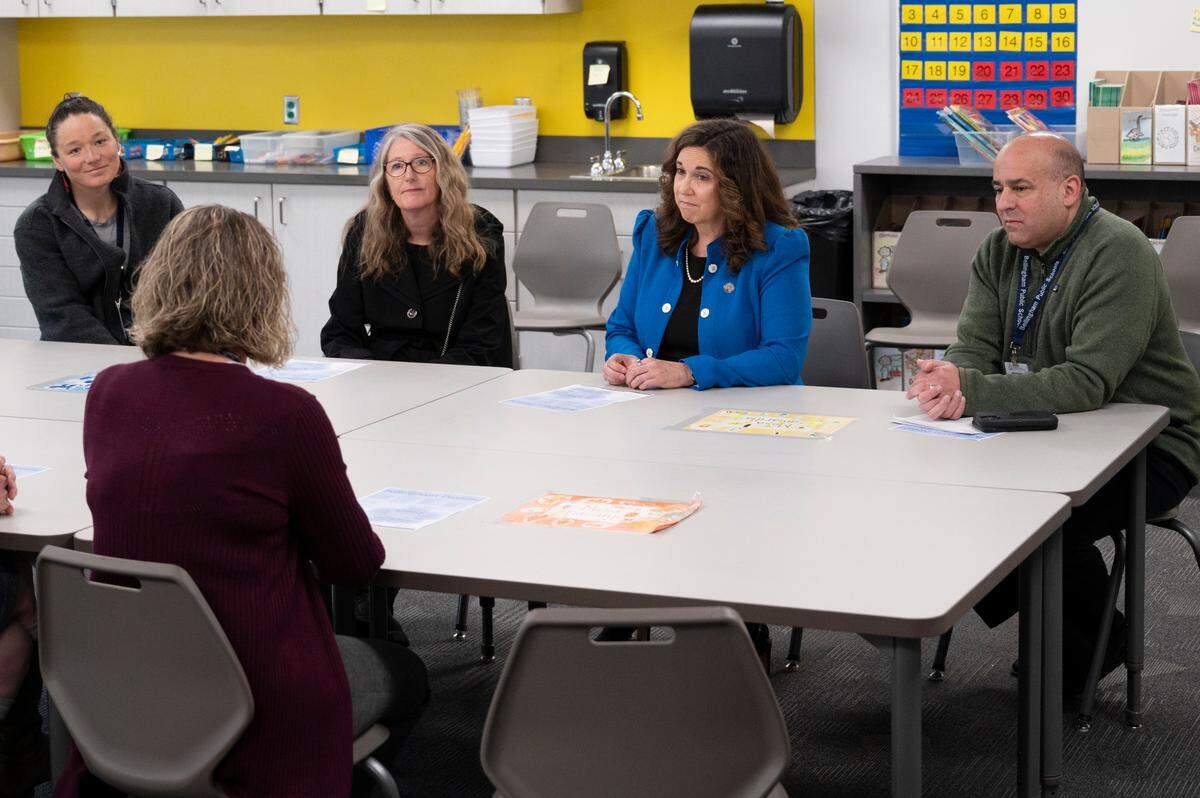
There, Marten held a round-table discussion with teachers, administrators and YMCA staff and then visited third- and fourth-grade classrooms where she chatted with the students and their teachers.
“The big picture is the whole community approach. So much of this is integrated in a really intentional way,” Marten told The Herald.