Federal flood insurance rates are changing in Whatcom. Up or down? Depends who you are
If you’re a Whatcom resident with flood insurance through the federal government, there’s a good chance your rates will change over the next year.
For some, that will mean paying upwards of $100 less per month, while others should expect price hikes between $40 and $50 a month. The majority of residents will fall somewhere in between those two extremes.
These changes are happening because the Federal Emergency Management Agency, or FEMA, is overhauling the method it uses to calculate how much property owners should pay for flood insurance. Whereas the federal agency has for decades primarily based rates on two factors — an area’s flood risk and how high property is elevated — it is now able to account for a host of variables through a new methodology called Risk Rating 2.0.
“In the past, we just lumped everyone into big zones,” said Scott Van Hoff, the regional flood insurance liaison for FEMA’s Region 10, which includes Washington, Alaska, Oregon and Idaho. “Low-value homes were paying too much for insurance, and high-value homes were paying too little. The low-value homes were subsidizing the high-value homes.”
Residents will now pay a monthly rate that is more individualized and reflective of the actual risk and value of their structure, he said. Risk Rating 2.0 accounts for details such as how often an area floods, distance from a water source, structure elevation, the cost of rebuilding and what types of flooding are likely (such as river overflow, heavy rainfall or storm surge along the coast).
The new system went into effect for existing policyholders on April 1. National Flood Insurance Program policies renew each year on the date they were first purchased, so by this time next year, all policyholders in Whatcom will be paying an updated rate.
How Whatcom rates will change
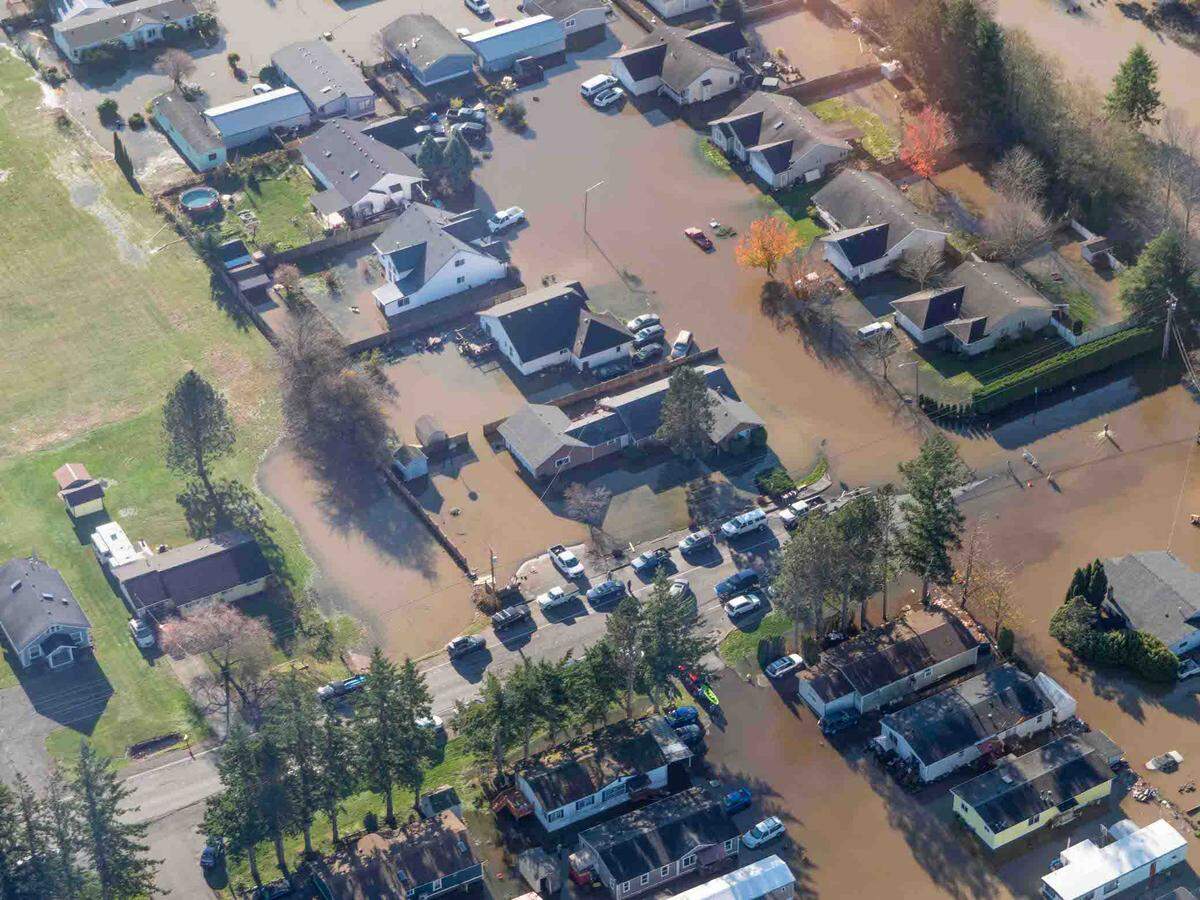
About 20% of Whatcom buildings in high-risk flood areas, which FEMA refers to as the Special Flood Hazard Area, have flood insurance through the National Flood Insurance Program, with 1,754 policies in the county, Van Hoff said. There are also private flood insurance policies available. Although flooding is “by far the most common disaster,” Van Hoff said, standard homeowners insurance doesn’t cover flood damage.
More than half of Whatcom policies are projected to cost less per month under the new rating system, according to FEMA data.
“There are some large percentages of policy decreases in some high population zip codes (in Whatcom),” Van Hoff wrote to The Bellingham Herald in an email.
Most policies that increase will do so by up to $10.
Many residents may not notice the shift from the old system to the new one, Van Hoff said. For the last few years, National Flood Insurance Program rates have already been increasing about 11% each year. on average — that equates to about $8 per month for the average policy.
The Wisconsin-based Flood Science Center used FEMA’s data to create an interactive map showing how National Flood Insurance Program rates are projected to change by zip code.
The Whatcom area where the highest proportion of residents are projected to see a rate decrease is zip code 98230, which runs along the county’s coast from Cherry Point north to Blaine. About 84% of policyholders here will pay less each month for federal flood insurance, with 27 policies decreasing by more than $100.
The area with the largest percentage of residents projected to see noticeable rate increases is zip code 98244, a chunk of the county bookended by Mount Baker to the east and Deming to the west. About 8% of the 87 policies in this zip code will increase by more than $20 a month.
A ‘transformational leap forward’
The National Flood Insurance Program, launched in 1968, has challenges to contend with: It is about $20 billion in debt. Floods are devastatingly expensive, and the program hasn’t been financially solvent for years.
“That ended in 2005 with Hurricane Katrina,” Van Hoff said. “Since then, we have had an increasing number of large disasters all over the country.”
In other words, the cost of flood damage is outpacing the amount of money the program brings in.
Human-caused climate change makes these challenges even more daunting, driving more frequent and severe flooding in regions across the country. The issue begs a question, Van Hoff said: How many times can a house be rebuilt or repaired on the federal government’s dime before it no longer makes sense to have human development there?
“Some homes around the country, the (flood insurance policy) price will go up to where it just won’t seem that feasible to continue with that house in that location,” Van Hoff said.
He has high hopes that the new rating system will disincentivize people from building expensive structures in high-risk areas and restore balance to the National Flood Insurance Program. FEMA calls the new system “a transformational leap forward” on its website.
“I’m hoping what this will result in is much more fair and transparent premium costs,” Van Hoff said. “It’s just going to give people better information to make personal choices about where they move.”