Report: Switch to zero-emission vehicles could save lives and billions of dollars in WA
Washington state could see an estimated $5.9 billion in public health benefits by 2050 if it can eliminate planet-warming pollution from cars, trucks and buses, according to an American Lung Association report published Wednesday, March 30.
Nationally, a transition to zero-emission vehicles could generate more than $1.2 trillion in health benefits and $1.7 trillion in global climate benefits by 2050, according to the report, titled “Zeroing in on Healthy Air.”
“Air pollution harms people,” said Carrie Nyssen, senior director of advocacy for the lung health nonprofit. “We have known that for a long time.”
The report uses models to examine what the United States would gain in public health benefits if it can power the electrical grid with clean, renewable energy by 2035 as well as ensure that all new passenger vehicles are zero-emission by 2035 and all new medium- and heavy-duty trucks are zero-emission by 2040. Zero-emission vehicles include hydrogen fuel cell vehicles and vehicles that can be charged with electricity from the grid.
Transportation is the largest source of greenhouse gas emissions in Washington, and the report found that a transition away from fossil fuel-powered vehicles could mean 531 avoided deaths, 15,000 avoided asthma attacks and 73,200 avoided lost work days. (Work days can be lost when, for example, parents have to stay home to care for children with asthma or people have to go to the emergency room for lung-related issues, Nyssen said.)
The U.S. Energy Information Administration describes gasoline as a “toxic” liquid — when it is burned it produces air pollution and greenhouse gas emissions that trap heat in the atmosphere. Diesel, which fuels many heavy-duty trucks, produces a noxious exhaust that can lead to dangerous health conditions, damage crops and trees and produce acid rain, according to the U.S. Environmental Protection Agency.
The American Lung Association report put forth policy recommendations at the federal, state and local level. Recommendations include expansion of grants and incentives for those looking to purchase zero-emission vehicles, more stringent air quality standards and the prioritization of historically under-served and over-polluted communities.
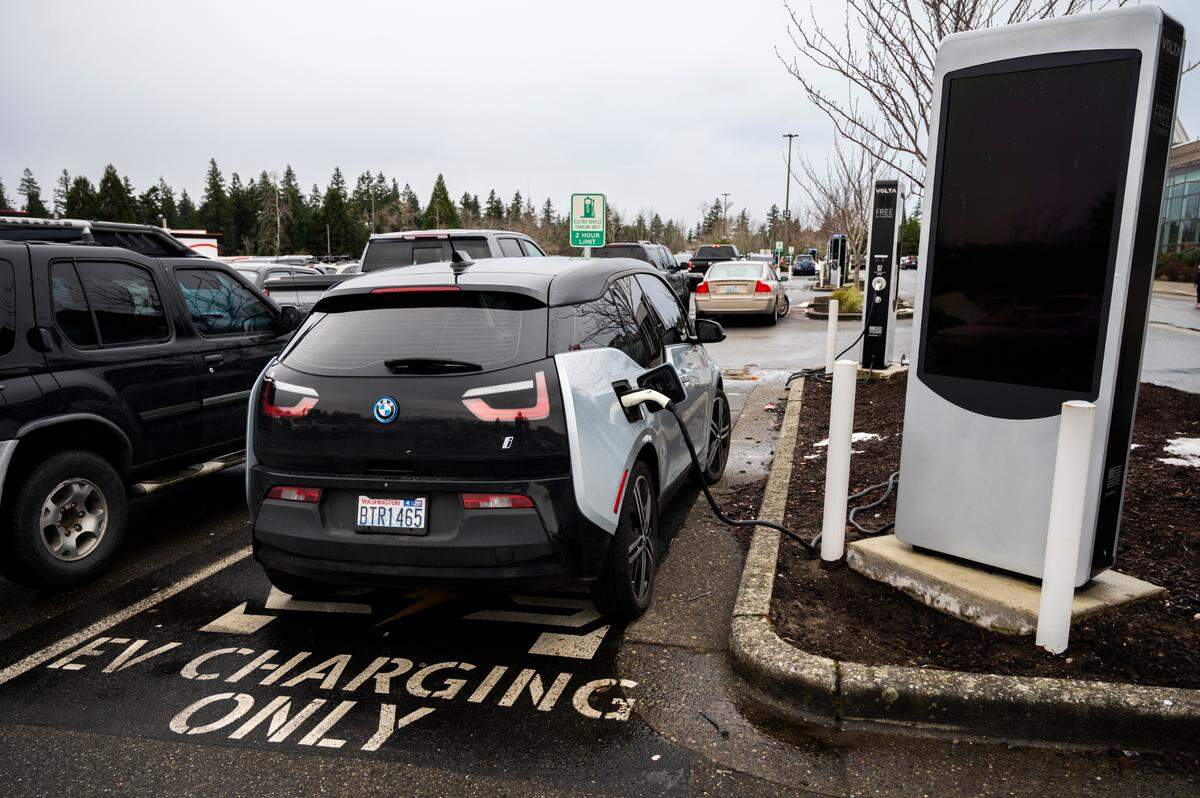
Compared to many states, Washington has robust policies supporting a transition to zero-emission vehicles, Nyssen said. It has adopted California’s zero-emission vehicle and truck standards, which are stronger than federal standards and require manufacturers to scale up sales of zero-emission vehicles.
“We are very blessed to live in a state that has leaders who believe in climate change and understand the health impacts,” Nyssen said.
This year’s legislative session, which wrapped up earlier this month, yielded additional legislation to usher more zero-emission vehicles onto the state’s roads. Last week, Gov. Jay Inslee signed the $17 billion Move Ahead Washington transportation package, which provides funding to support electrification across the transportation sector. He also signed Senate Bill 5975, which will fund new EV charging stations and zero-emission buses.
In future legislation, the American Lung Association would like to see the state provide more incentives for low-income individuals to purchase electric vehicles as well as push for the replacement of diesel-fueled trucks with electric ones, Nyssen said. She also believes Washington needs more EV charging stations in rural areas.
“It’s my hope that when people see this report, they understand the benefits from taking on these challenges,” she said.
This story was originally published March 31, 2022 at 5:00 AM.