Shows are over for Seaquarium’s killer whale Lolita, new managers say. What happens now?
The shows are over for Lolita the killer whale.
After five decades as iconic star at Miami Seaquarium, the 7,000-pound orca will no longer perform daring dives, splash spectators or serve as mascot for the marine park on Virginia Key, according to the federal agency that oversees animal attractions.
Lolita — the focus of a decades-long campaign by animal rights activists who have advocated to return the orca to the Pacific Ocean waters where she was captured in 1970 — has not been doing regular twice-daily shows for months, since the stadium where she lives in a 20-foot-deep tank was closed for repairs ordered by the U.S. Department of Agriculture, which cited numerous maintenance, water quality and animal welfare problems during an inspection of Seaquarium last summer.
The company slated to take over Seaquarium from the current owner has agreed to retire Lolita, also known as Tokitae or Toki. She will no longer have to flip for food.
MS Leisure, a subsidiary of The Dolphin Company, a Mexico-based theme-park operator, announced Thursday it is assuming management of Seaquarium and notified USDA it will not exhibit Lolita and her Pacific white-sided dolphin companion Lii in the Whale Stadium, nor will the stadium be accessible to patrons. Lolita will not even be visible to the public, according to a letter from USDA approving MS Leisure’s application for an exhibitor’s license.
“If, in the future, you intend to exhibit either of these animals (including posting any image of these animals on social media with the expectation of economic benefit), or resume using this pool for exhibition purposes, you will need to apply for a new license,” wrote USDA Deputy Administrator Elizabeth Goldentyer.
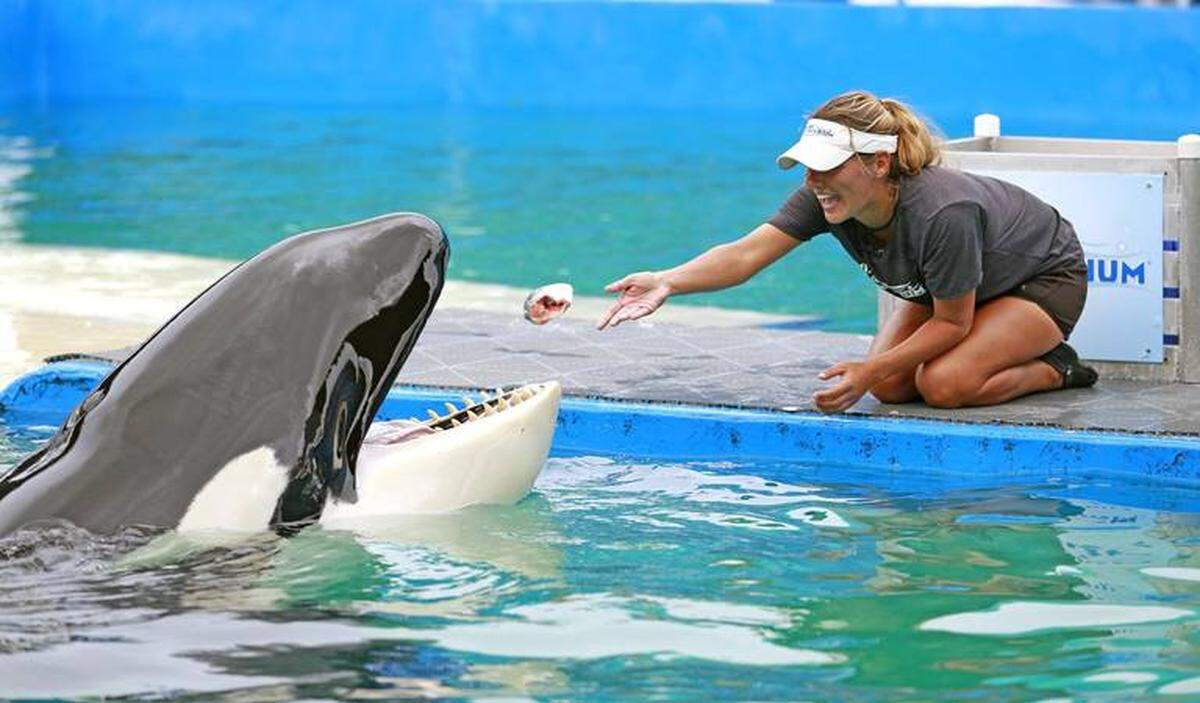
The orca was captured at Whidbey Island’s Penn Cove in Washington over 50 years ago. Noted as the lone survivor of a round-up of over 50 Puget Sound orcas in 1970, she has since been performing at the Miami Seaquarium.
In a 2019 press release announcing Lummi Nation Tribal members Raynell Morris and Ellie Kinley’s intent to sue for the orca’s release, the pair wrote Lummi Nation was never notified nor consented to the orca’s capture from territorial waters. Morris and Kinley lead the Sacred Lands Conservancy — a non-profit committed to the protection of the Salish Sea that has long advocated for the orca’s return.
In 2020, Lummi Nation renamed the orca Sk’aliCh’elh-tenaut, meaning a member of the resident orcas in the Salish Sea, as Morris and Kinley renewed their legal efforts to repatriate the whale. A petition calling for the return of the orca has gained over 22,000 signatures.
“As reported earlier today, the USDA has granted a new exhibitors license to The Dolphin Company, which has bought the Miami Seaquarium, on the condition that Sk’aliCh’elh-tenaut (Tokitae / Lolita) will no longer perform and that the Whale Stadium will be closed to the public. We believe that this is in her best interest, as she will be able to receive care as needed,” Sacred Sea wrote in a statement to McClatchy March 3. “With this new license, The Dolphin Company is now in a position to make decisions for her future. We remain hopeful that The Dolphin Company will work to provide the best possible care for our relation, and will help bring her home in a good way. Hy’shqe for all your support, and please keep sending your love and prayers to our #SalishSeaDaughter.”
Citing recent reports about Sk’aliCh’elh-tenaut’s health, the Sacred Lands Conservancy wrote to the U.S. Department of Agriculture, National Oceanic and Atmospheric Administration and the mayor of Miami-Dade County requesting an independent expert evaluation of orca’s physical and emotional condition, according to earlier McClatchy reporting.
“Sk’aliCh’elh-tenaut, the qwe’lhol’mechen (orca) also known as Tokitae or Lolita, is our relative. Ancestral teachings hold that the Lhaq’temish (Lummi) people and the Southern Resident Orcas are one family, with some members living above the water, and some living below. We care for qwe’lhol’mechen as we care for our own family members. This is our Xa xalh Xechnging (sacred obligation),” the conservancy wrote in a statement to McClatchy last month.
“When we know what her immediate needs are, we can then press for those needs to be fully met. However, she can never be truly healthy and whole in a concrete tank.”
In collaboration with the Whale Sanctuary Project and others, the conservancy has a plan for the orca’s ongoing care in the Salish Sea.
“We are hopeful that our relation will receive any expert urgent care she needs, that her health will soon stabilize, and that we can then move forward with our plan to bring her home,” the conservancy wrote.
Welcome news
For supporters of the 56-year-old orca, who have demanded that she stop performing tricks and be moved to a larger tank or released to a seaside sanctuary in her home waters in Puget Sound, the decision to end Lolita’s career was welcome news.
“It’s a big win for Toki that she doesn’t have to perform anymore,” said Miami-Dade County Commissioner Raquel Regalado. Seaquarium sits in her district, and the current owner — Festival Fun Parks, a subsidiary of Madrid-based Parques Reunidos, also known as Palace Entertainment — pays the county $2.5 million per year to rent county land.
“Finally, this USDA license allows the county to close a chapter with the old operator, which has done a shoddy job and has not been transparent, and move forward with a new operator that has a different bent on how to run a marine park and treat animals,” she said.
Miami-Dade Mayor Daniella Levine Cava said she was “pleased to see The Dolphin Company’s commitment not to exhibit Lolita and to prioritize her well-being.”
“Today marks a new day for the Miami Seaquarium and for Lolita,” she said. “Our priority remains providing the highest standard of care for all the Seaquarium’s marine inhabitants, including the beloved orca.”
In a People for the Ethical Treatment of Animals (PETA) report last month, an unidentified whistleblower said Lolita was “deathly ill” with pneumonia. Seaquarium denied that diagnosis, stating that Lolita was “under the weather” but recovering steadily under 24-hour care, and released a video that showed Lolita interacting with her trainers.
“As you can see, she is just beautiful and we’re really proud to have her here at Miami Seaquarium,” a spokesperson said.
Levine Cava requested an independent examination of Lolita but Seaquarium wouldn’t grant permission, saying it was unnecessary given the expertise of its veterinarians.
“It’s quite frustrating the county has so little authority or oversight of a facility on county property,” Levine Cava said. “We are eager to make a seamless transfer to new owners who are conservation-oriented and not focused on the entertainment side, and a new lease that gives us much more say on infrastructure maintenance and animal welfare as well as access to all inspection, health and safety reports.”
USDA’s September report said the advice of in-house veterinarian Magdalena Rodriguez was often ignored. Rodriguez said Lolita was forced to perform head-first dives with an injured jaw and was too old to keep up her usual repertoire of tricks without risk of further injury. She had developed a retirement plan for the 20-foot long orca.
“We have to regain people’s trust when it comes to Toki’s well-being,” Regalado said. “I’m a native Miamian. My generation grew up going to Seaquarium. That’s not OK anymore. We don’t want to take our kids to see the whale perform.”
A USDA investigation was triggered in December when Catalina, a Pacific white-sided dolphin that lived in the same tank and performed shows with Lolita, died from what staff believes may have been trauma after aggression by Lolita. Coral, a harbor seal, died after “chronic infection.” And a manatee that was in rehabilitation died of emaciation, or being too weak and thin.
Rodriguez said she was fired in June after 24 years at Seaquarium because she had raised concerns about algae-infested water, spoiled food and poor marine mammal management. An atypical string of deaths to five bottlenose dolphins and a baby California sea lion occurred between March 2019 and April 2020 at the aging marine park, and Rodriguez told the Miami Herald the trauma-related deaths may have been a result of inexperienced staff not spotting unusual animal behavior and placing incompatible animals together.
Seaquarium, which opened in 1955, has long been the target of animal activists who call it an “abusement park” and argue that Lolita’s cramped tank has caused physical and psychological trauma. Currently, the Whale Stadium is blocked off with barriers. A sign at the ticket counter tells patrons: “There will be no killer whale show today. The stadium is temporarily closed for maintenance and enhancements of the seating and guest entry side of the facility. We apologize for any inconvenience.”
Moving Lolita to another location would require an application to and review by the National Oceanic and Atmospheric Administration, Levine Cava said.
“That is not within our jurisdiction but we are open to what the experts have to say,” she said. “Many people and organizations worldwide are working on behalf of this wonderful creature, and support the idea of her being free. Is that in her best interest after so many years in captivity? Her health is the No. 1 priority.”
PETA Foundation Vice President and Deputy General Counsel for Animal Law Jared Goodman said Lolita’s struggle is not over.
“For the first time ever, the USDA is taking some action by tacitly acknowledging that Lolita’s tank cannot meet her needs,” he said. “PETA is calling for this to be the first step toward releasing Lolita (and Lii) to a seaside sanctuary, before this long-suffering orca ends up dying in the same cramped tank she’s been confined to for over half a century.”
Seaquarium said in a statement that Lolita is responding well to treatment: “Our dedicated and loving team of caregivers continues to monitor Toki’s condition very closely. She continues to exhibit normal behaviors and activity levels and has maintained a good appetite.”
Eduardo Albor, CEO of The Dolphin Company, said Thursday he wants to see “Miami Seaquarium once again become the family attraction many of us enjoyed in our youth and to make it an educational opportunity for new generations, educating our community about the value of aquatic species and the sustainability of the oceans. I also want to give credit to the real heroes, the people who have dedicated their lives taking care of all the animals in this unique park, including the rescued manatees, sea lions, dolphins and indeed our beloved Lolita.”
The Bellingham Herald contributed to this story.
This story was originally published March 4, 2022 at 8:17 AM with the headline "Shows are over for Seaquarium’s killer whale Lolita, new managers say. What happens now?."