Rally, ‘teach-in’ planned as Whatcom residents react to the Russian invasion of Ukraine
As the Russian invasion of Ukraine enters its second week, Bellingham-area residents are standing in solidarity with people of Slavic descent by demonstrating for peace, and scholars are helping make sense of the war.
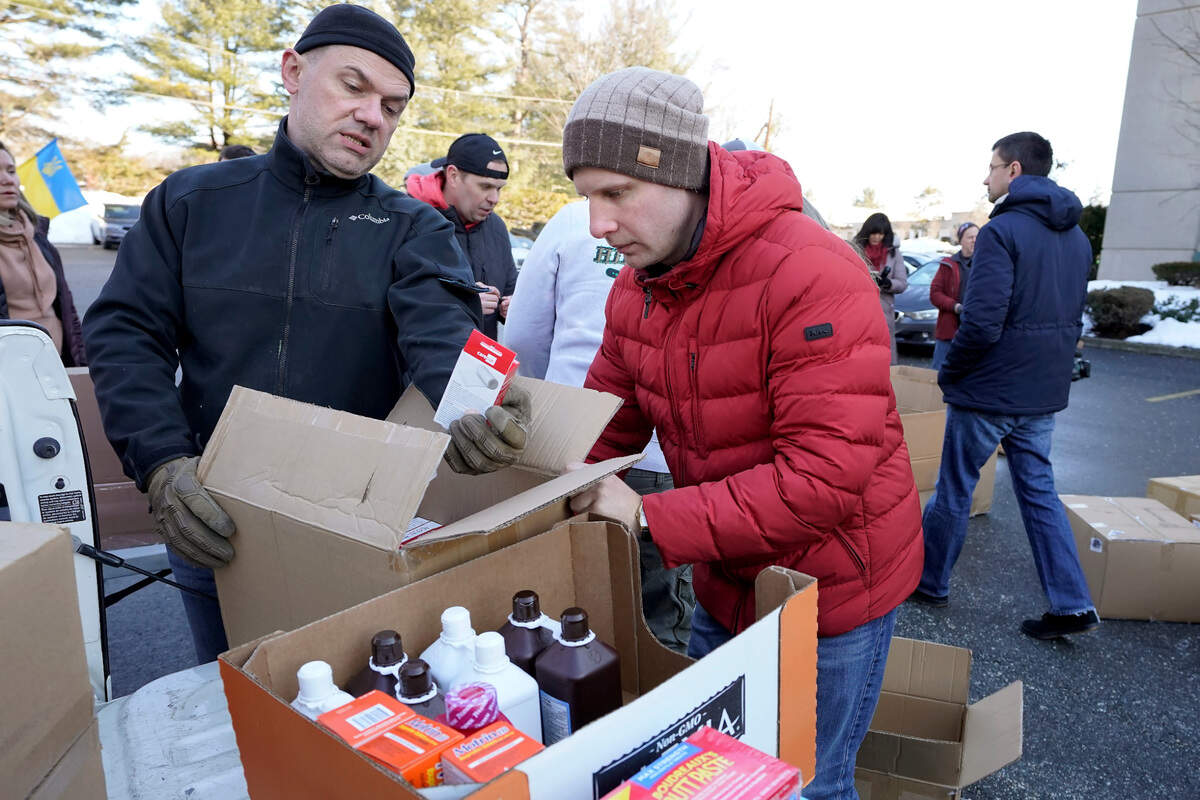
Ukrainian immigrant Nazar Gamdysey of Blaine told The Bellingham Herald that the invasion that began Feb. 24 is particularly upsetting for Whatcom County residents of mixed Slavic heritage and especially for the members of his Ukrainian Evangelical Church.
“We have Ukrainians, Russians, and Belarussians. For us, it really hurts to see that our brothers are fighting,” Gamdysey said.
“It tears us apart to see this happening,” he said.
Gamdysey came to the U.S. 31 years ago with his parents at age 10, fleeing religious persecution at the hands of Soviet police.
His friends and relatives in the former Soviet states are safe for now, he said.
But the strain of conflict is weighing on the members of the Ukrainian congregation where his father is pastor, and is equally difficult for members of the other five Slavic churches in Whatcom County.
“It affects everyone in our church. We have a Russian wife and a Ukrainian husband. It would be like if you had two (U.S.) states fighting,” Gamdysey said.
According to U.S. Census data from 2019, there were 2,000 people over the age of 5 who spoke Russian, Polish or other Slavic languages at home in Whatcom County, including 511 people born in Ukraine and 348 from Russia.
There are likely several thousand Slavic immigrants countywide, he said.
“The biggest support we can have right now is prayer,” Gamdysey said. That’s what we’re doing right now, praying for peace.”
Sister city in Russia
At the City Council meeting Monday, Feb. 28, Mayor Seth Fleetwood expressed his support for the people of Ukraine and said his administration has no intention of severing ties with Nakhodka, Russia, one of Bellingham’s seven sister cities.
“This idea of sister cities that was created by President Eisenhower after World War II was very much based on the idea that if we made friends with people in foreign countries we would be less inclined to engage in the sorts of things that are happening in Russia right now,” Fleetwood said.
Nakhodka is a port city of about 160,000 people on the Sea of Japan just northeast of North Korea.
“The people of our sister city in Russia are our friends. Our beef of course is with the dictator in Russia,” he said.
Demonstration planned
Members of the Whatcom Peace and Justice Center are planning a ”No War in Ukraine!” demonstration as part of a worldwide series of anti-war events at noon Sunday, March 6, at the corner of Prospect and West Holly streets in downtown Bellingham.
“It’s a way for us to be connected and united,” said Aline Prata of the Whatcom Peace and Justice Center.
“It’s important for us to come together and ask for peace,” Prata told The Herald.
Co-sponsors of the event are Veterans for Peace, Community 2 Community Development and the Whatcom DSA.
‘Teach-in’ at WWU
To help Whatcom County residents understand the roots of the conflict and its implications, Western Washington University is hosting a “teach-in” from 3-4:30 p.m. Friday, March 4, at 138 Miller Hall and via the Zoom online meeting app.
One of the scheduled speakers is WWU associate professor Susan Costanzo, who studies social and cultural change in post-Stalinist Russia.
“I don’t know how much Russia feels threatened by Ukraine,” Costanzo told The Herald. “It’s really about being threatened by NATO. Russia has long worried about having a good buffer between themselves and Western Europe.”
Costanzo said Ukraine has resisted Russian influence for decades, dating to World War I and most recently after ousting pro-Russian president Viktor Yanukovych, who opposed closer ties with the West.
“So it’s no big surprise that there are Ukrainians resisting Russia again. It’s gotten to be not exactly what Russia expected,” she said.
In many ways, the current conflict is reminiscent of Nazi Germany’s 1938 invasion of Czechoslovakia, where many ethnic Germans lived — only with nuclear overtones.
“We’re at that moment where we’re going to have to decide, ‘What is the West going to do?’ ” she said.
How to help
Gamdysey said that checks to help the people of Ukraine can be sent to the Ukrainian Evangelical Church, P.O. Box 2096, Blaine, WA, 98230 with the words “Ukraine relief” in the subject line.
Donations can also be made through the Ukrainian Association of Washington State page on Facebook or at the organization’s website.
This story was originally published March 3, 2022 at 12:31 PM.