Community concern sparks this new task force at Bellingham Public Schools
Bellingham Public Schools is establishing a Sustainability Task Force to address increasing concern about climate change from students, staff and the community.
The task force’s call for member applications last week garnered a stunning amount of interest from the community, said Mark Peterson, the district’s director of facilities and sustainability. (Bellingham is the state’s only school district with a director-level sustainability position, he said.)
“Within minutes of the announcement going out, I had emails and texts from people interested in being part of the task force,” Peterson said.
The team of more than 20 people will shape the district’s long-term plans regarding waste, water and energy usage, as well as help determine educational priorities regarding sustainability.
“(Bellingham Public Schools) has been doing sustainability like many of us as individuals into sustainability do, but we haven’t really been measuring,” Peterson said. “We really haven’t been setting measurable goals and targets we want to achieve.”
Bellingham Public Schools is accepting applications until 5 p.m. Monday, March 7, for community members interested in serving on the task force, which will include district leaders, teachers, principals, students and a local contractor. The team will meet about six times between late March and early June, when it will present final sustainability recommendations to the superintendent and iron out timeline details for the next year’s Sustainability Task Force.
Growing eco-anxiety among youth
The district has previously established task forces to handle issues such as sexual health education and dual-language program planning. But the sustainability task force is unique: Its creation was largely motivated by a surging number of students expressing eco-anxiety, or intense fear of damage to the environment, Peterson said.
This observation was confirmed by Bellingham-based therapist Brianna Longwell.
“We have kids growing up with trauma right now,” she said. “Their trauma includes feeling very powerless with what’s going on in this world.”
The already-large body of research warning of the devastating impacts of climate change continues to grow, with a major United Nations report released Monday painting a grim picture of the future: Even if the planet only warms a couple of tenths of a degree, generations alive in 2100 will experience four times more climate extremes than we do today.
Bellingham Public Schools itself has been impacted by the type of extreme weather expected to become more frequent and severe as climate change worsens — wildfire smoke has pushed recess indoors, schools have been used as emergency shelters during heat waves and flooding has forced the district to add alternative bus routes to get children to school.
The kids notice these impacts, and they are demanding a voice, Peterson said.
“We are hearing students that want to go into this work,” he said. “They want to know how to engage as a student now and have a role in helping the district and also helping themselves enter college or a career path in the future.”
Bellingham could be a leader
More school districts across Washington will likely begin to eye sustainability measures as electrification and energy efficiency building standards are mandated at the state level, Peterson said. (Many experts see electrification as crucial in limiting climate change, since electricity can be generated with renewable energy sources, such as wind, solar and hydropower.)
Peterson hopes Bellingham can lead as an early adopter of sustainability practices, providing replicable programs for other districts.
“We do have the opportunity to potentially embark on certain initiatives that maybe other districts can’t,” he said. “We have an administration that is open to ideas and listens to our community. It’s clear we live in a community that takes climate change and sustainability very seriously.”
But Bellingham Public Schools still faces hurdles in its efforts to address climate change. Limited staff and financial resources puts a ceiling on what the district can accomplish, Peterson said.
Plus, school districts don’t receive the same tax benefits and incentives on rooftop solar installations as private residents do, he said, which means continued use of planet-warming fossil fuels remains the cheapest energy source for the district right now.
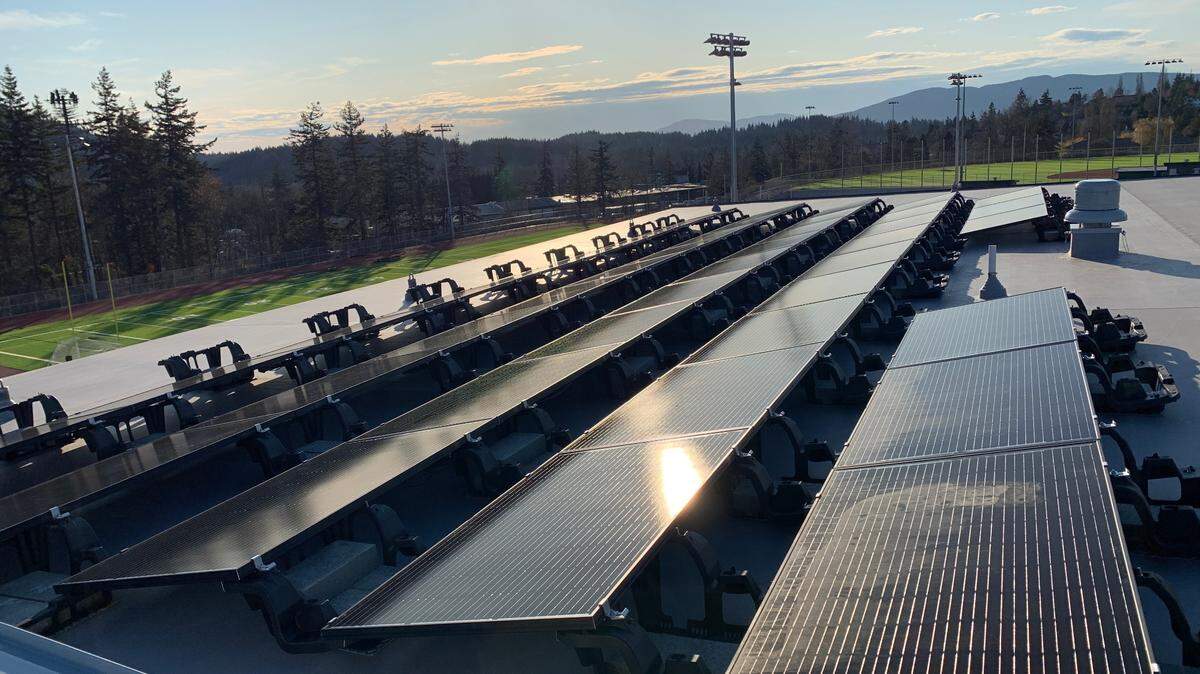
However, the district has found other ways to make solar financially feasible: A 100-kilowatt system was installed on Sehome High School in 2020 at virtually no cost to the district, with the help of donations from local construction, solar and contracting companies.
“Part of our values as a community is to support a transition to cleaner energy and to move away from fossil fuels,” said Corey Ayers, the district’s capital projects manager, in a statement at the time. “These panels showcase that we are doing it. It’s powerful.”