This Whatcom activist will help the state determine what a green, just future looks like
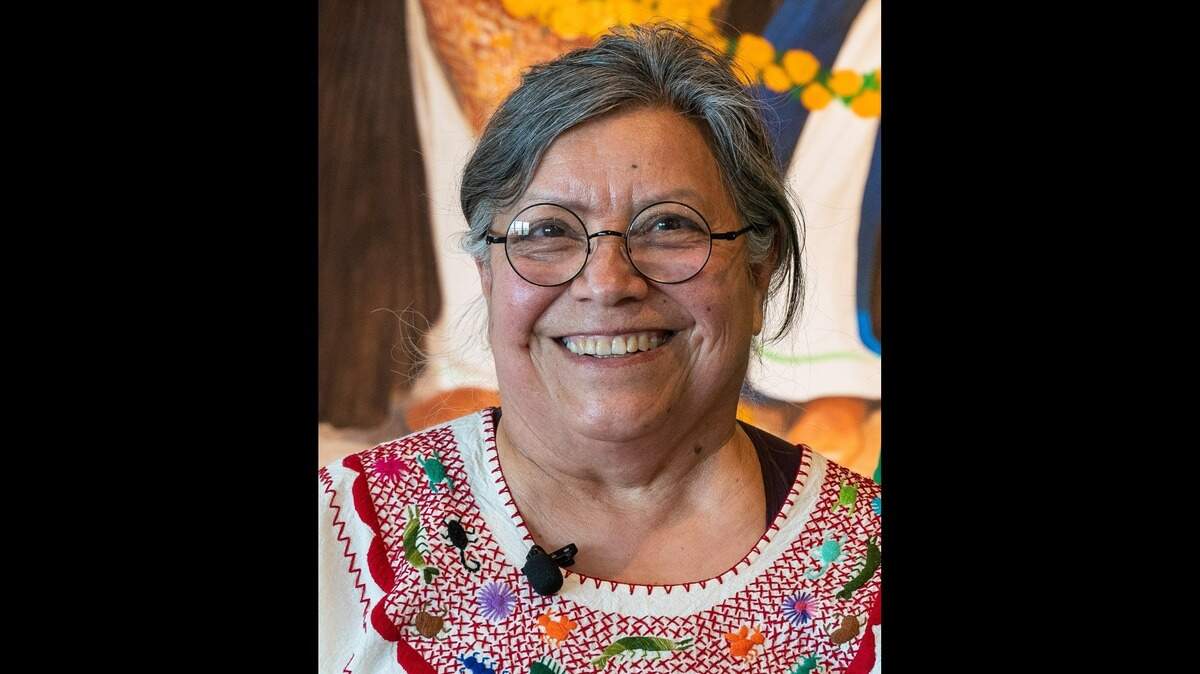
Whatcom activist Rosalinda Guillen will help Washington leaders determine what a green, just future looks like in her new role on the state’s Environmental Justice Council.
“Environmental justice for me is the bottom line, the base of how we are going to take care of other injustices,” said Guillen, who grew up as a farmworker in Skagit County’s La Conner.
A prominent advocate for worker and immigrant rights, Guillen was the only community representative from Whatcom appointed by Gov. Jay Inslee in January to serve on the council for a four-year term. The council — established by an environmental justice law passed last year — is tasked with guiding state leaders on how to incorporate environmental justice in their work, identify overburdened communities and track the state’s progress toward health equity and environmental justice.
The council will also play a role in determining how the state spends revenue from its cap-and-invest program, which will go into effect in 2023 and require companies to pay for the right to pollute the atmosphere with planet-warming greenhouse gases over a certain limit. The program is projected to take in $500 million in revenue each year, according to the Department of Ecology.
The other 13 members appointed by Gov. Inslee to the Environmental Justice Council include four community representatives in addition to Guillen, a youth representative, three tribal representatives, two environmental justice experts, a Seattle-based government relations leader for The Nature Conservancy, a construction industry representative and a representative of workers in the building and construction trades.
The council was initially required to convene its first meeting by Jan. 1, 2022, but has delayed it until two vacancies are filled by the governor’s office. The full council is expected to meet approximately six times each year, according to the Department of Health.
What is environmental justice?
Guillen says her first priority on the council is to understand the perspectives and goals of other members. Environmental justice is a multi-faceted concept that can include the right to a living-wage job, affordable housing and clean air and water. It can even be interpreted as the right for other species to use the planet’s resources, Guillen explained.
The U.S. Environmental Protection Agency says on its website that environmental justice will be achieved when everyone has the same protections from environmental and health hazards and equal access to the decision-making process.
Guillen’s perspective on environmental justice is shaped by her community’s physical connection with the land and its ability to provide us with sustenance.
“As a farmworker, when you look at movements going all the way back, we have always been environmental justice proponents because we have been on the ground producing food,” said Guillen, who founded the Bellingham-based farmworker and immigrant advocacy organization Community to Community. “We have seen and felt the changes to how food is being produced.”
Her goals include increasing community engagement with decision-makers through in-person, local events, as well as fighting the narrative that protecting the environment must come at the expense of a thriving economy.
“That is the biggest challenge: to convince people that new work, new jobs can be created in cleaning up the planet,” she said. “That is totally possible if people have the willpower.”
On the defensive
One of Guillen’s concerns is that a law celebrated by many state leaders and climate advocates could backfire and worsen the environment in overburdened communities.
“Those of us that are poor, those of us that are in areas that are needed to increase profit or save money, we are always the ones that pay,” she said.
The Climate Commitment Act establishes a “cap-and-invest” program, which is a market-based mechanism for reducing planet-warming emissions. Put simply, the state will establish a limit on the amount of greenhouse gases that big industry polluters can emit. The limit will decrease over the years, and if companies want to exceed that limit, they must purchase permits from the state. Some pollution can be “offset” if a company helps fund projects, such as regenerative agriculture or tree planting, which suck carbon emissions out of the air.
The revenue earned by the state from selling pollution permits is intended to be invested back into projects that protect communities from climate change impacts, expand clean transportation and address health inequities.
Many environmental justice advocates have long been wary of this type of program, which puts power into the hands of corporations to largely determine how and where they reduce emissions.
While Washington’s cap-and-invest program contains multiple provisions intended to foster environmental justice — such as dedicating a certain amount of revenue to projects in vulnerable communities and requiring regular reviews — Guillen is skeptical that a method so entwined with corporate profit and power can be just.
“The wealth of the biggest corporations is obscene,” she said. “They set aside millions of dollars for lawsuits, yet their projects go on. Things get built over pristine soil that can produce food or pristine trees that produce oxygen.”
Guillen describes the cap-and-invest program as a “very dangerous step” and said that the governor’s decision to support it is “one of the biggest mistakes he has ever made.”
Despite this position, Guillen is hopeful that the Environmental Justice Council can help prevent her worst fears regarding the state’s cap-and-invest program.
How to stay hopeful
Guillen is still waiting to see if state leaders will truly heed the council’s recommendations or if competition between council members’ differing interests will impede their work.
Fighting for environmental justice can be fatiguing, Guillen said, but she truly believes a better future is possible. Hope is essential to the work she does.
“You go back home to your people. That’s what I do,” Guillen said. “Gathering with farmworkers, speaking to them, sharing a meal with them. Listening to our music together. Being with my community keeps me going.”
Injustices against her people also fan the flames of her efforts, Guillen said.
She remembers Honesto Silva Ibarra, a migrant farmworker who died in 2017 after working in hot, smoky conditions at Sumas’ Sarbanand Farms.
Deaths like Ibarra’s should not happen, Guillen said: “If we don’t have clean air for people to work in and bring food to our table, we are doomed.”
This story was originally published February 28, 2022 at 5:00 AM.