Here’s why WWU says it decided to drop ‘Huxley’ name from College of the Environment
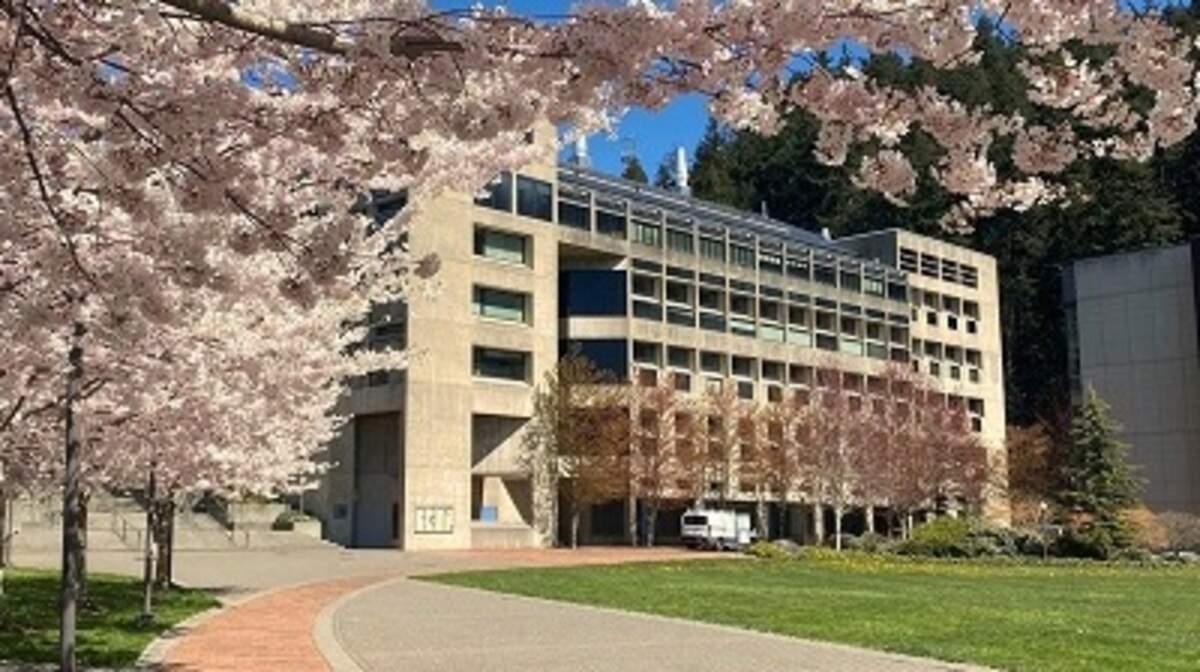
The Western Washington University Board of Trustees voted Thursday, Dec. 9, to remove the “Huxley” name from what will now be known as the College of the Environment, the school announced in a letter to the community Friday.
The vote followed a recommendation to remove the name submitted by the Legacy Review Task Force in June, after the task force found Thomas Henry Huxley’s “views about natural racial and gender inequalities, the role of these hierarchical views in the application of Darwin’s theory of evolution to humans, and the development of scientific racism more generally” conflicted with the university’s mission and commitment to inclusion.
“The College of the Environment has been an important part of Western’s excellence and history for more than 50 years, but the Huxley name has not been the root of that excellence,” WWU President Sabah Randhawa and Board of Trustees Chair John M. Meyer wrote in the Dec. 10 letter. “That has been due to the leadership of faculty seeking to address critical environmental issues and bridge the gap between curriculum and real-world impact; passionate students eager to be the difference they want to see in the world; and alumni who are making that difference in every sector of society. It has also been due to a spirit of innovation and visionary leadership.
“If anyone can define what inclusive, impactful environmental education should look like in the 21st century, and lead inquiry into important societal issues, such as climate change and environmental management, it is the faculty, staff, students, and alumni of the college.”
Huxley was an English biologist in the 1800s, according to britannica.com, and was known as a vigorous supporter of Charles Darwin’s evolutionary naturalism.
A Heritage Resources report on the origin and naming of Huxley College said that the College of the Environment was named after Huxley when the school opened in 1969 because of certain virtues he represented, according to the task force.
But the Board of Trustee’s Ad Hoc Legacy Review Committee’s Statement of Fact reported that Huxley’s name was attached to the College of the Environment informally by a small group of administrators and faculty during planning, and it just stuck without approval by the Board of Trustees.
Western first began looking into changing the name of the College of the Environment after a June 2020 letter submitted by leaders of Western’s Black Student Organizations called for the removal of Huxley’s name and the renaming of other campus buildings to honor important figures in Black history, according to the task force’s report.
The task force reported that it invited input from scholars from beyond the WWU community with expertise on Huxley and the Victorian era in which he lived as it investigated whether the name should be changed, and it was through that his views on natural racial and gender inequalities did not meet the school’s standards.
Though the task force said some have argued that Huxley’s views expressed in the essay were “uncommonly progressive in his attitudes toward Black people,” those claims did not stand up to scrutiny of the historical context.
The task force was unanimous in recommending removal of the Huxley name, adding that the lack of any history between Huxley and WWU “was a compelling factor in recommending de-naming of the College,” and that it should warrant “a higher standard that should be applied to the alignment of the honoree’s beliefs, behavior, and character with the values of the institution.”
The task force also recommended changing the names on Haggard Hall, Mathes Hall and Viking Union, but the Board of Trustees voted Thursday to retain those names, according to the letter.
“We want to note that this process has not just been about evaluating building or college names, nor is it an isolated undertaking,” Randhawa’s and Meyer’s letter stated. “It is part of a broader effort to create and sustain an institutional environment that honestly acknowledges Western’s past and provides a springboard for greater inclusivity, equity, and success for all going forward.”