What toll did recent flooding take on Whatcom’s salmon?
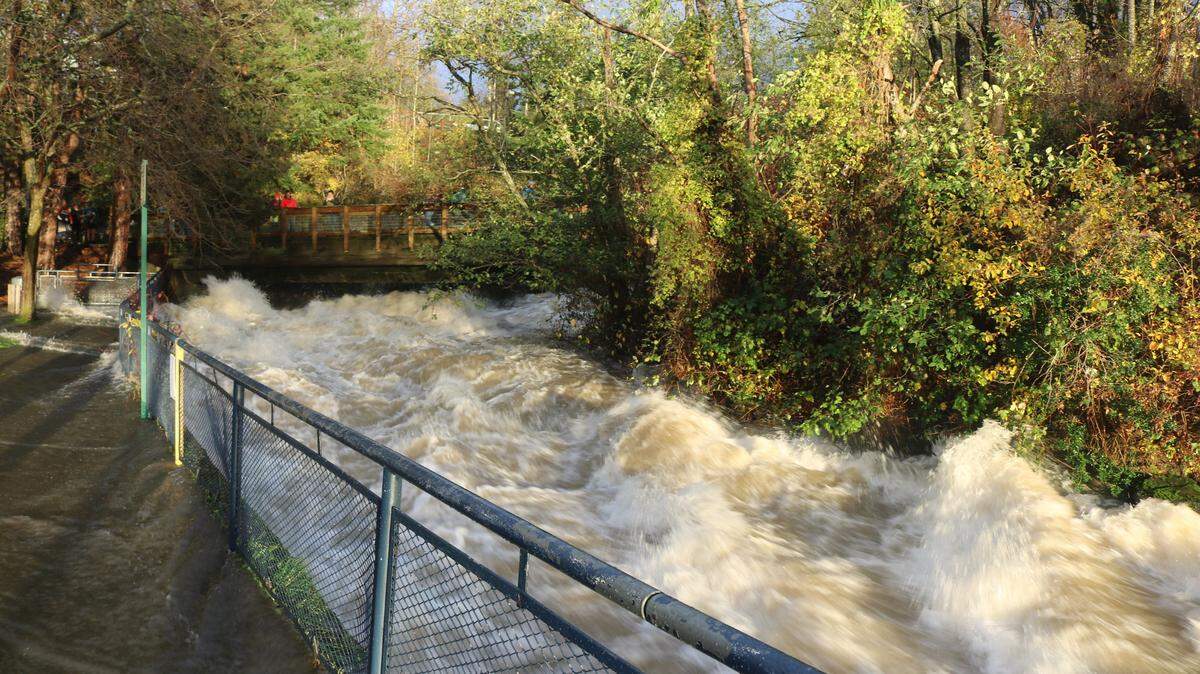
Salmon may live underwater, but they are not immune to damage from the flooding that has inundated Whatcom County in recent days, according to local salmon experts and advocates.
“Salmon are adapted to high flows, and it’s actually a pretty important part of their life cycle,” said James Helfield, an associate professor at Western Washington University who studies Pacific salmon and trout habitat. “That said, this was a pretty big storm. We don’t usually get this much flooding.”
The Nooksack Indian Tribe, which conducts extensive salmon habitat restoration work, is also worried about the impacts of flooding on the fish.
The scope of the flood has yet to be measured exactly, but provisional data shows that it was one of the top three on record for the North and Middle Forks and the Nooksack River at Ferndale, said Treva Coe, habitat program manager for the Nooksack Indian Tribe’s Natural and Cultural Resources Department.
That’s not great news for salmon: Years with high annual peak flows are associated with low survival, Coe told The Bellingham Herald in an email.
The flood follows a taxing few months for Whatcom’s salmon: A particularly hot summer boded poorly for the fish, whose immune systems are stressed by high temperatures. In October, the Lummi Nation reported that over the course of a month, thousands of Chinook salmon died due to low flows and high temperatures in the Nooksack River’s South Fork.
As the climate of the Pacific Northwest changes, fueled by humans burning fossil fuels, the region is seeing more short, intense storms rather than the gentle, constant rain more common in past decades, Helfield said. Flooding is also intensified by human development in watersheds, which interferes with how water naturally moves across the land.
“We have changed the watershed drastically, and the climate is changing,” Helfield said. “What we consider a 100-year flood based on past data, we really have to start adjusting those probabilities.”
How many salmon died?
Don’t expect immediate answers about the flood’s impact on salmon populations — the consequences will become apparent over the next three years, as fish born this season return as adults to spawn.
“The proof is in the pudding,” Helfield said. “When the fish start coming back, we will get a sense of how many did or didn’t survive.”
One of the biggest concerns is that flooding will erode the riverbed and damage the nests, or redds, that female salmon dig for their eggs. If the eggs are dislodged from the redd, they will die, Helfield said.
“That could be catastrophic,” Helfield said.
Large floods can also displace juvenile fish that are unable to access slow water, Coe said.
Fiercely turbulent water churns up sediment, or bits of stone and sand, which can damage fish’s gills, interfere with their ability to navigate and suffocate them. (Some sediment in the water is beneficial to salmon, Helfield said, since it has scent that the fish use to find their way around.)
Fish can get stranded on the floodplain, depending how water recedes, and emergency responses to flooding can cause longterm habitat damage, said Coe with the Nooksack Indian Tribe.
Intense flooding can also lower the quality of salmon habitat by decreasing its complexity. Salmon thrive in streams with structures and shallow pools that create refuge for the fish, Helfield said.
“With big floods, you can get a lot less diverse habitat,” Helfield said. “The natural accumulations of woody debris get washed out.”
While some flooding is healthy for salmon habitat, big floods cause erosion and widen streams. When water levels return to normal, the stream is shallower and moves slower. More fine sediment drops out of slower water, filling in the shallow pools salmon seek shelter in and block oxygen from getting down into the gravel where salmon eggs are buried, Helfield said.
“Coarser gravel is better for spawning because it allows for oxygen,” Helfield said.
Damage to restoration projects
There’s a chance that the recent floods damaged salmon habitat restoration projects, such as engineered log jams, which are built to mimic natural log jams and provide structured habitat, Helfield said. Luckily, these log jams are designed to withstand floods, even intense ones.
The Nooksack Salmon Enhancement Association reported in its Nov. 16 newsletter that it is still assessing the flood’s effects on recent habitat restoration projects, but a few landowners had already called reporting “no real damage.” The association said it had received word that there are still fish in Goodwin Creek, where it has completed several projects in recent years.
The Nooksack Indian Tribe is also checking on its projects.
“After every flood, we are eager to get out and survey our restoration projects, just as local public works staff survey bridges and roadways for flood damage,” said Coe, the Tribe’s habitat program manager. “We have seen some damage to individual log jams as a result of past floods, although the vast majority of log jams we have constructed have remained stable and largely intact.”
Some of the Nooksack Indian Tribe’s restoration efforts focus on building resilience to floods, such as reconnecting floodplains and restoring side channels where salmon eggs are less likely to get washed away, Coe said.
The Lummi Nation had not been able to check on its habitat restoration projects due to road closures as of Tuesday, Nov. 16, said Watershed Restoration Program Manager Kelley Turner.
Development in the watershed
Buildings, farms and roads along the Nooksack River magnify the negative impacts of flooding on salmon (and ourselves), Helfield said.
A watershed is an area in which all the water that drains off it goes into the same body of water — the Nooksack Watershed is the area that drains to the Nooksack River.
When we develop in the watershed, we interfere with natural floodplain functions, Helfield said. Loss of floodplain function to development is directly related to declining salmon runs, according to NOAA.
Picture this: In a forest, rain is intercepted by tree canopy, which slows the flow of water and makes it easier for the ground to absorb the moisture. Much of the water that makes it to the ground is quickly taken up by the trees and evaporated back into the atmosphere. Some water percolates down into the soil, trickling through groundwater pathways into the ocean.
But if you cut down the trees and pave the area, all that rain falls directly and immediately into rivers and streams, which Helfield said has a “drastic effect on flooding.”
Part of the solution? Thoughtful planning for how we further expand development in the region’s watersheds, Helfield said.
“We can support low-impact development,” he said. “We can think about how we build our cities and roads to think about how we drain water.”