If Whatcom County did everything it could to fight climate change, what would happen?
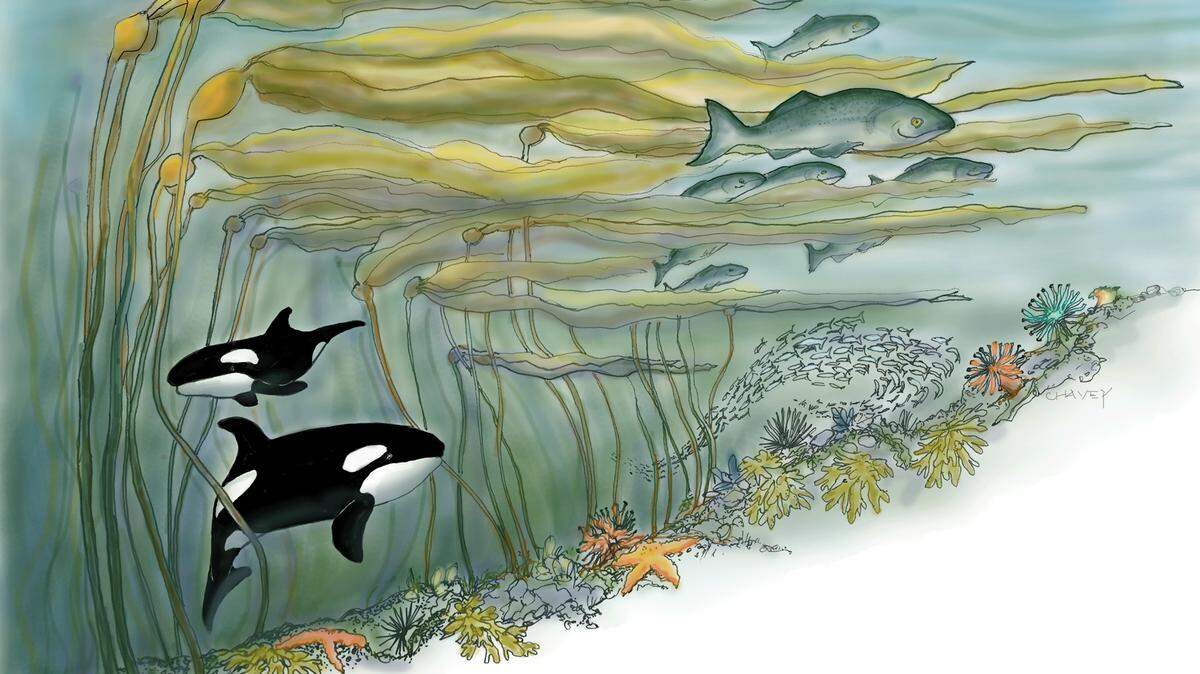
Whatcom County could be a place where orcas have recovered from the brink of extinction, shade-offering trees are abundant even within city limits and farms and forests are managed to benefit both humans and the environment. Buildings run on clean energy, and children learn early on how to protect the earth.
These are just a few of the realities in the world imagined by a new art-based initiative, Climate-Resilient NW Washington. The project was launched on Tuesday, Oct. 19, by local environmental nonprofit RE Sources.
The initiative seeks to educate the community about local climate impacts and inspire investments in climate resilience. The project centers around a “story map,” which combines pictures, videos, maps and illustrations to tell the story of local climate success stories and imagine what the region would look like if bold climate investments are made.
“The things we love about the Pacific Northwest are the things that will help us weather the impacts of climate change,” said Ander Russell, senior environmental advocate at RE Sources. “Protecting our old-growth forests, restoring our rivers to their natural state, those kinds of things.”
Resilience is defined as the “capacity of a community, business, or natural environment to prevent, withstand, respond to, and recover from a disruption,” according to the U.S. Climate Resilience Toolkit website.
“I hope folks come away from this project with a sense of grounded hopefulness,” Russell said. “Knowing that there is a serious issue that we are facing, and what we have here is an opportunity. An opportunity to decide how to live, what we want our future to look like.”
“Do we want to be hopping from crisis to crisis?” they continued. “Or do we want to act in holistic, proactive ways?”
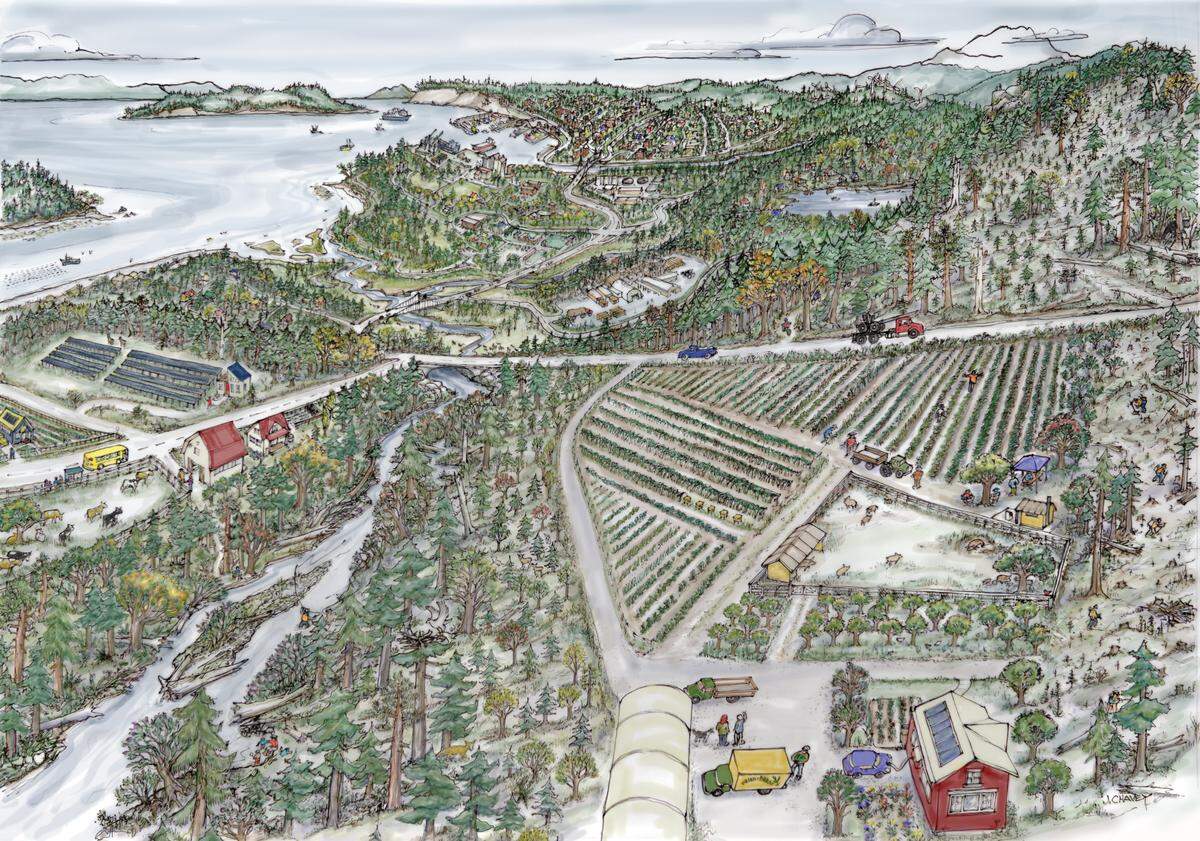
Highlighted projects include Nooksack River salmon habitat restoration, estuary conservation efforts near Drayton Harbor, farmworker-led efforts to grow food in restorative and just ways, a fish-friendly farm in Everson and climate-adaptive forestry on Galbraith Mountain. By putting a spotlight on these projects, the initiative is sending the message that a climate-resilient way of life is possible, Russell said, adding “We just need more projects like these.”
“It’s coming from a place of abundance instead of leading with gloom and doom,” they said.
Russell spent months researching local climate impacts and action for this project, and was surprised to learn that while governments are taking some action to reduce planet-warming greenhouse gas emissions, there was not as much being done to adapt to the impacts of climate change that are already here and will likely get more severe.
The initiative details the climate change impacts that have already arrived in the region, such as drought, increased temperatures and sea-level rise. It also offers solutions, from bold policies to actions that any community member can take as an individual.
Whatcom County is in the final phases of creating a Climate Action Plan, and Russell urges Whatcom residents to encourage County Council members to approve and implement the nearly 200-page plan.
“We can’t have another plan that sits on a shelf and doesn’t get implemented,” Russell said. “We need to fund a County Office of Climate Action that is situated to work across departments.”