Should we be worried about the salmon struggling to swim upstream at Whatcom Creek?
Whenever Sunnyland resident Brendan Meade jogs through Maritime Heritage Park, he keeps an eye on Whatcom Creek, which meanders from Lake Whatcom to Bellingham Bay.
The sight he was greeted with last weekend was one that he found simultaneously hopeful and disturbing.
Dozens of adult Chinook salmon were attempting to make their way upstream, as they do each fall to spawn in the freshwater.
That relieved Meade, he said— Puget Sound Chinook are a threatened species, according to NOAA, and it was good to see them returning to give birth to another generation.
The flow in the creek, however, looked low to Meade. In some locations, it couldn’t have been more than a centimeter deep, he estimated.
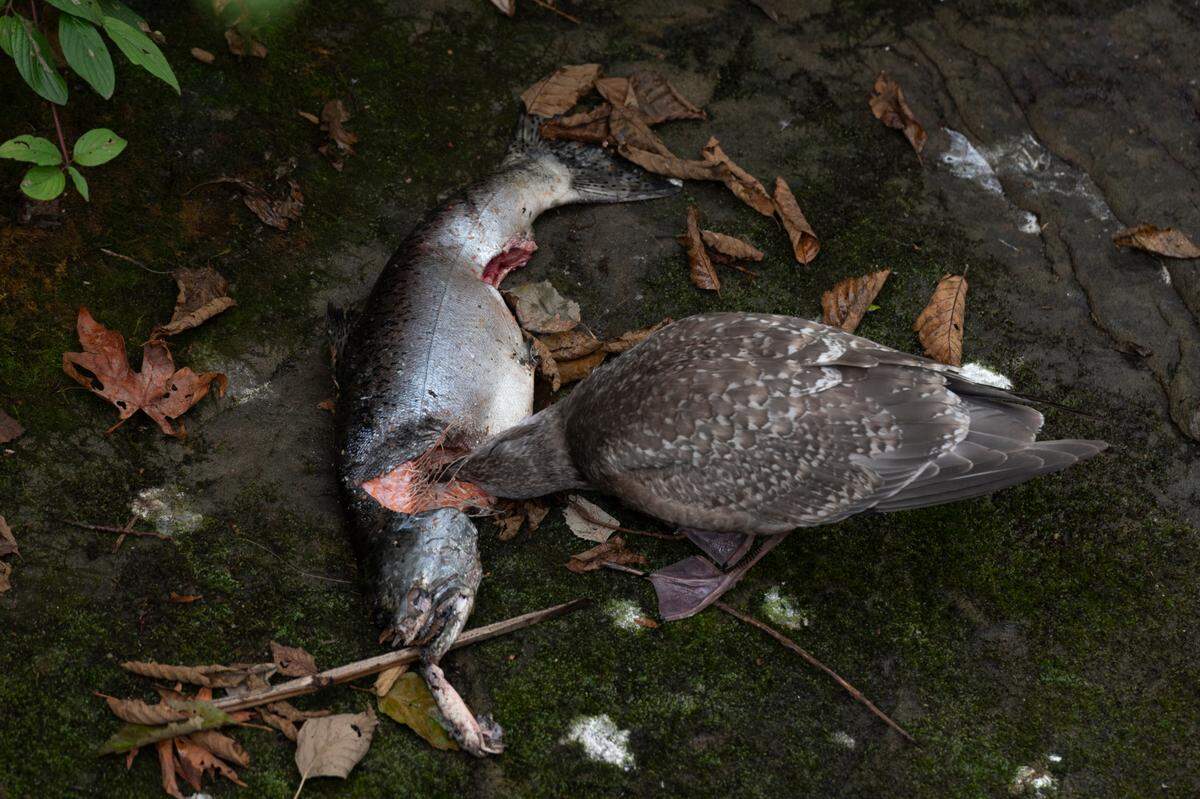
As the salmon flung their muscular, gray bodies upstream, many landed on these almost-dry areas. The fish contorted desperately to get back underwater, while the bodies of unsuccessful ones piled up along the edges of the creek, their eyes glaring lifelessly upward.
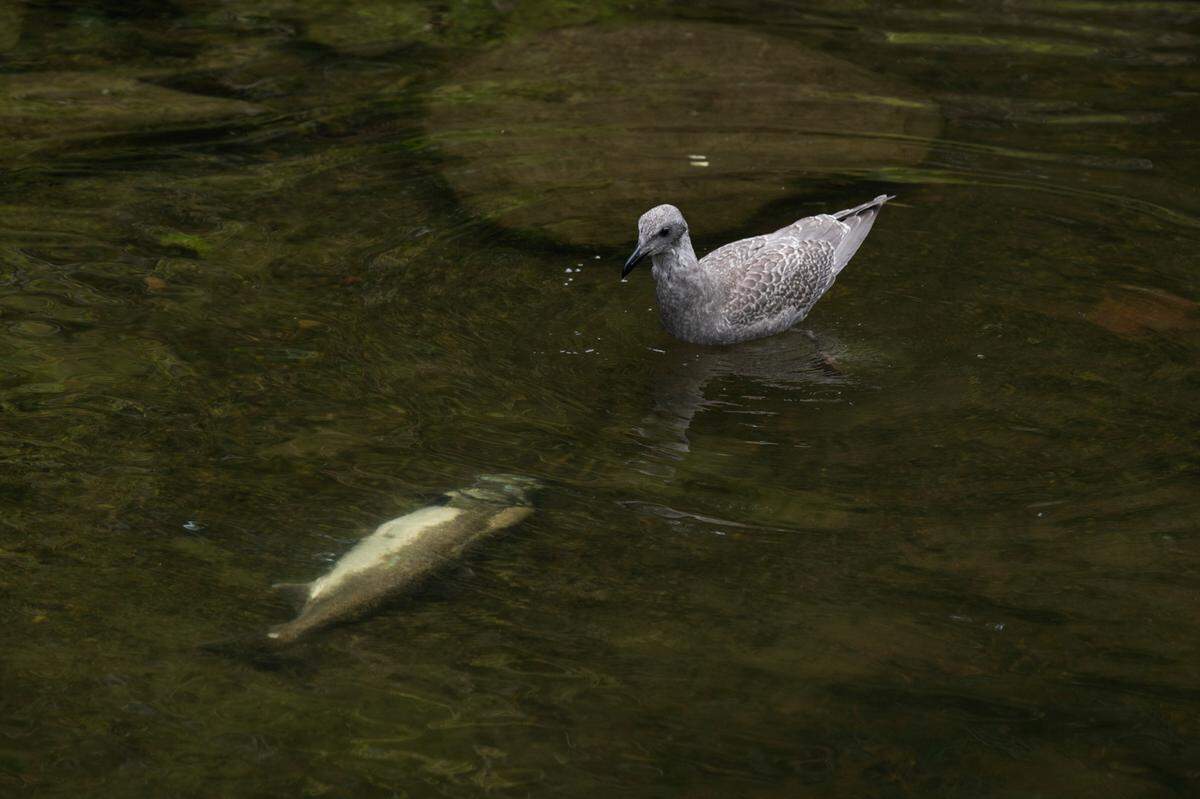
Seagulls picked contentedly at these graveyards, and harbor seals lurked in the waters closer to the bay, prowling for an easy meal, Meade said.
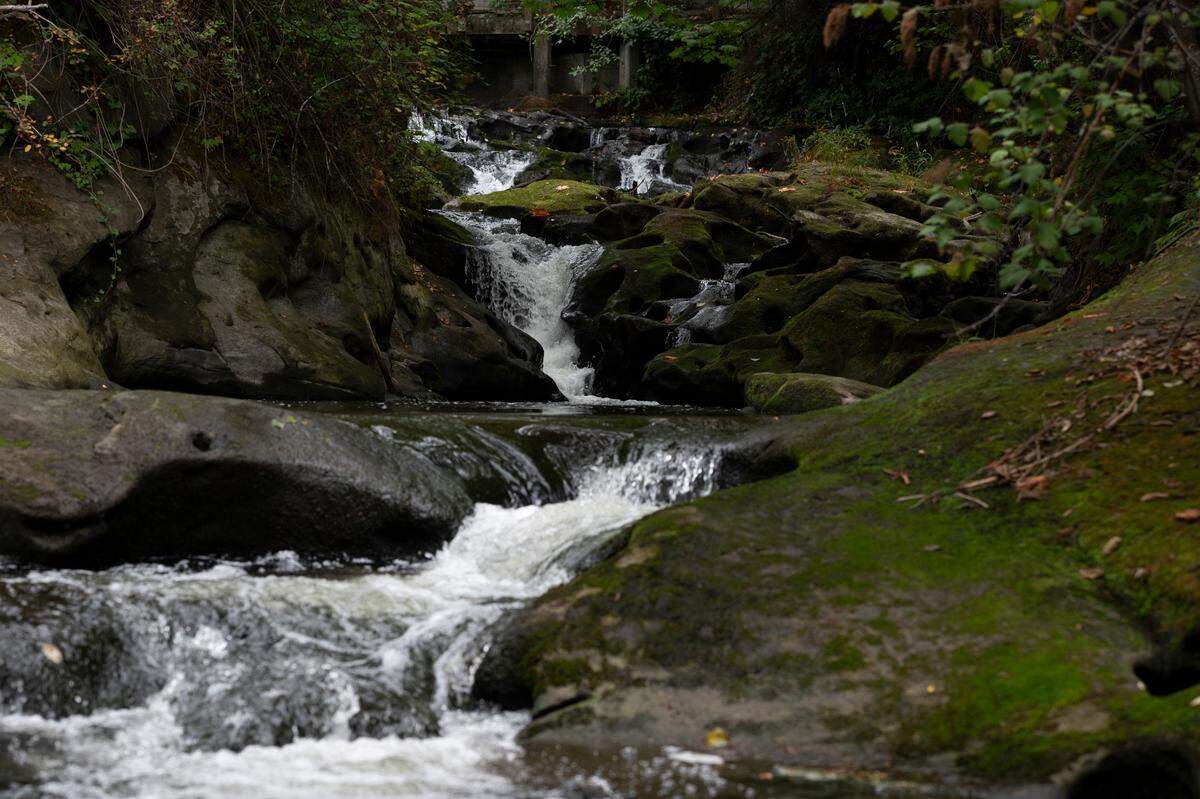
Low creek water levels are always a concern when it comes to salmon, but Whatcom Creek is a unique case, said Brittany Palm-Flawd, head of Bellingham Technical College’s Fisheries and Aquaculture Sciences Department. Its water levels are regulated by the City of Bellingham through a dam near Lake Whatcom, she said, and the city is required to maintain a “natural flow level” of water in the creek at all times.
“But no one wants the creek to be at its minimum level,” Palm-Flawd wrote in an email to The Bellingham Herald. “We want to see more water.”
The Chinook salmon returning to spawn in Whatcom Creek were raised in the nearby fish hatchery, which is run by students in Palm-Flawd’s program. The goal of the hatchery is to help bolster the salmon supply for local fisheries and provide critical food sources for the endangered Southern Resident killer whale, Palm-Flawd said.
“A silver lining to the lower water levels is that the returning hatchery fish will stay closer to the hatchery, below the falls, and be more accessible for fishers,” she said.
The city further explained why current water levels at Whatcom Creek are not too far out of the ordinary.
“While we are in an especially dry year, we commonly see low creek flow and dry creek beds in lowland streams in late summer,” wrote Amy Cloud, Bellingham Public Works communications and outreach specialist, in an email. “Fall rains often result in continual flow returning in mid to late September.”
The Herald analyzed stream flow data collected by the city at Whatcom Creek near the bay between 2012 and 2021. It revealed that last month saw the lowest average daily stream flow rate of any August for the past nine years. Average stream discharge levels were more than six times higher in August 2012.
However, this year’s low levels aren’t completely unprecedented — flow rates for August 2018 were just a touch higher.
This is the second year that hatchery-raised Chinook are returning to Whatcom Creek to spawn, since the program began releasing the species during the 2017-2018 season. (The hatchery has been raising and releasing chum salmon since 1979.)
Other threats to Whatcom Creek salmon
Palm-Flawd is very concerned, however, about two other threats to the salmon in Whatcom Creek: Poor water quality and predators from an overpopulation of seals and sea lions.
Human-caused climate change is increasing ocean water temperatures, according to Western Washington University’s 2021 State of the Salish Sea report.
This stresses salmon’s immune systems and prevents them from fighting disease as effectively, Palm-Flawd said.
In addition, warmer water is conducive to harmful algae blooms, which can kill the fish. The hatchery is currently fundraising for systems that will cool and filter Whatcom Creek water that gets diverted into the egg incubation center, Palm-Flawd said.
Then there are the large numbers of seals preying on spawning salmon.
“As the fish move in, so will the seals. It’s almost like clockwork,” she said. “By the end of October or November, there are dozens of seals in that tiny little creek.”
Historically, the largest seal populations were found further south in Puget Sound, Palm-Flawd said. But as northern waters get warmer and southern areas become crowded with overpopulation, the seals are migrating closer to Whatcom County’s waters. In other words, Palm-Flawd said, seal predation will only be exacerbated as the planet continues to warm, which a recent United Nations climate change report predicts will almost certainly happen given the amount of greenhouse gases humanity has polluted the atmosphere with.
Last year, the hatchery worked with a research team to deploy underwater speakers near Whatcom Creek that emit a noise unpleasant to seals but not salmon. The research team noticed a reduction in seal predation next to the hatchery’s fish ladder when the speakers were on, but the project was a yearlong, grant-funded pilot, so the hatchery is exploring alternative strategies and fundraising opportunities, Palm-Flawd said.
There were also “salmon snaggers” fishing along Whatcom Creek last weekend, according to Meade.
Snagging is an illegal, “unsportsmanlike” way of fishing where the fish doesn’t voluntarily take the hook in its mouth, according to Becky Bennett, community outreach liason for the state Department of Fish and Wildlife Police. Small waterways like Whatcom Creek present a greater opportunity for this type of poaching, Bennett said, urging citizens to report the practice if they see it happen.
“Fish and Wildlife Officers patrol statewide,” Bennett wrote in an email. “However with limited staff and often equally demanding fishing, hunting, public safety activities occurring at the same time it is difficult to maintain a presence on all waterways.”
To report a violation, community members can:
▪ Call 911 to report poaching in progress, a dangerous wildlife complaint, or an emergency.
▪ Call 877-933-9847 for non-emergency poaching/violation reports.
▪ Send an email to reportpoaching@dfw.wa.gov.
▪ Send a text tip to 847411 (TIP411) by entering WDFWTIP, followed by a space, and then entering your report.
▪ Use the online reporting form at https://wdfw.wa.gov/about/enforcement/report#.
This story was originally published September 18, 2021 at 5:00 AM.
CORRECTION: The term used for creek flow water levels was corrected Sept. 24, 2021.