COVID likely skewed annual homeless count, but it showed these numbers in Whatcom County
Homelessness in Whatcom County was at its highest level in more than a decade this year, according to the annual Point In Time Count that surveyed those living without permanent shelter the night of Jan. 28 — as Bellingham Police dispersed the Camp 210 protest at City Hall.
The report found 859 people were homeless in 2021 — up from 707 in 2020 and the most since the count began in 2008.
The U.S. Department of Housing and Urban Development chooses a date and requires that the nationwide homeless census occur on the same night everywhere.
Data regarding homeless residents is likely skewed because of the new coronavirus pandemic, officials said in a summary statement that was emailed Monday, July 19.
“We’ll need to wait and see how trends change in future counts,” Health Department housing specialist Chris D’Onofrio said in the statement. “There were too many changes in 2021 to be able to say definitively how COVID-19 has affected people experiencing homelessness in Whatcom County.”
“The date had been picked by HUD several months before the count took place,” D’Onofrio said in an email to The Bellingham Herald. “The count is done on the same night in every jurisdiction to avoid double-counting people who might be traveling. There was very extensive outreach from the Homeless Outreach Team to count the residents of Camp 210 after they relocated to softball fields and other dispersed locations. Because of COVID we were given more time over the following couple of weeks to survey folks — but the focus was always on where the person spent the night on Jan. 28.”
City of Bellingham officials didn’t immediately respond to a request for comment.
Increase in shelter use
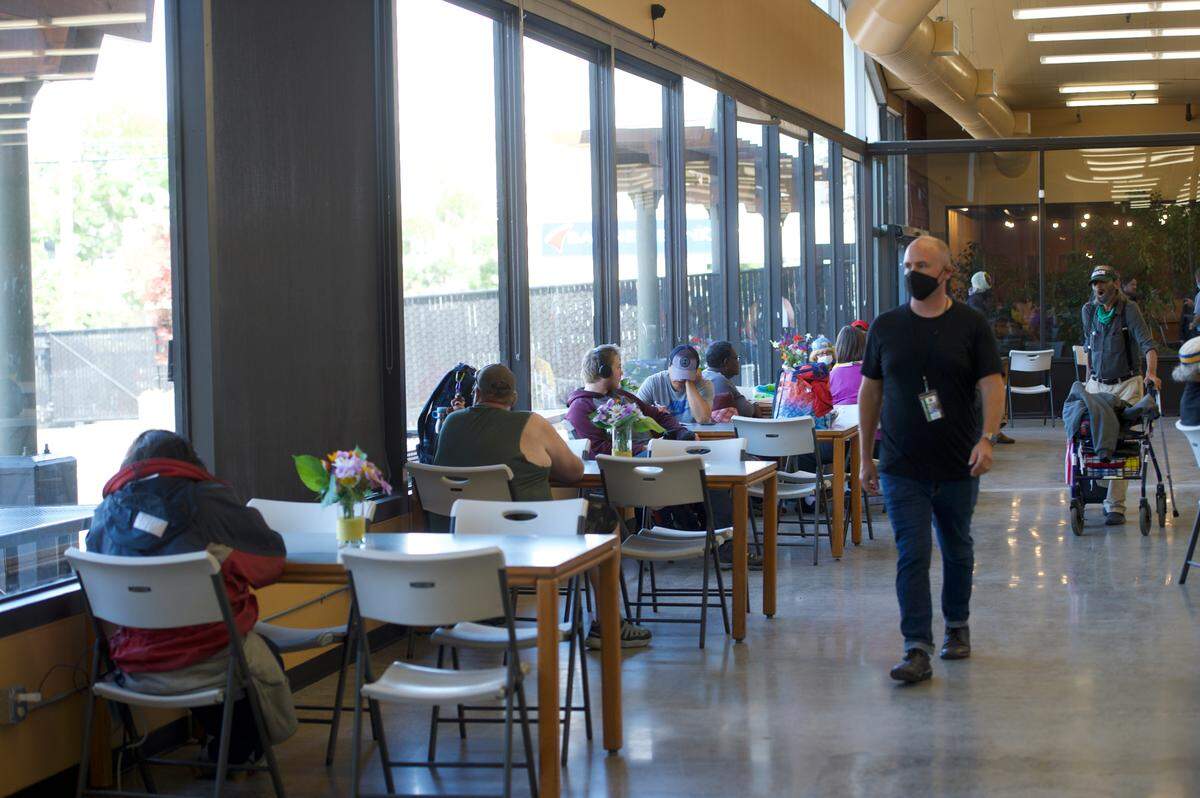
Even so, the Whatcom County report’s findings show a sharp increase in the use of drop-in shelters and families with children using motels as temporary shelter.
But the number of people living outside stayed the same.
Markis Stidham, a homeless advocate and member of the county’s now-disbanded Homeless Strategies Workgroup, said the area’s unsheltered population was likely undercounted.
“It’s largely acknowledged among members of the Homeless Strategies Workgroup that the number is somewhere around 1,500 for Whatcom County,” Stidham told The Herald.
Whatcom County’s report also says that racial disparities continue among homeless people, according to data from the full report, released by the Whatcom County Health Department on Monday.
Both the Health Department and the Opportunity Council prepared the report, according to a summary statement.
To address racial inequality in helping homeless people find housing, administrators have adjusted their intake processes and built relationships with local tribal administrators, the Health Department summary said.
Challenges with collecting data
“The extent of progress in reducing the disparities remains unclear due in part to challenges with collecting data during the COVID-19 pandemic,” the Health Department said.
In Whatcom County, the Point In Time Count involved housing service providers, outreach specialists and administrative staff who surveyed homeless people over a period of two weeks about where they spent the night of Jan. 28.
According to the full Point in Time report, it included people who were “sheltered homeless” in drop-in settings, transitional housing and motels rooms paid with a subsidy.
It also included “unsheltered homeless” camping in alleys, under bridges, on sidewalks, or in doorways, in vehicles, in RVs without hygiene and/or cooking facilities and other places not meant for human habitation, including abandoned buildings.
It didn’t include people who were “couch-surfing” with friends and family or were in jail, even if they were homeless when they were jailed.
Point in Time numbers
Point In Time Count findings this year show:
▪ The average age was 36, and ranged in age from newborn to 87.
▪ 218 people were living in tents, in cars, trucks and RVs or in other “unconventional” locations — a figure unchanged from 2020.
▪ 82% were people on their own, not part of an extended household.
▪ Families with children sleeping in shelters rose from 64 in 2020 to 96 in 2021.
▪ Overall use of motel rooms, emergency shelters and transitional housing increased by more than 30% — from 489 people in 2020 to 641 people in 2021.
▪ Motel use increased tenfold — from eight households in 2020 to 88 households in 2021. Most of that was linked to an emergency shelter program for families with children that was funded with pandemic-related resources.
▪ 1,347 households (including 2,267 people) received some form of housing support through a network of housing providers in Whatcom County in 2020.
Camp cleared on count day
Other factors affecting the number of homeless people during the 2021 Point In Time Count were Base Camp, a drop-in shelter for 200 people established in 2020; and Camp 210, where about 100 people pitched tents and built makeshift shelters on the lawns of Bellingham City Hall and the Bellingham Public Library in mid-November 2020.
That encampment was forcibly cleared the morning of Jan. 28, 2021, and many of its residents moved to a parking lot at Geri Fields in the city’s Puget neighborhood.
Bellingham Police were met with resistance on the morning of Jan. 28 as they protected Public Works and Parks and Recreation crews as they removed campers’ belongings and cleared trash and debris.
Campers had been given a Jan. 29 deadline to move, but police cleared the camp a day early because of threats that a large number of protesters were traveling to Bellingham to stage a rally.
Pathways for re-housing
“We’re grateful for the hard work of our housing partners that prevent housing loss, create pathways for re-housing, and help to stabilize thousands of Whatcom County residents each year,” the Health Department’s D’Onofrio said in the statement.
“We’re excited by new local, state, and federal resources that will allow us to strengthen existing programs and pilot new ones in the coming months and years. We expect that additional funding, together with a strong commitment from local leaders to create more affordable housing, will allow our partners to provide more assistance than ever before and will lead to lower numbers of people experiencing homelessness in the future,” he said.
Resources are available to help those at risk of homelessness, including households that fell behind in rent during the pandemic.
The Opportunity Council is screening applicants for assistance with rent and utilities at 360-746-3826.
This story was originally published July 21, 2021 at 5:00 AM.