Electric vehicles have a bright future in Whatcom County, if this issue can be overcome
Travis Graddon, manager of Bellingham’s Roger Jobs Automotive, knows the dealership will likely only sell electric vehicles by mid-century. It’s not because of any decision made by the dealership. It’s because the car brands it deals in — Audi, Porsche, Volkswagen — will phase out gas-powered vehicles in the coming decades.
Graddon isn’t worried about what that shift means for business. His Whatcom County customers are already increasingly choosing to go electric, with the dealership’s electric vehicle, or EV, sales booming since 2019.
“The trend is definitely for the growth of the EV sector,” Graddon said. “The manufacturers we sell, their plan is to go 100 percent EV.”
Consumer demand for electric vehicles is increasing in tandem with federal, state and local legislation supporting eco-friendly transportation. It’s clear that for governments to achieve their climate goals, fossil fuel-powered vehicles will no longer be a viable option for everyday travel. Vehicles are Washington’s largest source of greenhouse gas emissions, and the state has some of the most ambitious climate targets in North America, with a goal of achieving net-zero emissions by 2050. Bellingham aims to slash community emissions by 85 percent below 2000 levels by mid-century.
The more complicated question for officials is how to encourage growth in the EV sector and provide a smooth transition from gas-powered to electric transportation. People don’t want to buy EVs if there aren’t enough public charging stations, but should governments invest in charging stations before a large number of people own EVs?
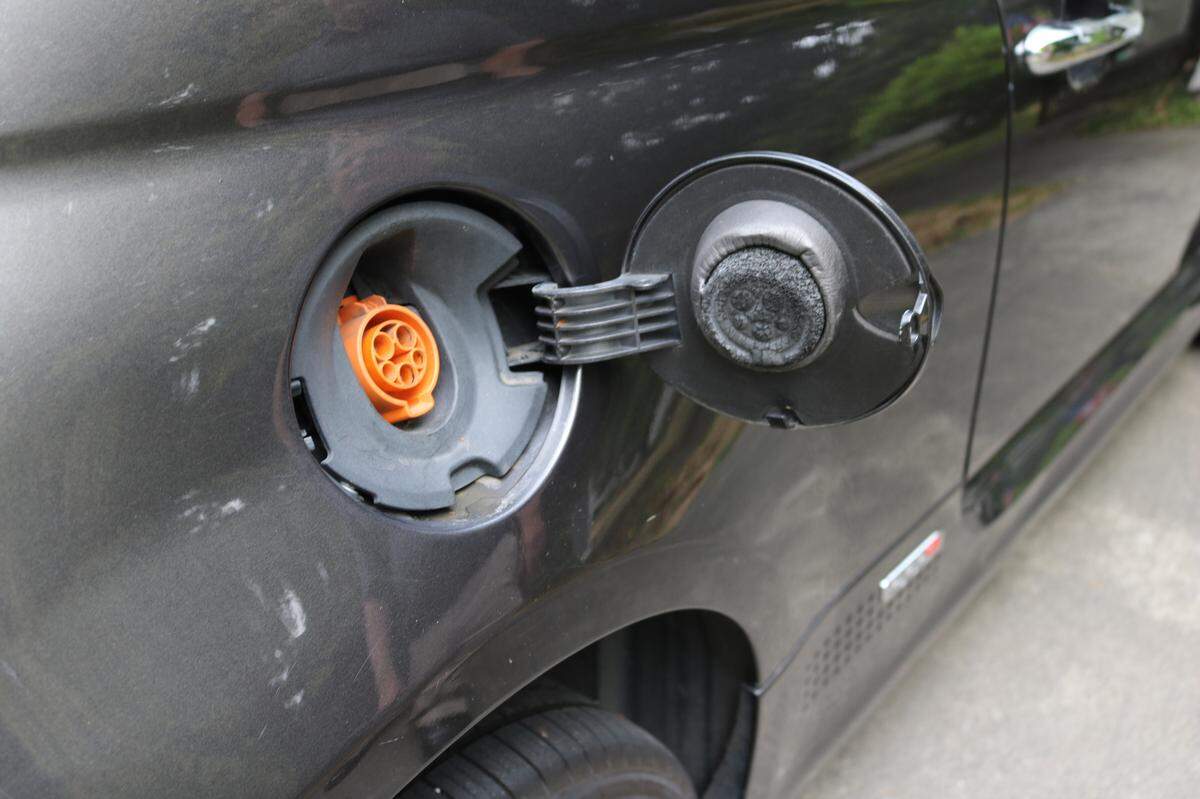
A crash course in electric vehicles: They use large batteries to power an electric motor and must be charged regularly. Since EVs run on electricity, they produce no tailpipe exhaust. If the electricity used to power EVs comes from renewable sources such as wind and solar, the vehicles produce low amounts of planet-warming greenhouse gas emissions. There are different types of EV chargers — level 1 chargers take about 20 hours to charge an EV enough for 124 miles of travel, level 2 chargers take about five hours and level 3 (fast) chargers take around 30 minutes, according to ChargeHub.
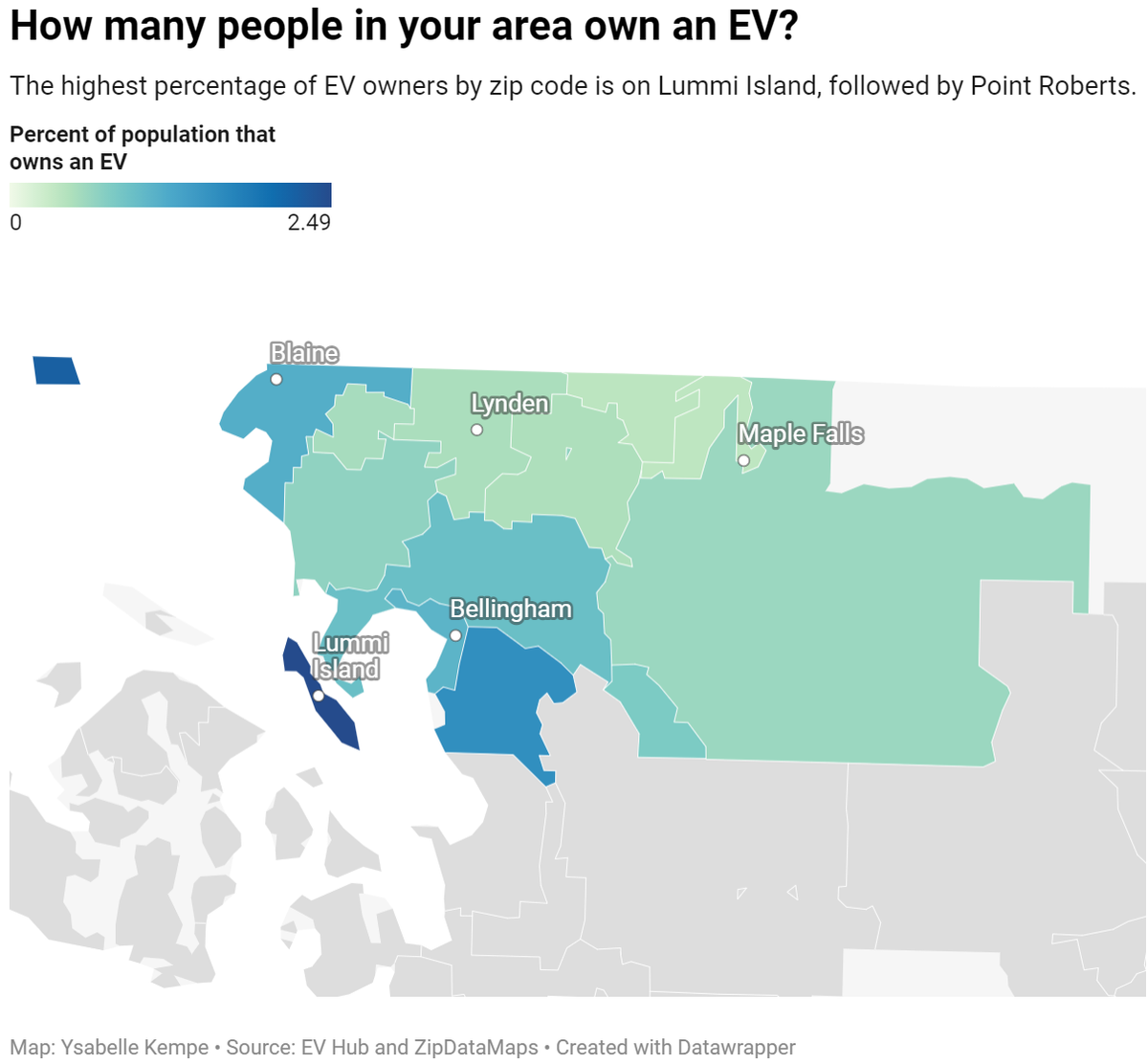
There are currently 1,964 EVs registered in Whatcom County, with nearly 30 electric vehicles per level 2 charging port, according to the online platform Atlas EV Hub, which strives to accelerate EV market growth. That means there are 66 EV charging ports in the county.
Banking on EV growth
Bellingham is banking on the fact that EV use will continue to trend upward and become mainstream. The city currently manages nine charging stations and earlier this year was awarded $1.5 million by the state Department of Commerce to expand EV charging infrastructure. This grant will be matched with $500,000 from the city’s voter-approved Transportation Fund.
The project aims to install approximately 90 charging stations at 25 city-owned sites for use by the public as well as the city’s EV fleet. (Bellingham has committed to investing in electric and hybrid fleet vehicles as part of its Climate Protection Action Plan. It currently owns 46 hybrid vehicles and six EVs.) Approximately 23 of the sites will have at least one level 2 charging station and five sites along Interstate 5 will have a level 3 (fast) charger.
The exact list of charging locations is still being drafted, with construction expected to begin in early 2022 and be completed by the end of 2023. City staff are still determining how public demand for these charging stations will be balanced with the power needs of the city’s fleet. Charging costs are also still being determined.
The city has an agreement with Puget Sound Energy instructing the utility to deliver as much renewable energy to the grid as the charging stations use, effectively making the power consumed by them “low-carbon,” the City’s Climate and Energy Manager Seth Vidaña wrote in an email.
“At-home charging is likely to support the majority of EV use in the long term, provided homes have adequate alleyway or driveway access,“ Vidaña wrote in another email. “That said, it is hoped that this first project will be the first of a series of infrastructure improvements that would help support EV usage amongst those who can’t charge at home.”
Charging stations encourage tourism
The Port of Bellingham also plans to expand EV charging infrastructure on its properties and installed six charging stations in March. Not only are the chargers beneficial to Bellingham residents, but they can support local tourism by encouraging long-distance travelers to stop in the city to charge their vehicles, said port spokesperson Mike Hogan.
“It is absolutely part of the logic to put them in places that will attract money to local businesses,” he said.
At the airport, the pre-purchase reservation fee is $11.40.
Whatcom County currently manages several charging stations at county-owned buildings such as the Crisis Stabilization Center and the Civic Center. The county doesn’t have EV infrastructure plans as significant as Bellingham’s but has been in talks with Puget Sound Energy to install charging stations at county-owned parks, said Jed Holmes, spokesperson for the Whatcom County Executive’s Office.
Graddon with Roger Jobs Automotive thinks there’s a misconception that only urban communities want EV charging stations. He hopes that more chargers are installed throughout rural parts of the county, as he sees EV interest in those areas blossoming as well.
“Right now, the county doesn’t feel there is a demand because they are not seeing people request it,” Graddon said. “Just like the city is, I think the county will find out there is demand.”
The only problem? Range anxiety
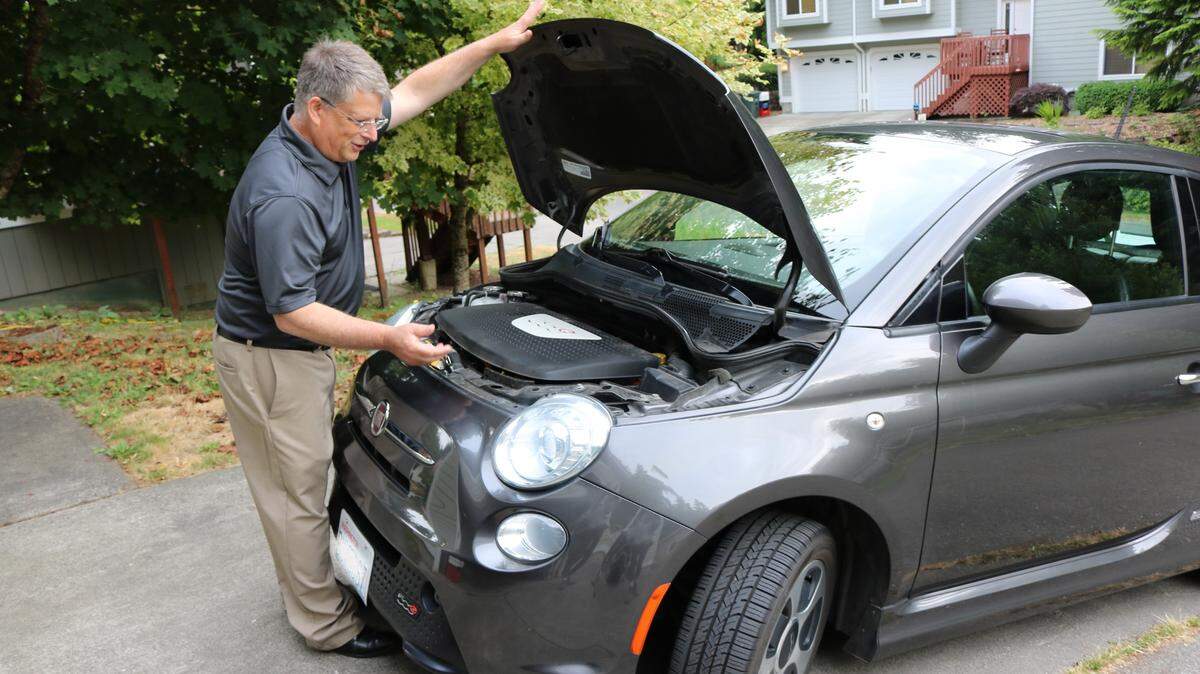
Sudden Valley resident Don Minter bought his first EV — a used Fiat 500e — last year, out of pure curiosity. As his teenage children approach driving age, he knew he needed another car and wondered if EVs were truly as cost-effective as he’s heard. A year later, he’s all but ditched his gas-powered vehicle in favor of the Fiat.
“It’s cost effective,” Minter said. “I’m not having to change the oil, I’m not having to worry about a timing belt. I don’t have to worry about all the maintenance you normally have to.”
Minter charges his vehicle every night at his home. It costs roughly $2.50 to fully charge the battery, he said, which gives him about 100 miles of travel. That’s saving him buckets of money compared to his gas-powered car, which he said would cost about $20 in fuel to get him just as far. And the Fiat is a fun drive to boot, Minter said, with enough power to throw his head back against the headrest when he accelerates.
According to Graddon, most Roger Jobs customers would agree with Minter’s analysis.
“Everyone loves the way they drive, loves the way they feel, loves the way they handle,” Graddon said. Many manufacturers will pay for drivers’ charging costs for up to three years after they purchase a new EV, he explained, further sweetening the pot.
The only rain on EV lovers’ parade? Range anxiety, or the worry that they won’t be able to get to the next charging station before the car’s battery dies. Minter was concerned about range when he bought his Fiat, which is why he only drives it around town. The furthest he’s driven in the car is Mount Vernon, roughly 20 miles away. Graddon said range anxiety is also the largest concern for potential EV customers coming into his dealership.
By the time those customers leave, however, range is the last thing they’re worried about, he said. The average EV gets around 200 miles on a full charge, he explained, and many come with a built-in GPS system showing the nearest available charging station. For most drivers, Graddon said, this range is more than enough for daily use — the average American drives roughly 30 miles a day, according to a 2015 study.
High-end EVs, like some Tesla models, get around 350 miles in range, nearly enough to drive from Bellingham to Spokane on a single charge. Plus, there are charging stations along every major route in the U.S., Graddon said — you just have to put in a bit more effort preparing a trip, making sure you plan stops in locations where you can plug in.
Charging EVs at home
“The reality is that the EV is intended to be charged at home at night just like we charge our cell phones,” he said. “In today’s day and age, we don’t buy a new iPhone based on how long it will be charged because we are going to plug it in at night.”
But what about those who live in apartment buildings or older homes where the outlets don’t have the voltage to support an EV charger? Those individuals will be less likely to purchase EVs, Graddon said, because they can’t easily charge them. And despite EVs cheaper maintenance and fuel costs, they still can have a higher upfront price tag than gas-powered cars. There are numerous tax credits and rebates for EV buyers, but the cars can still be financially inaccessible for lower-income folks who may be more likely to rent or live in older houses.
That’s why Graddon hopes the city focuses on installing chargers in underserved communities, rather than newer retail corridors. Charging stations would be more valuable in old neighborhoods, older apartment complexes and rural neighborhoods out in the county, he said.
“They aren’t buying because they don’t have easy access to charging,” he said. “I specifically think of the Lettered Streets, the Eldridge area, older apartments around Fairhaven and Western Washington University, older buildings in downtown Bellingham.”
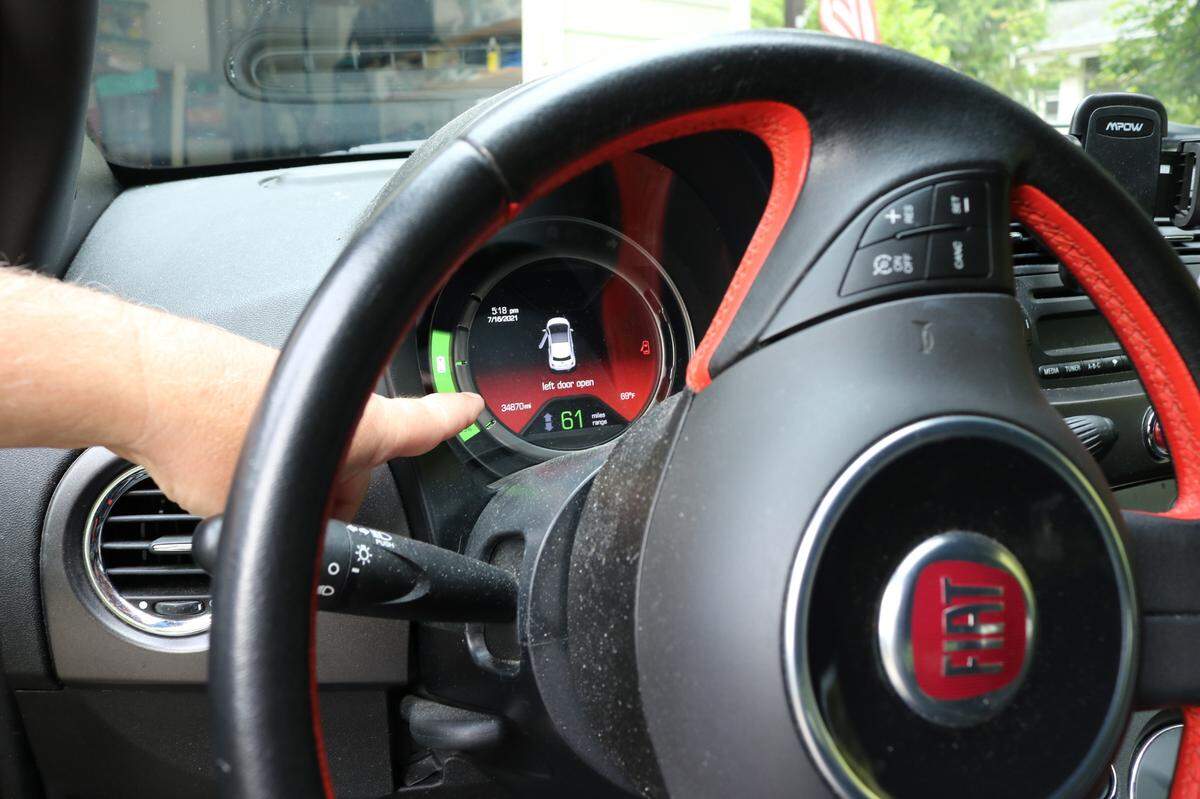
For Minter, the Sudden Valley EV owner, range anxiety is enough to stop him from going all-electric, even though he wholeheartedly recommends EVs to his friends. Once his kids start driving the Fiat, he’ll keep his gas-powered car because he values the ability to spontaneously road trip to California without having to plan charging stops. He’d need to see an affordable electric vehicle with a 400- to 500-mile range to convince him to replace all his vehicles with EVs.
“I like it a lot. But I wish I could take my kid and we could go up to Mount Baker and ski,” Minter said. “I wish Mount Baker had an EV station, because I can get there, I just can’t get back.”
This story was originally published July 21, 2021 at 5:00 AM.