Here’s how Whatcom, Bellingham are advancing a countywide Racial Equity Commission
Whatcom County officials took a step toward forming a Racial Equity Commission this week, hours after a former Minneapolis police officer was convicted of murdering George Floyd.
In a unanimous vote Tuesday, April 20, the County Council hired the nonprofit Chuckanut Health Foundation to develop a framework for how such a commission would operate.
County Executive Satpal Sidhu said plans for a citizen advisory panel on racial equity emerged from last summer’s rallies, marches and other events highlighting systemic racism in the wake of the killing of Floyd and other people of color at the hands of white police officers and vigilantes.
“If you want to work hard and change people’s hearts, then this kind of organization can do something good for our community,” Sidhu told the council.
Sidhu, who was born in India and came to the U.S. from Canada, cited a personal experience with racism to promote formation of an inclusive panel, describing how he once was refused a haircut at a Lynden barbershop.
“We have to change people’s minds, and this is an attempt to do that,” he said.
During his 2019 race for the county’s top elected post, Sidhu’s campaign signs were defaced with racist slurs, including one instance that was investigated by the Whatcom County Sheriff’s Office as a hate crime.
Since 2019, there have been several reports of vandalism by white supremacist organizations around Whatcom County and other high-profile instances of racism.
Chuckanut Health Foundation planning
With a separate unanimous vote Tuesday, the council funded the Chuckanut Health Foundation’s efforts with $45,000 — an amount that the Bellingham City Council is being asked to match when it meets Monday, April 26.
Sidhu worked with Bellingham Mayor Seth Fleetwood, Prosecutor Eric Richey and other elected officials to advance the plan.
“I am eager to continue the conversation with the Bellingham City Council, and our entire community, in our effort to identify sources of racial disparities and address them,” Fleetwood told The Bellingham Herald in an email.
“We expect a rich, informative public process in the months ahead that results in a proposal for a racial equity commission that is tailored to our community’s needs,” he said.
Recommendations regarding the formation of a Racial Equity Commission are expected by December, according to a timeline from Sidhu’s office.
‘Living and thriving’ neighbors
Shu-Ling Zhao, one of two Bellingham activists who pressed local officials to address systemic racism, told The Herald that a key goal is building a “thriving community” of people in Whatcom County.
“It’s our responsibility as a community to look at ourselves and reflect on ourselves,” Zhao told The Herald.
“We want all of our neighbors to be living and thriving,” she said.
Zhao worked closely with Kristina Michele Martens, who played a key role in organizing last summer’s marches and rallies and is now running for a seat on the Bellingham City Council.
“It’s not that we haven’t been shouting. It’s finally that we’re been heard,” Martens said.
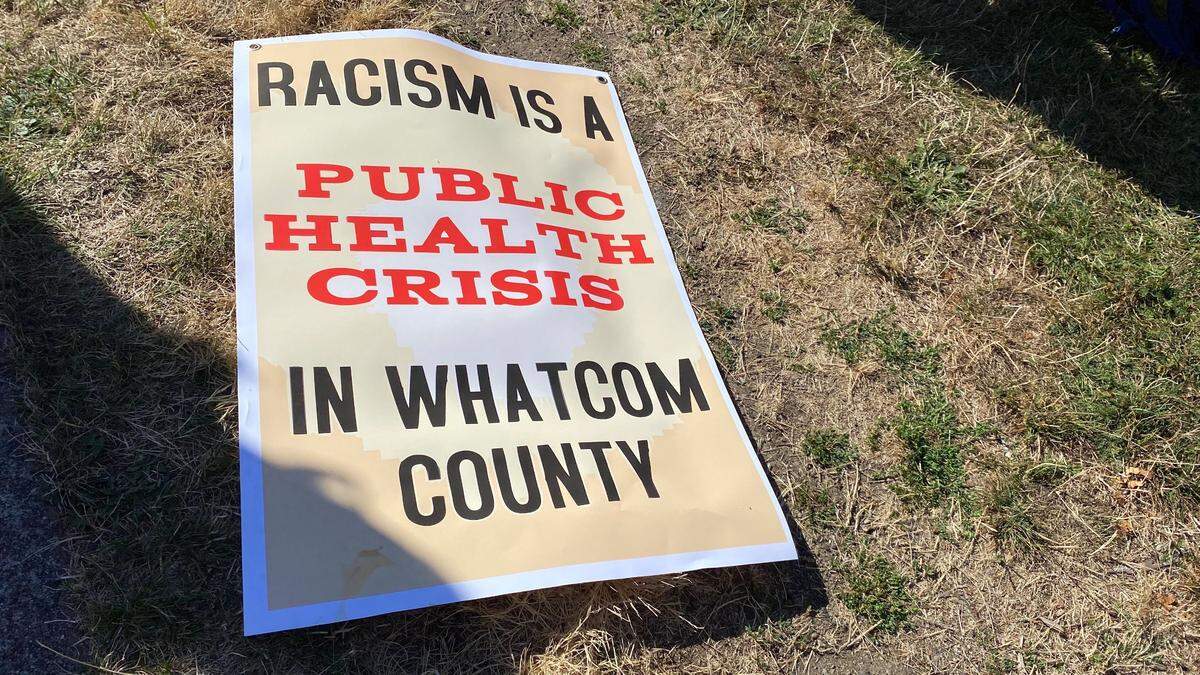
“The heart of the Racial Equity Commission is having the community look at the problem together, instead of sitting at opposite sides of the table and seeing each other as the problem,” she said. “This is 100% about the community so that we don’t have to be having these discussions in 25 years.”
Zhao and Martens compiled a preliminary report addressing racial disparities in Whatcom County, which is 86% white according to 2019 US. Census estimates.
They found that Black, Indigenous and other people of color were more likely to have lower incomes, live in areas with higher environmental pollution, have children who are less ready to start school and graduate at lower rates.
People from various racial and ethnic backgrounds also see higher incarceration rates, their research found.
Heather Flaherty, executive director of the Chuckanut Health Foundation, said the organization describes “health” in a broad sense of the word.
“We made a big commitment last year to pursuing health equity,” Flaherty told The Herald. “We define health beyond the scope of the health-care system.”
Flaherty said the murder of Floyd “catalyzed our board to make a big, bold commitment” to addressing racial inequities.
To develop a plan for how a Racial Equity Commission will work, Chuckanut Health Foundation will reach out to Whatcom County residents in several ways, starting with a Community Visioning Summit on May 22 and is taking applications for a stakeholder group to meet from June through December.
More information is available at Chuckanut Health Foundation’s Facebook and Instagram pages.