These BTC students’ efforts ‘will have a cascading effect on future generations’ of salmon
At a fish hatchery near the mouth of Whatcom Creek, on land that was an indigenous village before white settlers arrived, biology students are working to boost salmon runs and help save the endangered Salish Sea orcas.
“If we get back one fish that feeds somebody, we’ve done the right thing,” said Steven Solomon of Lummi Nation’s Natural Resources Department.
Solomon told The Bellingham Herald that his great-grandfather lived in a small dwelling on the creek near Bellingham Bay in the early 1900s, and salmon provided food for all tribal members, not just his family.
Pacific salmon have been in decline for several decades because of pollution, habitat loss, climate change and other factors and all are protected at some level of the Endangered Species Act, according to NOAA Fisheries.
Salmon fishing on rivers, streams and the Salish Sea is regulated by the Washington Department of Fish and Wildlife, which sets limits based on estimates of returning salmon.
Now, sport fishing for the creek’s native chum salmon hasn’t been allowed or faced early closure for several seasons amid poor returns
But that could change soon as 1 million chum and 500,000 chinook fry are being released this year into the creek, thanks to Lummi Natural Resources, Fish and Wildlife and a unique Bellingham Technical College program that gives its students hands-on experience in fisheries management.
Students’ efforts “will have a cascading effect on future generations,” said Brittany Palm-Flawd, head of BTC’s Fisheries and Aquaculture Sciences Department.

Palm-Flawd said officials hope the program will create a new fishery for tribal members and commercial and recreational interests, as well as adding to the food available for the region’s southern resident orcas, which prefer chinook over other species.
“It’s a win-win for everybody,” she told The Herald.
Here’s how it works:
▪ Chinook salmon eggs are taken from spawning fish and hatched at a site near Kendall in water from Whatcom Creek, so the fish imprint on its chemical makeup as their birthplace.
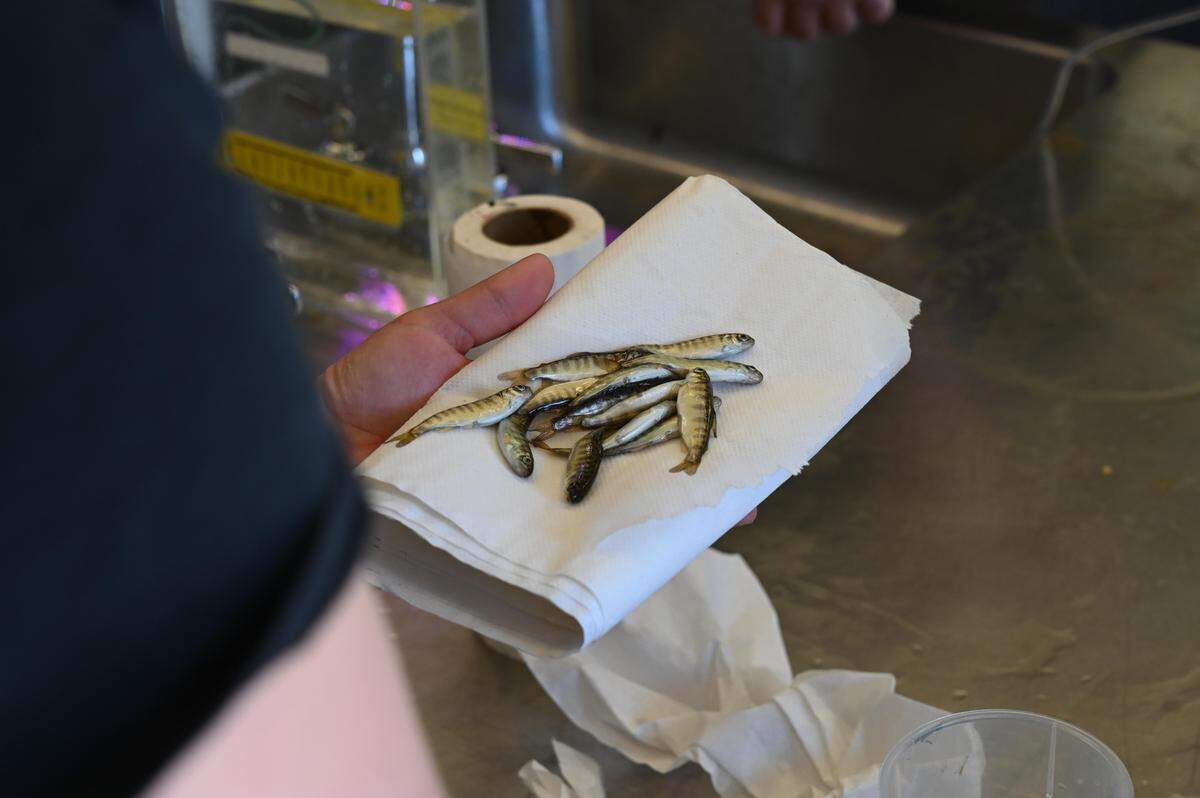
▪ Once their yolk is absorbed, the tiny alevins are trucked to the Whatcom Creek hatchery ponds, where they grow into fry and are released into the estuary and swim into the Pacific Ocean.
▪ Adults return to spawn in two to five years, usually in summer. Pacific salmon species die after spawning.
Whatcom Creek Hatchery, which is on the site of the city’s former sewage-treatment plant, is operated by BTC and managed cooperatively by Fish and Wildlife and Lummi Nation.
Aquaculture students began work on creating a Whatcom Creek chinook run after Gov. Jay Inslee signed Executive Order 18-02 in March 2018, which set new protections for Salish Sea orcas and proposed educational steps and other actions — such as increased hatchery production.
“We took up the challenge,” said Palm-Flawd, a former Fulbright scholar who left a doctoral program in salmonid reproduction to teach aquaculture students in Bellingham.
Hatchery efforts are part of the “full circle” of recovery efforts for salmon and orca, said Rachel Vasak, executive director of the nonprofit Nooksack Salmon Enhancement Association.
“NSEA’s focus is on habitat restoration and we acknowledge that that is a long-term solution,” Vasak told The Herald.
“This and other hatchery programs may offer additional fish on a shorter timeline, but it ultimately will help the orca,” Vasak said. “Their progeny will be able to use the habitat we’re restoring.”
City of Bellingham officials also are working to restore Whatcom Creek, whose habitat was devastated by Bellingham’s early logging industry, and where tribal fishers were forced out so white pioneers could build a port city.
“Our forefathers gave them permission to use the river, the water to get their logs down,” Solomon said. “But in that handshake agreement, the fish were in the way — we were in the way. They displaced us and the city grew,” he said.
“(Last) summer we had our chinook return to Whatcom Creek and we were able to support the first tribal harvest in over 100 years,” along with a small recreational harvest, Palm-Flawd said.
Lummi tribal members held a blessing ceremony to mark the event, Solomon said.
“We give respect to the fish and give reverence to them so that they come back,” Solomon said.