‘I miss it so much’ as Bellingham center for people with disabilities pivots during COVID
Before the pandemic, Hilary Prunty would show up on Friday and Saturday nights at Max Higbee Center. She brought her pet bunny sometimes. But not when another member brought her dog “because dogs and bunnies don’t get along,” she said.
At times, the 32-year-old Bellingham resident with developmental disabilities forgets that the center in Bellingham closed its doors in March to slow the spread of COVID-19. She gets excited about seeing her friends on those weekend evenings. Then she remembers that she can’t.
“I just wish it would open up soon because I miss it so much. I just miss hanging out with my friends,” Prunty said.
She knows the center has created virtual events for its members and that she can talk to her friends on the phone.
“It’s not the same,” said Prunty, who has been a member of Max Higbee Center since 2009.
When it reopens after statewide pandemic restrictions have been lifted, the Bellingham center will be in a new and larger space. That will once again give Whatcom County residents with developmental disabilities who have been separated from each other for months a place to hang out.
The closure has been tough for Max Higbee clients who already are usually more socially isolated than the general population — even before the pandemic.
As for Prunty, she feels less isolated after returning to her job at the Fred Meyer on Lakeway Drive, after not working from October to March.
“It was really hard,” she said. “Since I can go to work, it’s better for me.”
‘Around each other’
There’s also the added stress, because of the nature of their disabilities, of not always being able to understand why they can’t go to the center or to their jobs, or take part in other activities that made up their lives before the pandemic.
“The clients absolutely want to be around each other,” said Kait Whiteside, executive director for Max Higbee Center. “We continue to hear that people are lonely and just really struggling with mental, emotional and physical health right now.”
The nonprofit serves over 400 people age 13 and older in Whatcom County, providing them with recreational programs and social opportunities. It has 56 people with developmental disabilities on its waitlist, and the move to its new 5,000-square-foot home at 1400 N. State St. is expected to help fill a need that has deepened because of the pandemic.
“Historically, people with disabilities have faced a myriad of barriers to social inclusion and many individuals are now experiencing deeper and disproportionate isolation due to COVID-19,” Whiteside said. “The new facility will allow us to serve Max Higbee Center members with the dignity and respect that they deserve and finally reach people on our waiting list in a time when our services are needed most.”
The expansion project already had started when the pandemic struck. A year ago, the center was making plans to move from its 1,500-square-foot location on Bay Street to the former Alicia’s Bridal & The Formal House Tuxedos on North State Street in downtown Bellingham. The hope was to relocate in early 2020.
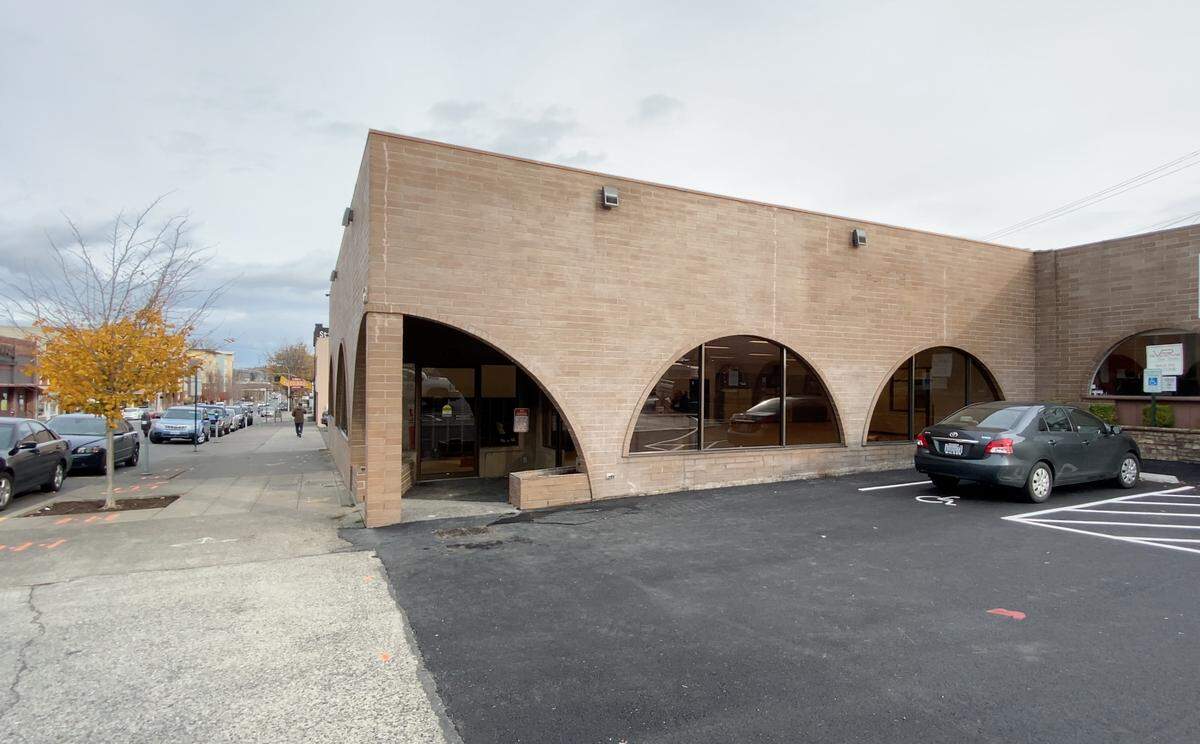
The pandemic’s impacts, as well as surprises that popped up during the work, delayed the new center’s renovation and move — from a five-week pause of construction in the early days of the pandemic to social distancing required for construction crews upon their return, to a sewer line replacement, to regrading the parking lot to make it flat enough to comply with the Americans with Disabilities Act.
Combined, the issues caused a budget shortfall. Rotary Club of Bellingham stepped in to help.
“This is something very important. We’ve got to help those families out,” said Shauna Naf, a Rotary Club of Bellingham member, of the goal of raising up to $100,000 for Max Higbee Center.
“They needed a little extra to get over the finish line,” she said of the project.
Each year, the club contributes that amount of money to a project that’s expected to significantly benefit Bellingham and Whatcom County, including, recently, the Whatcom Mountain Bike Coalition and its Galbraith Mountain parking lot expansion and the Opportunity Council’s Recovery House on Girard Street.
In all, the expansion project will cost $615,000, according to Whiteside.
‘Laughter in the next room’
When it’s open, Max Higbee also helps families by giving them a chance to rest, go to appointments or take care of everyday life such as grocery shopping while their teen or adult is at the center.
Such support is important given that about 50% of adults with developmental disabilities in Whatcom County live with their families, according to Whiteside.
While it remains closed, the center has made it possible for teens and adults to see their friends and to be social. It’s reaching out to its clients in other ways as well. Those include:
▪ Virtual programs twice a day during the week, including dance, drawing and yoga.
The center built a tech library of devices so the center’s clients could participate, Whiteside said.
The virtual programs helped people see their friends and provide relief to families, some of whom told Whiteside, “It’s a breath of fresh air to hear laughter in the next room.”
▪ For those who don’t want to or can’t engage online, the center has a one-on-one mentoring program where clients, wearing masks and staying outside, can participate in activities such as going for a walk in the park.
“The virtual programs are a great placeholder given the circumstances, but they’re lacking in so many ways,” Whiteside acknowledged.
Colder weather means that the one-on-one program won’t serve as many people, though she said the staff will continue to do it for the clients who want to continue.
▪ Calls to isolated clients who aren’t participating in the virtual programs, so they have a friendly voice checking on them. The center also has sent pen pal letters.

Bellingham resident Jim Monroe, 32, is among the Max Higbee clients in the one-on-one mentoring program. Being on Zoom doesn’t work for him, mom Maureen Monroe said.
“He’s so much better in person because he’s very social,” she said.
When his mentor Doug Sacrison came over, they would spend an hour or two on the deck, playing games and otherwise hanging out.
“It was just their time for them to be guys,” Maureen Monroe said.
Those mentoring sessions together allowed her to run errands, such as going to the grocery store, or to leave the house with husband Robert for some time together — providing a sense of normalcy in a year that has been anything but.
Learn more
Additional information about Max Higbee Center and its new space at 1400 N. State St. is at maxhigbee.org.
This story was originally published December 20, 2020 at 5:00 AM.