Ever seen an orca swim backward before? Bellingham boater gets video near Marine park
Bellingham resident Keith Wallace and his boating party were headed back to port at about 7:30 p.m. Wednesday, July 8, when about a half-mile offshore from Boulevard Park he saw what he thought was a group of kayakers.
As he got closer, he realized they weren’t kayakers, but a pod of orca swimming south — 11 of them total, he estimated in a Facebook message with The Bellingham Herald.
While Wallace said he was surprised just to see the whales there, he certainly wasn’t prepared for what he saw when they got closer to Marine Park.
“Ever seen a Killer Whale swim backward for the fun of it,” Wallace asked in a Facebook post made to the Seeing Bellingham group.
Sure enough, Wallace caught video of one of the whales appearing to do a somersault and then come back up for air swimming in reverse.
“It was so surprising to us as well,” Wallace told The Herald.
Wallace’s Facebook post has already been shared more than 275 times.
Swimming backward is definitely within orcas’ toolbox of tricks, Orca Network co-founder and executive director Susan Berta told The Bellingham Herald in an email. Orca Network is a non-profit organization that raises awareness of Pacific Northwest whales and tries to educate on the importance of providing them healthy, safe habitats.
“What a fun video, and though we don’t get to see it too often, orcas can surprise us with behaviors of all kinds, including backward swimming, upside down swimming, etc. — and it’s always a thrill to see!” Berta wrote.
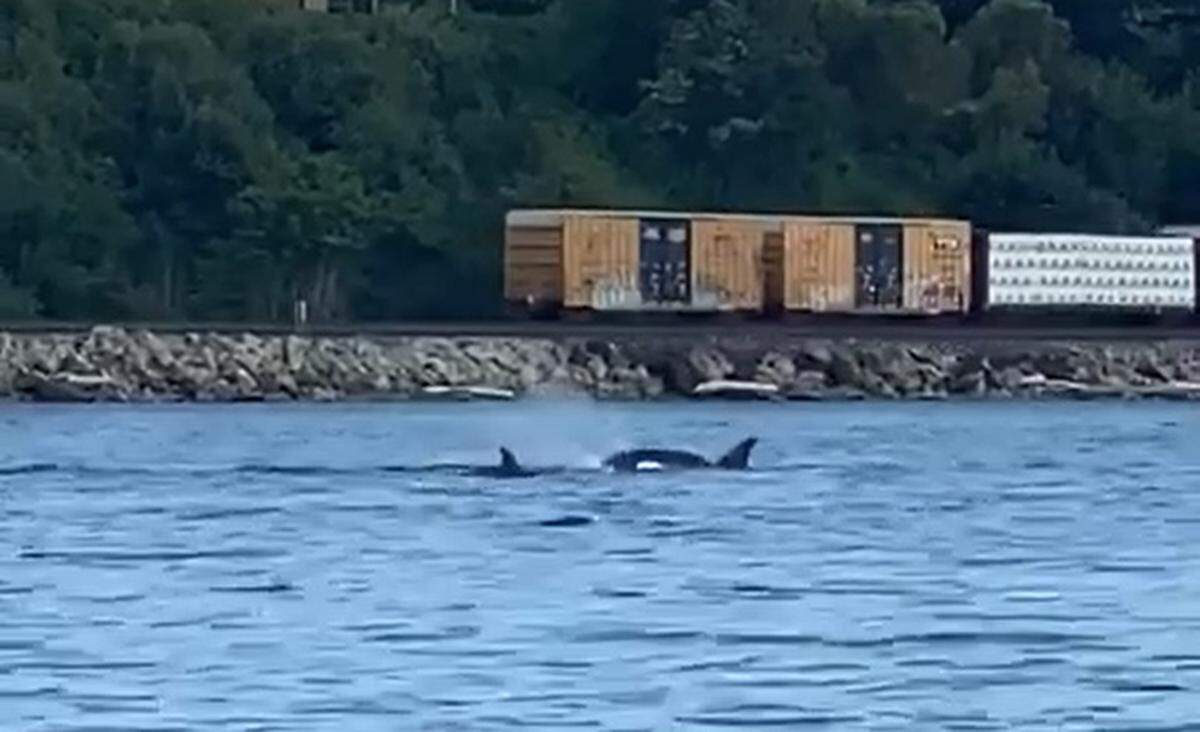
The orcas that were in Bellingham Bay were identified as Transient — most likely the T36s or T37As, Berta reported.
Unlike the Southern Resident orca pods, which feed primarily on salmon in inland waters, transients feed on other meat sources when they pass through the area between Alaska and California. Orca Network co-founder and president of the board Howard Garrett previously told The Herald that an estimated 120-130 transient orca pass through the Puget Sound region every year.
“They seem pretty active here, which usually means they are hunting or just finished a kill — often they will change directions when making a kill, or get really active and in party mode after making a kill,” Berta wrote. “Or it could be socializing or mating behavior — it’s often difficult to know for sure what it is they are doing or why.”
This story was originally published July 9, 2020 at 5:03 PM.