Bellingham diversion dam being removed to help these imperiled Pacific Northwest icons
The Middle Fork of the Nooksack River will be able to flow freely and threatened fish species — one of which is a vital food source for endangered southern resident orcas — will be given a better chance at survival once a small dam about 7 miles southeast of Deming has been removed.
When the work, which has been called one of the most important salmon restoration projects in Puget Sound, is completed in September, it will restore access to 16 miles of spawning and rearing habitat in the upper Middle Fork for threatened spring Chinook salmon as well as steelhead and bull trout, according to a project overview.
The city of Bellingham’s dam has been intermittently diverting water from the Middle Fork since 1962, on Valentine’s Day to be exact, to supplement its main source of water, which is Lake Whatcom — the drinking water for nearly 100,000 residents of Bellingham and Whatcom County.
In June, construction crews continued the work to take out the dam, which is about 25 feet tall and 150 feet wide, by doing the in-stream part of the project. That included filling large sandbags with gravel and dirt, and putting them into part of the river channel so work could be done there.
“You can’t stop the river,” said Eric Johnston, Public Works director for the city of Bellingham during a tour of the remote and forested site on June 26.
The dam is about 20 miles east of Bellingham.
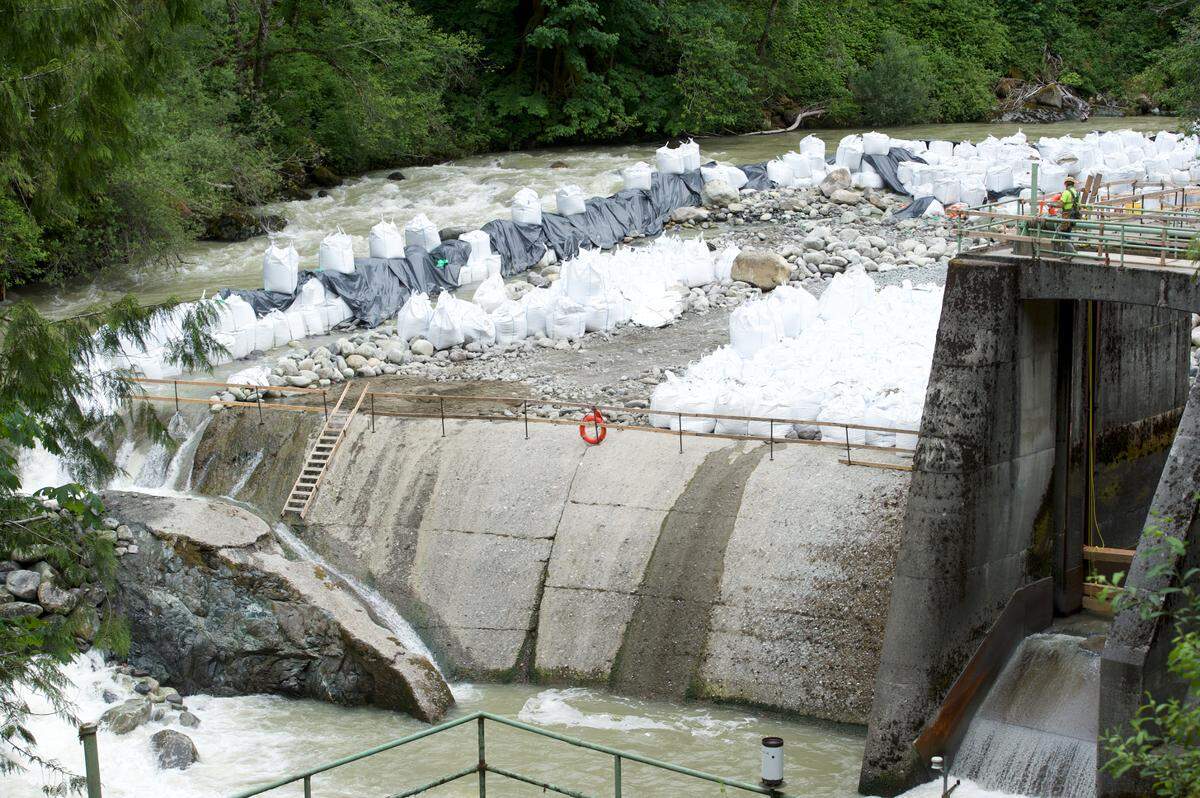
As Bellingham Mayor Seth Fleetwood, Johnston and Stephen Day, Public Works project engineer, walked through the site on June 26 and past the 17,000-pound sluice gate that had been pulled out, the river on the outside of those sandbags frothed and rushed around rocks on its way to a sheer-rock canyon nearby.
The next big step for the dam removal was set for Monday, July 13, when part of the concrete structure — the center pier and upper 15 feet of the dam crest — was to be blown into smaller pieces so it could be excavated and moved off-site, April McEwen, associate director of the river restoration program for American Rivers and project manager, told The Bellingham Herald.
A second blast to remove the rest is set for Saturday, July 18.
“Dam demolition will be followed by restoration of the river channel through the previous dam site to a natural condition that enables fish to migrate unimpeded in a free-flowing river,” McEwen said.
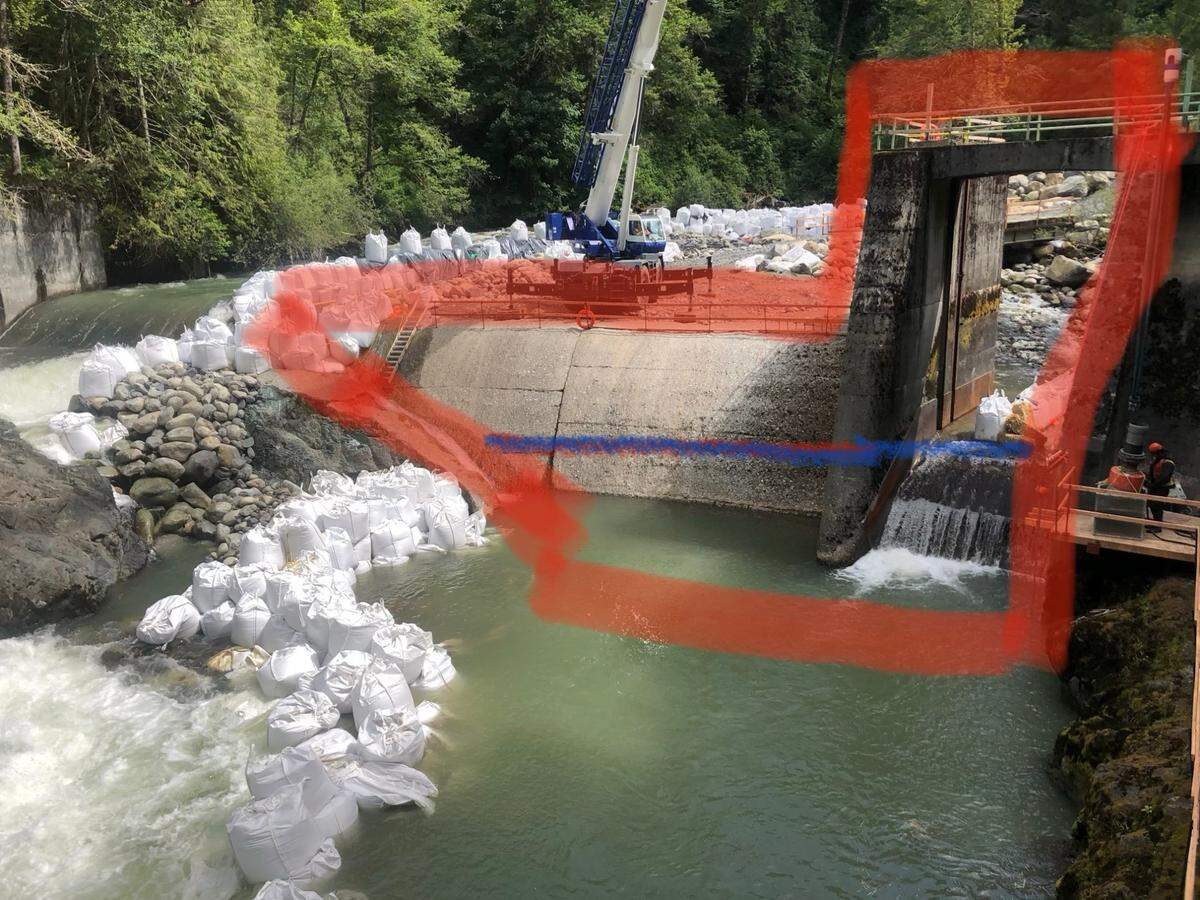
Other elements of the project include redesigning the way in which the city pulls water from the river by moving the intake system about 700 feet upstream, building a fish screen to protect fish by keeping them out of the intake, and replanting.
American Rivers, a conservation group, is a key partner in the work with the city of Bellingham.
“This project is really important for threatened fish in Puget Sound, but dam removal and fish passage is just one element of this larger project that creates more sustainable and resilient critical water infrastructure to serve communities,” McEwen said in an email to The Herald.
“This project also demonstrates that success to complex problems can only be achieved by building relationships, listening and valuing diversity in people, perspectives and technical disciplines across industries,” she said.
The dam cuts off access to spawning and rearing grounds for spring Chinook salmon, steelhead and bull trout. The three are protected under the Endangered Species Act. Chinook are the main source of food for the endangered southern resident orcas, whose numbers have dropped to just 73 — alarming scientists and others who love the Pacific Northwest icons.
The salmon and the whales are cultural symbols — and, in the case of salmon, an important food source — for the Nooksack and Lummi tribes in Whatcom County, who are among the public-private coalition working to remove the diversion dam.
The project is expected to increase the abundance of spring Chinook in the North and Middle Fork of the Nooksack River by 31% and once again give steelhead access to about 45% of their historic habitat in the Nooksack Middle Fork watershed, according to an overview.
“We want to see the salmon return and continue protecting a resource that has always been there for our people,” said Trevor Delgado, Nooksack tribal historic preservation officer, in a prepared statement.
“The Middle Fork dam removal project is a representation of decades of work and provides an opportunity to work together collaboratively to protect an area that is deeply rooted to our culture. What the Middle Fork means for our people today, we want it to mean the same for future generations. We want to continue to pass on the bridge from our ancestors into the future,” Delgado said.
The river also was spiritually important to the tribe, according to a Dec. 16, 2019, essay by Phil Dougherty on HistoryLink.org, that was commissioned as part of the project.
“Anthropologist Allan Richardson, who has studied the Nooksack Indian Tribe since the 1970s, has observed that the Middle Fork Nooksack Diversion Dam, in operation on the Middle Fork Nooksack River since 1962, has adversely affected the spiritual power and purity of the water in the eyes of the Nooksack, and has negatively impacted the river’s use for religious ceremonies downstream by tribal members,” Dougherty wrote.
The Nooksack and Lummi tribes approached the city in 2000 about removing the dam.
The dam’s construction began in the late 1950s and was completed in 1961, although it didn’t start operating until 1962, according to Dougherty.
The project carried water from the Middle Fork to Mirror Lake via a 1.6-mile tunnel and 9.5-mile pipe. From Mirror Lake, the water flowed into Anderson Creek, which ended in Lake Whatcom.
The city of Bellingham said the work to remove the dam and restore the river to help fish showed how groups and government could work together on behalf of vital resources while maintaining water supply.
“The Middle Fork Dam was constructed as an essential piece to our drinking water infrastructure but we have known for over a decade that we needed a creative solution to restore access to this pristine fish habitat,” said Renee LaCroix, assistant director for the Bellingham Public Works Department.
“Fish are an invaluable cultural and ecological resource in the Pacific Northwest and we are grateful for the community relationships that made this long-term vision a reality,” LaCroix said in a prepared statement.
Money for the project comes from a number of sources, including $10.5 million in state dollars.
Walsh Construction was awarded the $15.3 million bid for the construction piece.
The total cost, including construction, engineering and other expenses, is expected to be $20.7 million.
Learn more online at cob.org/services/environment/restoration/middlefork.
This story was originally published July 14, 2020 at 5:00 AM.