Chief removed Bellingham Police Department sign with ‘thin blue line’ image
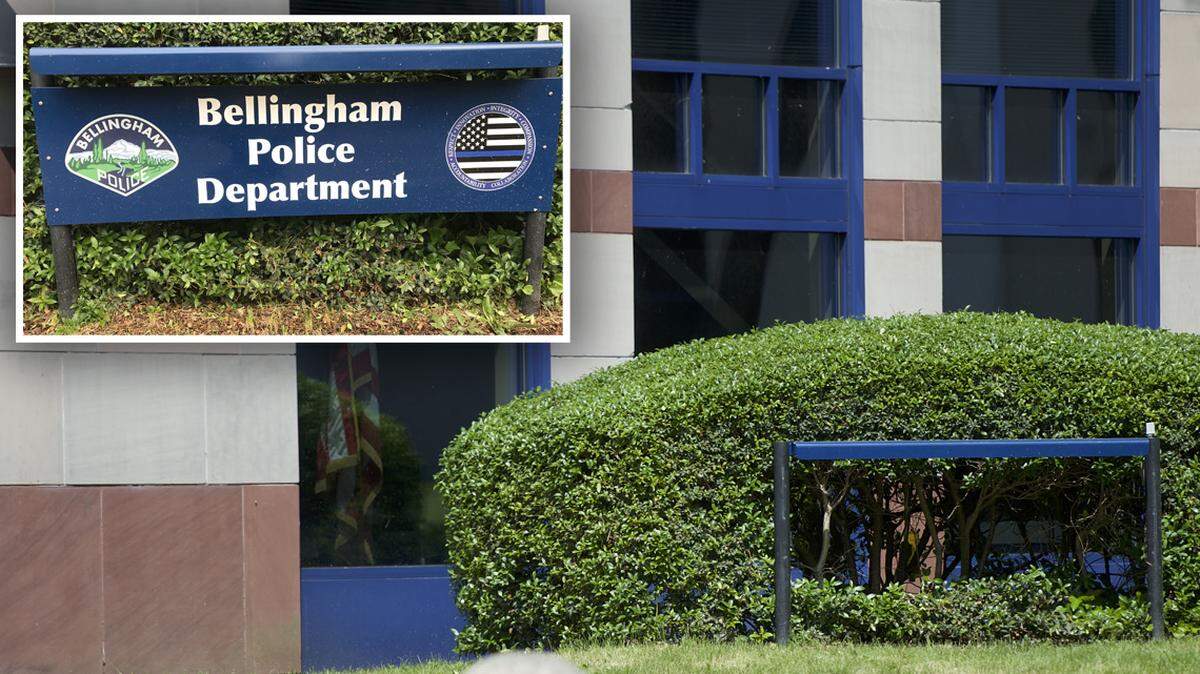
Bellingham Police Chief David Doll removed a sign from outside the Police Department headquarters on Sunday, May 31, because it contained an image of the “thin blue line” intended to symbolize police fraternity and community sacrifice.
But that image has been used by some racist and white supremacist organizations, and Doll told The Bellingham Herald that he recognizes the “thin blue line” has become a controversial and divisive issue outside law enforcement.
“It was the hardest thing I’ve ever done,” Doll said in an interview as he attended the Black Lives Matter rally dressed in civilian clothes on Saturday, June 6, at Maritime Heritage Park.
Doll said he explained his actions to Police Department command staff and rank-and-file officers last week.
“It was a lot of hurt, a little bit of anger and a lot of understanding,” Doll said.
Miri Cypers, director of the Anti-Defamation League’s Pacific Northwest office in Seattle, told The Herald that the “thin blue line” isn’t necessarily racist.
“The thin blue line flag is a flag originally designed to commemorate fallen police officers; it grew to become a popular symbol of support for law enforcement,” Cypers said in an email. “More recently, people in the so-called Blue Lives Matter movement, which arose in opposition to Black Lives Matter, have appropriated the flag and attempted to turn it to their purposes.”
Bellingham resident Lee Che Leong posted about it on Facebook and told The Herald that she noticed the sign in late May as she as walked past police headquarters on Grand Avenue.
“I was taken aback,” she said. “It’s a symbol I associate with white supremacists. That is a symbol that has been embraced by white supremacists and it has a chilling effect on communities of color.”
The black-and-white U.S. flag with one blue stripe flew alongside a Confederate flag at the deadly 2017 Unite the Right demonstration in Charlottesville, Virginia, according to a report by the Marshall Project, which studies criminal justice.
“I decided I should say something, and I should encourage others to say something,” Leong said.
She emailed Doll and he replied, saying, “I am deeply saddened that others have co-opted the intent of the meaning behind ‘the thin blue line’ as it is meant to honor those who risk their lives and those who have lost their lives serving others. We will find another way to honor those who serve.”
Leong said “it’s a good initial step forward. It’s a positive step and it’s great that he’s willing to listen to the community.”
Mayor Seth Fleetwood told The Herald that his office has received inquiries about the sign.
“Chief David Doll made the decision to remove the sign and personally took it down himself late Sunday morning, May 31. I support Chief Doll’s decision and share his interest in making sure our symbols are inclusive of all,” Fleetwood said in an email.
Doll said individual officers might choose to continue using the thin blue line, but in a manner that allows them to provide context if they are questioned about it.
He has it on a decorative “challenge coin” that he carries in his pocket, he said.
Assistant Chief Keith Williams of Western Washington University Police told The Herald that the “thin blue line” image isn’t meant to divide.
“For police officers, I would say they are wearing it with pride and respect that shows brotherhood,” said Williams, who is black. “(But) when it’s abducted by other groups, it devalues that message.”
Williams, who is from Missouri, was present at the rioting that followed the 2014 police killing of Michael Brown in Ferguson.
He is the author of “The Broken Badge: Re-Thinking Police & Community Relations in America” and works to change the culture of policing.
“There’s so much in the history of police work that’s been ‘Us vs. Them, and that’s something we don’t want see,” Williams said. “There’s an opportunity to build bridges and not walls.”
Meanwhile, the police officers’ union continues to use the thin blue line symbol on its website.
Bellingham Police Guild representatives didn’t return an email seeking comment.
This story was originally published June 10, 2020 at 12:01 PM.