Rare gray orca, Tl’uk, spotted with transient pod in Bellingham Bay Tuesday
Not only was Bellingham Bay treated to a rare visit by a family of orca on Tuesday, May 26, one of the rarest and most well-known whales of all was part of the group.
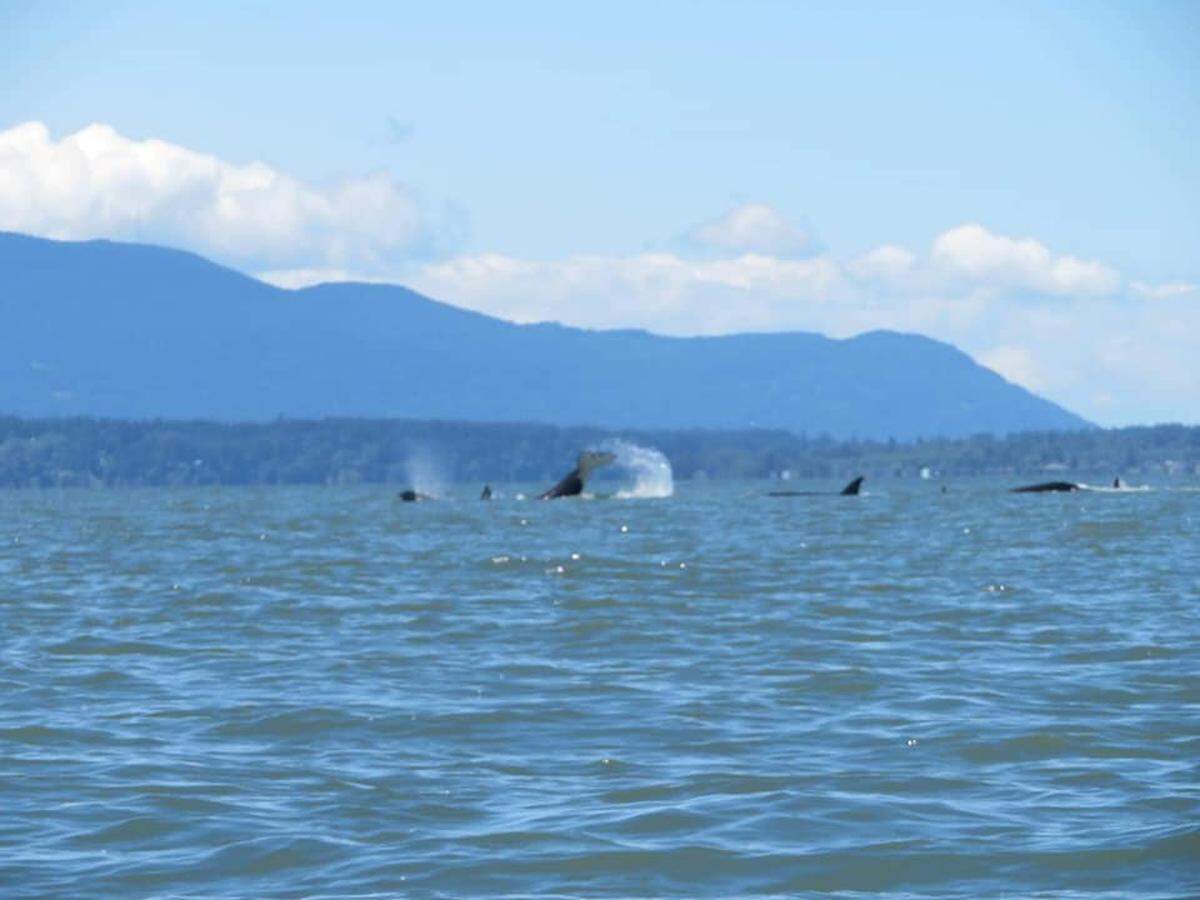
Tl’uk — the juvenile gray or white killer whale occasionally spotted around the Puget Sound when his family travels through the area — was part of a transient pod of at least five orca spotted swimming and splashing not far off shore from Bellingham, according to numerous social media posts of people lucky enough to be outdoors on a sunny afternoon.
On Wednesday, Howard Garrett, co-founder and president of the board for the Orca Network, confirmed to The Bellingham Herald that it was the transient pod known as the T46Bs — named after the matriarch of the group T46B.
T46B’s grandson is none other than T46B1B, or Tl’uk, whose name is a Coast Salish word meaning moon.
“He really stands out when you see him,” Garrett told The Herald.
According to unofficial reports, Garrett said the T46Bs were visible from the beach near the old Mount Baker Plywood factory and Squalicum Beach.
“One report said they were ‘full of beans’ — breaching, slapping their tails, etc.,” Garrett said.
Orca are not all that common in Bellingham Bay, Garrett said, though the Orca Network does get reports of them venturing into the area two or three times per year.
“Our first guess why they were there is food supply,” Garrett said. “If there were seals nearby, they would probably come in. They can detect it from miles away with their echo location, or just by hearing. If they have an idea seals are in there, they’ll come in and scout around.”
Unlike the Southern Resident orca pods, which feed primarily on salmon in inland waters, transients feed on other meat sources when they pass through the area between Alaska and California. Garrett estimates 120-130 pass through the Puget Sound region every year.
Orca Network is a non-profit that tries to raise awareness about whales in the Pacific Northwest and their need for safe and happy habitats, according to the organization’s website. For more than two decades the network has used community reports to track and help identify Southern Residents and transient orcas, as well as humpback whales and North Puget Sound gray whales, and provide information to researchers and other agencies.
Unfortunately, even the network’s work has been hindered by the coronavirus pandemic, as it had to suspend sharing real-time whale sightings on its social media pages so that social distancing guidelines are not broken by people rushing to beaches in hopes of seeing orcas, Garrett said. The network hopes it can begin making real-time whale alerts again in the coming weeks, he added.
Until then, the network said in an April 14 release that it is still positing its weekly Whale Sightings Report, past encounter photos and videos, educational information, news and activities on the Orca Network Facebook page and continues to ask that whale sightings be reported to them at 360-331-3543 or emailing info@orcanetwork.org.
If you love Whatcom Wildlife
Join us in our Facebook group Whatcom Wildlife. The Bellingham Herald created this group because we know so many people love to take pictures and video of the animals around us. And while we might want to publish a photo from the site, we’ll always ask the photographer’s permission first.
This story was originally published May 27, 2020 at 5:03 PM.