Whatcom beekeepers set traps for this giant killer of honeybees
Beekeepers have set up 61 “sap traps” around Whatcom County in an attempt to capture Asian giant hornet queens as they emerge after spending the winter in the ground.
The traps were put up in early April by members of the Mt. Baker Beekeepers Association, who also are monitoring them. The Washington state Department of Agriculture sent the experimental traps to the beekeepers.
In December 2019, the state department received and verified four reports of Asian giant hornets near Blaine and Bellingham. They were the first sightings of the hornets in the U.S.
In September, a nest of Asian giant hornets in Nanaimo, British Columbia, was destroyed, according to the Times Colonist. It also was the first time they were found in B.C.
Officials had previously speculated that the ones found in Whatcom County may have come from British Columbia.
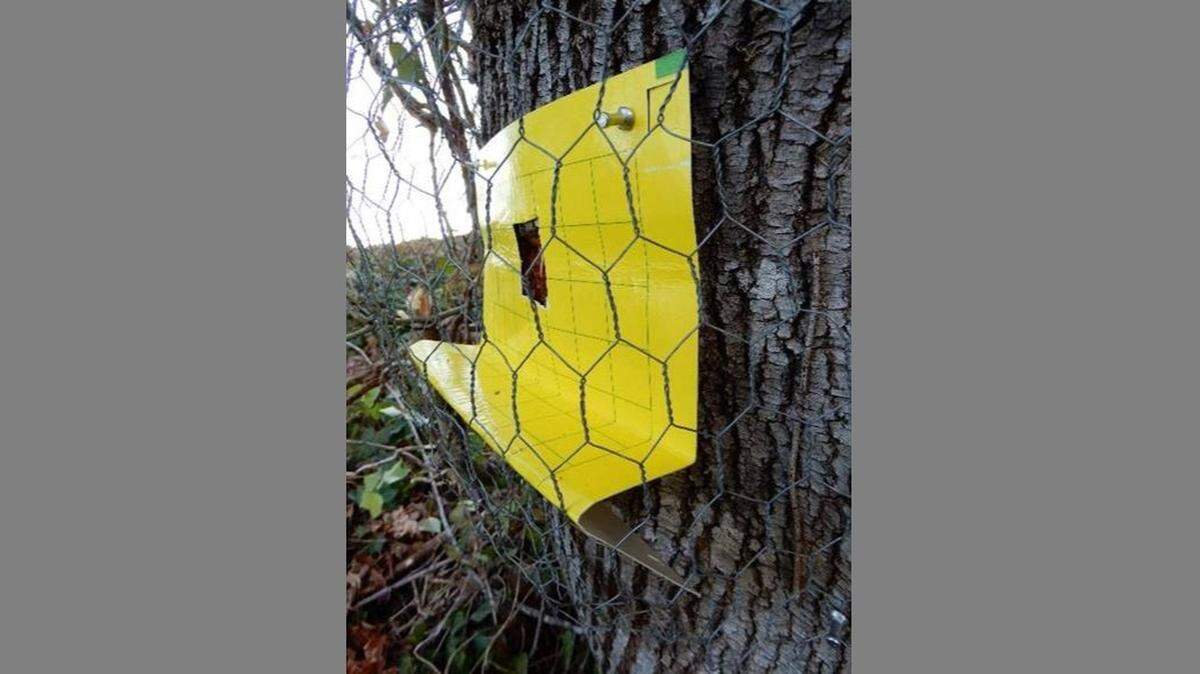
The traps, made of sticky cardboard, are set in front of small cuts made to trees to release their sap. Chicken wire then covers the traps to keep out birds and wildlife.
“Research indicates that they often eat sap from trees in the spring — hence the experimental sap traps,” the state Department of Agriculture wrote in a blog that covers its efforts to trap and eradicate the unwanted pests, which pose a threat to the state’s honeybees and the crops they pollinate.
Finding a queen isn’t expected to be easy.
“Trapping queens poses a serious challenge given their low numbers,” the state department wrote on its blog.
The traps were placed on oak, maple and alder trees in different locations that stretch from Everson in the north to Lake Samish in the south, according to Ruth Danielsen, a beekeeper and member of the Mt. Baker Beekeepers Association.
“I was thrilled that we had this many beekeepers that volunteered,” Danielsen said.
Research from Japan and Korea, part of the hornets’ native habitat in Asia, indicate the queens prefer sap from oak trees.
No queen has been found as of Wednesday, April 15.
Search and destroy
Trapping the queens as they emerge in the spring to set up colonies is part of an effort to find and destroy the hornets and prevent the pests from reproducing and taking hold in the Pacific Northwest.
About the size of an adult thumb, Vespa mandarinia is the world’s largest hornet. Its stinger is longer than a typical, native wasp, so each sting delivers more venom.
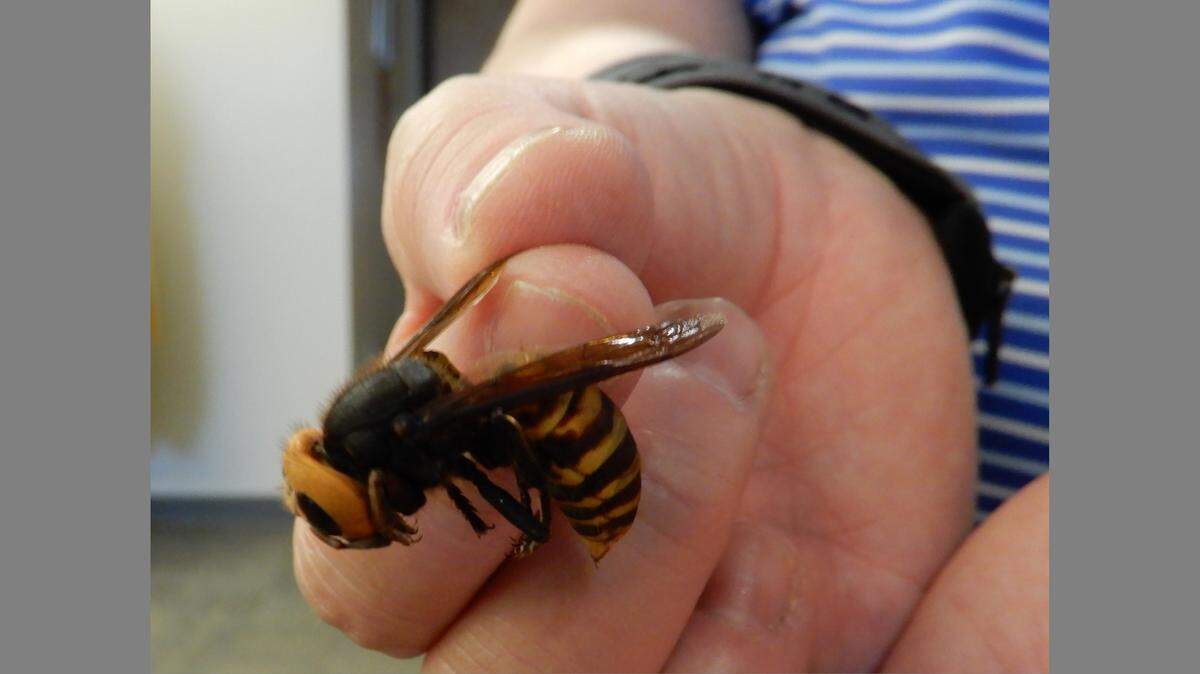
The hornets are known for their painful stings and voracious appetite for honeybees. They are identifiable by their large heads, which are yellow/orange.
Their native range is Asia. The hornets are also known as the Japanese hornet, yak-killer hornet and the giant sparrow bee.
Because they’re new to Washington state, officials here have been relying on the knowledge of their counterparts in China, Japan and Korea.
Asian giant hornets are typically dormant during winter. They’re seen usually from July through October.
They primarily nest in large colonies in the ground — in hollows formed by rotting roots, hollow trunks and rodent burrows. They can, though rarely, nest above ground in hollow trees and human structures.
The sap traps aren’t the only traps that the state agriculture officials and volunteers are turning to.
The primary trapping season will run from July through October, and beekeepers, as well as the public, will be asked to participate then — if they have the time to commit to such a project and feel safe doing so. That’s when colonies are established and workers will be out foraging.
People can help during that summer-into-fall period by creating traps using large plastic bottles, baiting them with a combination of orange juice and rice cooking wine, and then hanging them between 6 feet and 9 feet high in trees. They would be used to capture the hornets that are the workers.
“Anyone can make them, but we are particularly interested in people in Whatcom, Skagit, San Juan, Island and Clallam counties,” Karla Salp, the public engagement specialist for the state agriculture department, said to The Bellingham Herald.
“The main trapping season won’t begin until July, but those who are interested can start in April if they want to try and capture queens,” Salp said.
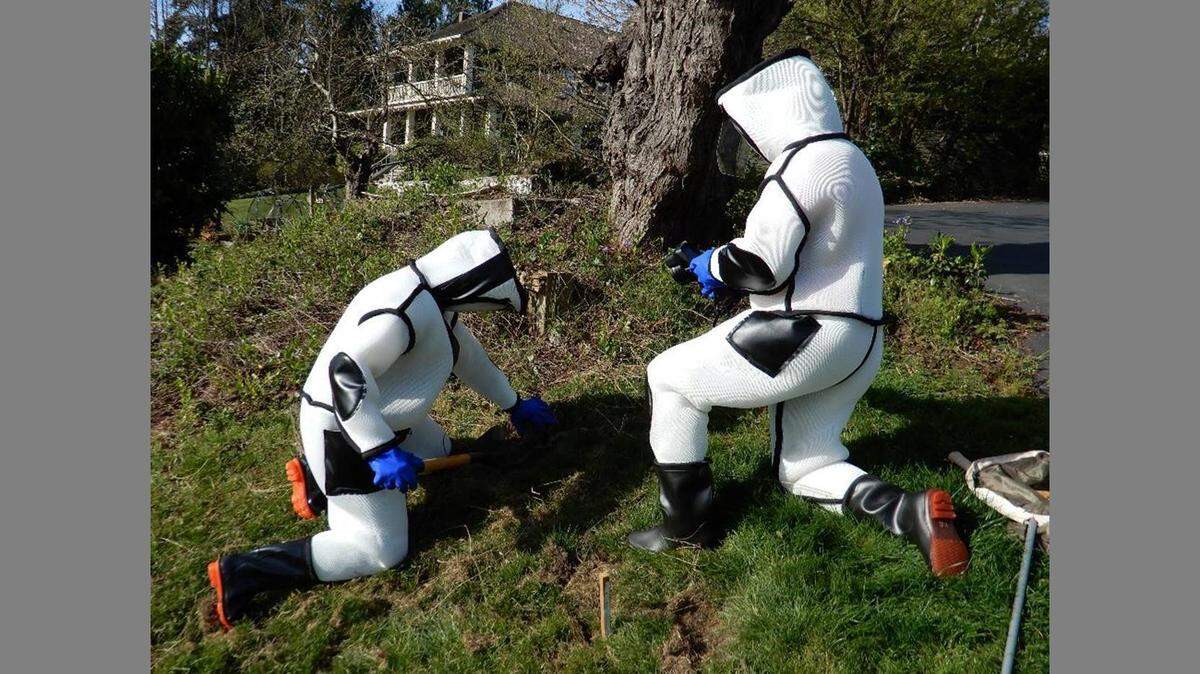
Beekeepers also are looking to what Danielsen called the third phase, trying to find a tool that can be used to protect honeybee hives in the fall when the hornets go on what is called the slaughter phase.
That’s what is believed to have happened last year near Custer, where a beekeeper reported a massive loss of bees with decapitated heads.
“They can do that within a few hours,” Danielsen said.
The hornets’ strategy is to have one hornet scope out the honeybee hive they want to take, mark it with pheromone, go get their sisters and then return to the hive.
Then 10 to 15 of the hornets will agitate the hive until all of the honeybees come out to protect their home. That’s when the hornets set on them, lop off the bees’ heads with their mandibles, go into the hive, kill the remaining bees and then take the bees’ brood — which are high in protein — to feed their own young.
“What can we do to protect the hives? Is there anything we can do?” Danielsen said.
If you’re stung
State officials are telling people to use “extreme caution” near Asian giant hornets. In Japan, up to 50 people in a year have died after being stung by Asian giant hornets.
It’s usually not aggressive toward humans unless disturbed.
In general, stay away from them, especially if you’re allergic to bee or wasp stings.
The Washington State Department of Health recommends the following steps for staying safe and for what to do if you’re stung.
▪ Protect yourself while outside by keeping food and drinks covered and dispose of food and garbage properly.
▪ Don’t swat at the hornets because that might make them sting.
▪ If you’re stung, thoroughly wash the area with soap and water.
▪ Reduce swelling by applying ice or a cold compress. Applying ice also will slow the spread of the venom. There won’t be a stinger for you to pull out.
▪ Take an antihistamine or use anti-itch cream to reduce itching.
▪ If you are stung multiple times or have a severe reaction, such as trouble breathing or difficulty swallowing, after being stung, call 911 or get medical care immediately.
Report it
If you think you’ve seen an Asian giant hornet, the Washington State Department of Agriculture wants you to report it. Here’s how:
▪ Go online to the Hornet Watch Report Form.
▪ Email PestProgram@agr.wa.gov.
▪ Call 1-800-443-6684.
Stay updated at the Asian giant hornet watch Facebook group.
Learn more at agr.wa.gov/hornets, including how to make bottle traps for Asian giant hornets.