‘It’s a real peach,’ Whatcom home owner says after second derelict boat sinks
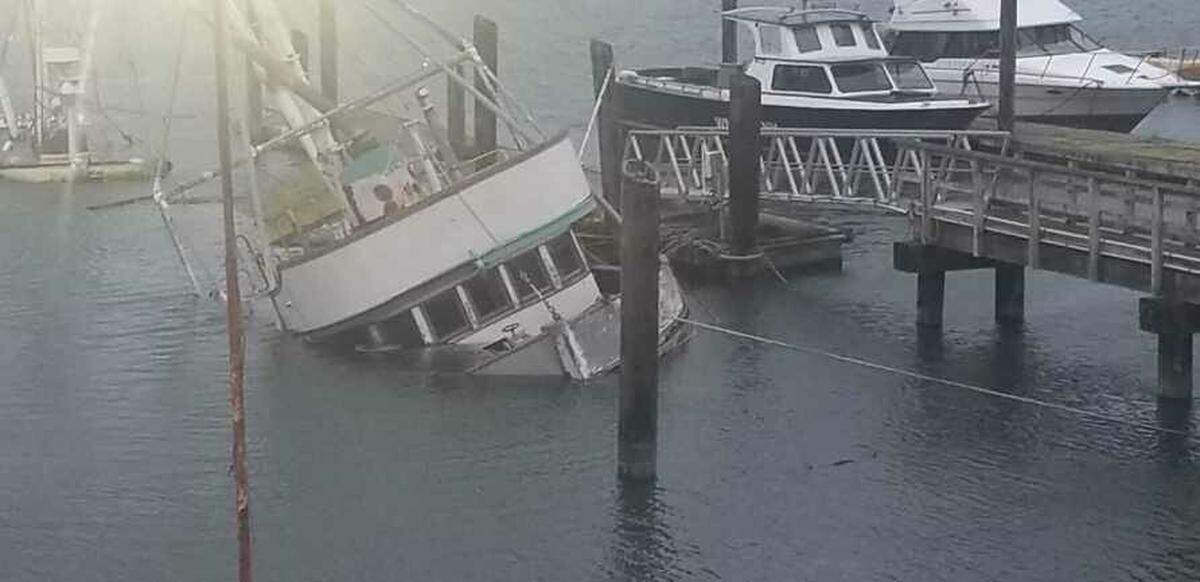
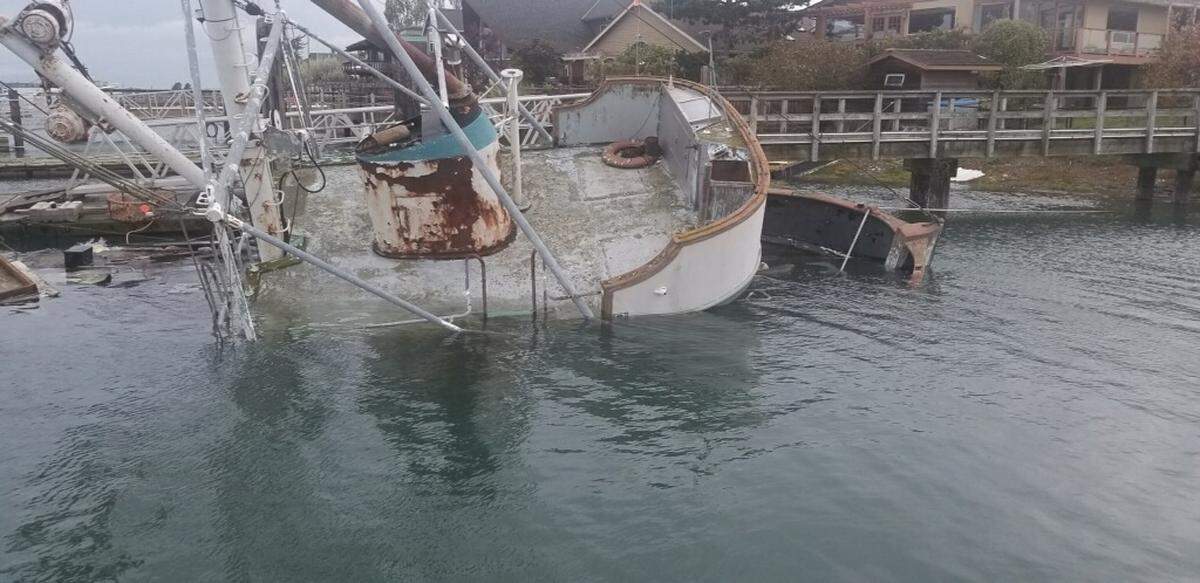
For the past three years, Sandy Point resident Howard Gilbert has endured looking at what remains of the F/V Coral Sea sitting on the bottom of the channel a couple of docks down from his house along Saltspring Drive.
In fact, the mostly submerged boat has been there long enough that it can be seen on the satellite view on GoogleMaps.com.
On Thursday morning, Oct. 17, Gilbert told The Bellingham Herald that he woke up to find the F/V Furious Sea, a 60-foot boat he said is derelict, taking on water while still tied to the dock right in front of the Coral Sea. Gilbert said he could see a sheen on the water from what he suspected is leaking oil and diesel on the boat.
Whatcom County Fire District 7 responded, but with nobody on board, chief Larry Hoffman told The Herald there was nothing his crews could do other than notify the U.S. Coast Guard and the Washington State Department of Ecology of the sinking.
So there the two boats sit.
“It’s a real peach,” Gilbert told The Herald. “It’s quite a sight — two derelict boats sitting on the bottom. Nobody seems to know what to do with them.”
The dock is adjacent to an empty lot on Saltspring Drive on the Lummi Reservation, according to Google maps.
After the Furious Sea sank Thursday, Ecology put out a boom as a precaution against leaking hazardous materials from the vessel while it determined if there is any fuel was on board, Ecology’s Spill Prevention, Preparedness and Response Communications Manager Ty Keltner said.
“We are monitoring for now, and if things change we’ll take a more active response role,” Keltner told The Herald, “but if there isn’t an active discharge then Ecology doesn’t have much of a role.”
Which means the Coral Sea and the Furious Sea will continue to sit in the channel, right next to the dock they’re tied up to.
“Yes, from an Ecology standpoint, derelict vessels present a problem when they have fuel, lubricants or other petroleum products on board,” Keltner told The Herald. “We don’t want the fuel to escape the tanks, or any contaminants to impact the environment.
“Fuel is a hazard to marine life, habitat, shellfish operations and other parts of our environment.”
Derelict Vessel Removal Program
The Department of Natural Resources and it’s Derelict Vessel Removal Program are stewards for more than 2.6 million acres of state-owned aquatic lands, Troy Wood, removal program and Aquatic Resources Division Program manager, told The Herald.
Wood said the Derelict Vessel Removal Program has been monitoring the Coral Sea since August of 2016, but it had not yet received any information on the Furious Sea.
“We share your concerns about the risks these vessels pose to the environment,” Wood said. “The DVRP wishes we could remove every derelict, abandoned or sunk vessel from all the waters of the state, but we just don’t have the jurisdiction or the resources to do so.”
Wood said that though the derelict vessel program is the last resort when it comes to the removal of derelict or abandoned vessels, it works with other state agencies, public entities and local law enforcement in an effort to protect Washington’s natural resources.
The Coral Sea and the Furious Sea are on tribal nation property, Wood said, and therefore the Derelict Vessel Removal Program cannot implement the Derelict Vessel Removal Act.
“We did try and contact the vessel’s owner in order to educate them on the state statutes, but the owner was unresponsive,” Wood said.
Setting priorities
The derelict vessel program prioritizes which vessels to remove first based on threat to human safety and danger to the environment, Wood said, but the number of vessels that need removal “outpace our limited resources.”
After the U.S. Coast Guard and Ecology removed hazardous materials following the Coral Sea’s sinking in 2016, Wood said it was listed a level 5 — the lowest priority level for removal — but its case has since been closed.
“The reasons for the case closure is the vessel does not meet the required definition of abandoned or derelict in accordance with RCW 79.100.010,” Wood said. “It was on private property with permission when it sank. In this planned community, the property lines extend to the centerline of the channel because it was originally uplands, (meaning) the aquatic definitions of tidal and bed lands do not apply.”
Wood said the derelict vessel program receives funding from recreational and commercial vessel registrations within the state, but the amount they receive is limited.
According to the U.S. Coast Guard database, the Coral Sea is a commercial fishing vessel hailing from Blaine. It was built in 1946 and had its last document issued June 30, 2004. The Furious Sea did not appear in the database.
Online resources
▪ DNR Derelict Vessel Removal Program: dnr.wa.gov/derelict-vessels
▪ Vessel Turn-in Program: dnr.wa.gov/programs-and-services/aquatics/derelict-vessels/vessel-turn-program
This story was originally published October 23, 2019 at 5:00 AM.