Your child has a disability and needs special education help. What should you do?
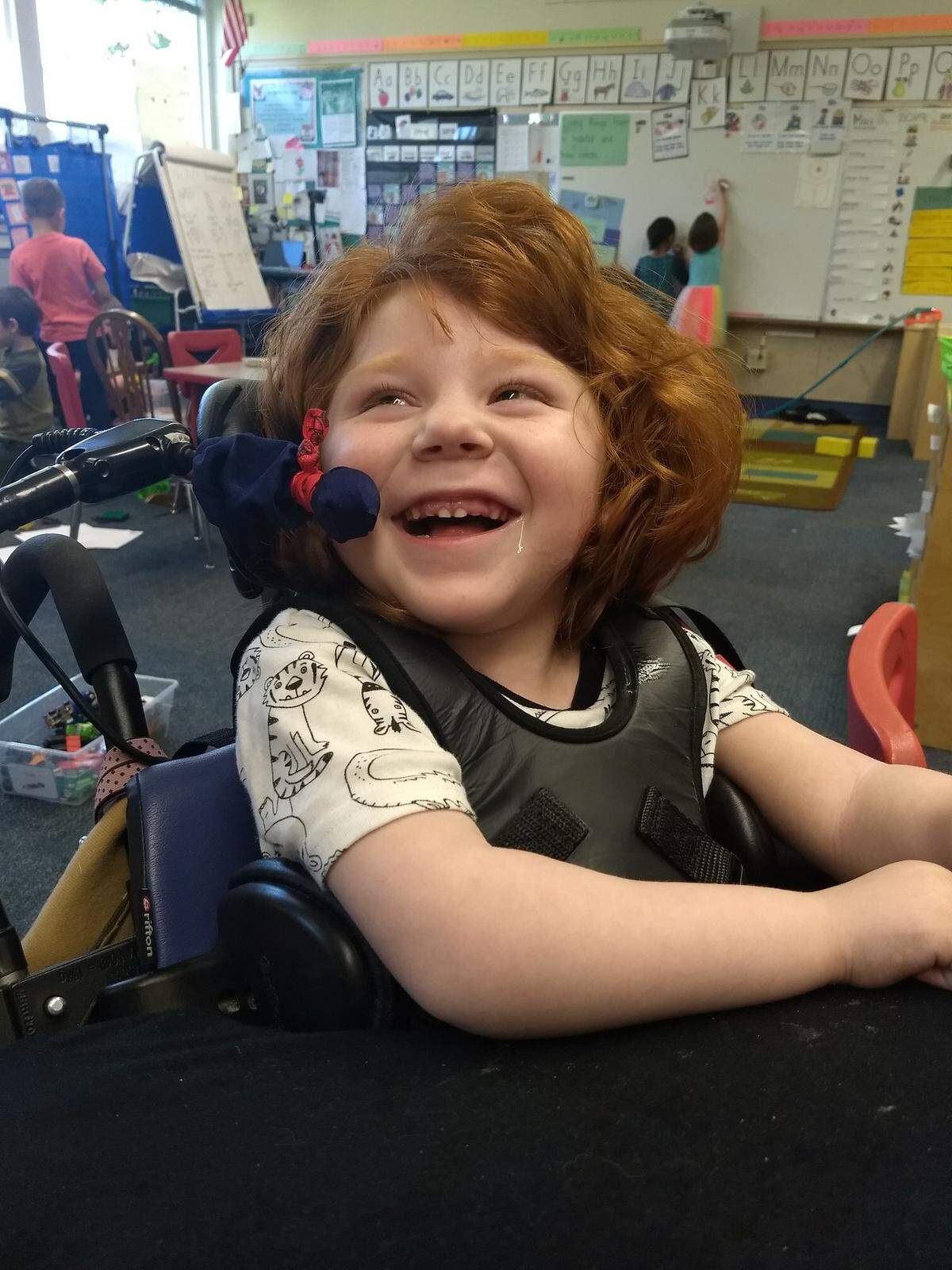
After Luella was born, she spent 6-1/2 weeks at Seattle Children’s.
The Bellingham girl sustained a traumatic brain injury at birth when she stopped breathing for several minutes because of meconium aspiration syndrome.
Her parents were wrapped up in her day-to-day needs, so thinking about what was next in terms of educational development wasn’t exactly on their minds.
That’s when the Bellingham School District stepped in.
Through a program called Child Find, the school district reached out to Luella’s parents — Jenn Mason and Mike Estes — came to the family’s house, did an assessment on the girl, and enrolled her in early learning services for special education through the school district. She was an infant.
“It felt like the school district scooped us up in their arms and showed us the way to go,” said Mason, who is now a Bellingham School Board member.
The program is among the myriad of special education services provided by school districts in Whatcom County and Washington state for students with disabilities that range from autism to visual impairment to behavioral issues. Services are for students from birth to 21 years of age.
About 143,000 students in the state — or 14% of the student population — receive special education and related services as mandated by the federal Individuals With Disabilities Education Act, according to the Washington Office of Superintendent of Public Instruction.
The act stipulates that children with disabilities must have the same opportunity for public education as students who don’t have disabilities.
The act has its roots in a 1975 measure.
Before then, schools could legally exclude students with disabilities, explained Mike Haberman, the special education director for the Bellingham School District.
Schools could say “we can’t educate your child, we don’t have a program, so too bad,” Haberman added.
School districts are legally required to provide students who have disabilities with what is called a “free appropriate public education” that is tailored to students’ needs.
They are to put disabled students in the least restrictive environment while doing so, according to Linda Quinn, superintendent for the Ferndale School District.
“If a student can be mainstreamed with support, then that’s our obligation,” Quinn said.
Bellingham School District’s Haberman added: “Research is really clear that students with disabilities learn better when they can learn with typically developing kids. We’re all together in this world, so why should we be segregated in schools?”
Still, the state has been criticized for keeping special education students out of general education classrooms, leading to some of the nation’s highest dropout rates in the 2014-15 school year, according to a Seattle Times article.
School officials, for their part, say they struggle with being underfunded by the state Legislature to the tune of millions of dollars a year.
Special education is funded through a combination of federal, state and local levy dollars, with most of the money coming from the state.
The Bellingham School District expects to serve 1,770 students from birth to 21 years old in the upcoming school year, at a total cost of $25.2 million. Of that, $3.2 million will come from local levy funding.
The Ferndale School District expects to serve about 819 students from birth to 21 in the upcoming school year, at a total cost of a little over $12 million. None of the funding will include local levy dollars.
Spending per student varies by the student’s need.
Being helped, getting help
The state Office of Superintendent of Public Instruction and school districts have information on their websites for parents who wonder whether their students need special education services and how to get them.
Figuring out what to do can be confusing.
Haberman said the Bellingham School District’s job is to take the time to help parents understand.
“It’s overwhelming, just because you’re a parent and you’re trying to help your child and you’re coming into a system that you don’t understand and you’re on somebody else’s turf,” he said.
There are a number of ways that children come to a school district’s attention.
As part of federal mandates, school districts participate in Child Find, which locates and assesses children who may have disabilities and need special education. It’s a network of community providers and medical professionals — who are the first to come into contact with kids — that work together to identify and refer children who need early intervention.
Physicians and family members can also refer children, according to Quinn.
Referrals asking that children be evaluated to determine whether they need special education must be made in writing.
Haberman said parents should seek help early.
“There’s a lot of power, there’s a lot of knowledge in how we can help students with real significant needs. The earlier we can be working in intervention, the better,” Haberman said.
“It relates to brain development,” he added. “So much of the human brain is developed very early in life.”
Think about language, Haberman said. How much of language do we learn by the time we’re 2, 3 or 5 years old versus what we learn in the rest of our lives?
For school-age children, Quinn and Haberman advise parents to get in touch with their child’s classroom teacher, a counselor or school principal.
Form a relationship and a partnership with the teacher, Quinn said.
If parents don’t understand something or they have a concern or a worry, they should check with the teacher first, Haberman said.
Tips from parents
What else can parents do?
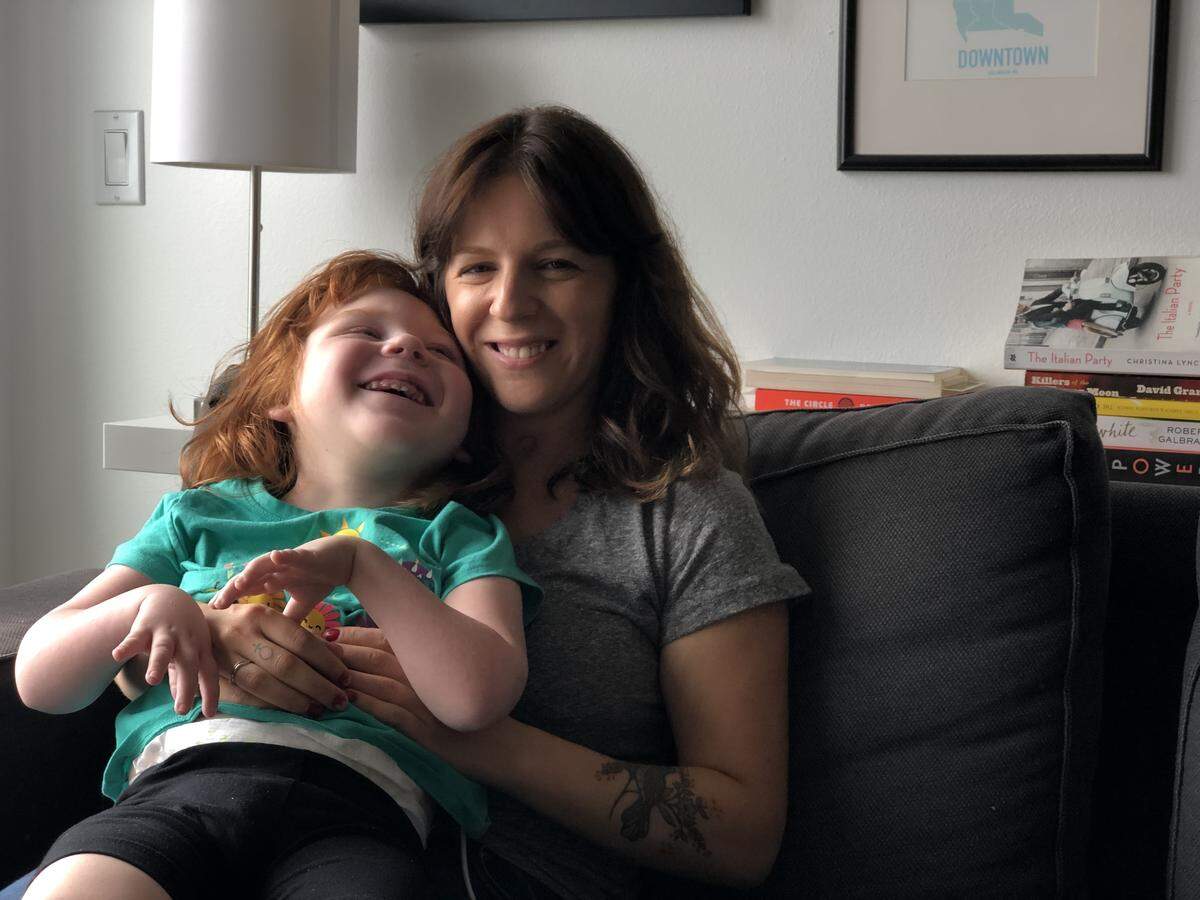
Here’s some advice from Mason and Kathy Hasenjaeger, whose daughter Michelle, now 23 years old, received special education services through the Bellingham School District.
▪ Check out Whatcom Taking Action at whatcomtakingaction.org, which provides details about community resources and support systems.
▪ Go to your school’s PTA or PTO meetings. You’re going to hear more about what’s going on at school and that will help you be more prepared so you can help your child be more prepared, Hasenjaeger said. It’s also where you can advocate for what your child might need to be able to be included in events that volunteer parents might run, she added.
▪ Be part of the district’s special education parent advisory committee or, at least, read the minutes from the committee’s meetings. In addition to advising the school district, the committee is also a great place for parents to build connections and find out what others are doing to help their children, Mason said.
The advisory committee is also a good place to find people who are good at navigating systems, Mason added.
▪ If you don’t get what you need, keep asking, Mason said.
“It can get so easy to be demoralized or to feel like people don’t care about your kid the way they would about a typically developing kid,” Mason said, “but keep asking and keep advocating until you get what you need for your children.”
Now 6 years old, Mason’s daughter Luella is getting ready to enter first grade at Carl Cozier Elementary School.
Luella uses a wheelchair. She’s non-verbal. She loves music, especially the children’s artist Raffi. She loves when her parents read to her. Her favorite book is “Is Your Mama a Llama?”
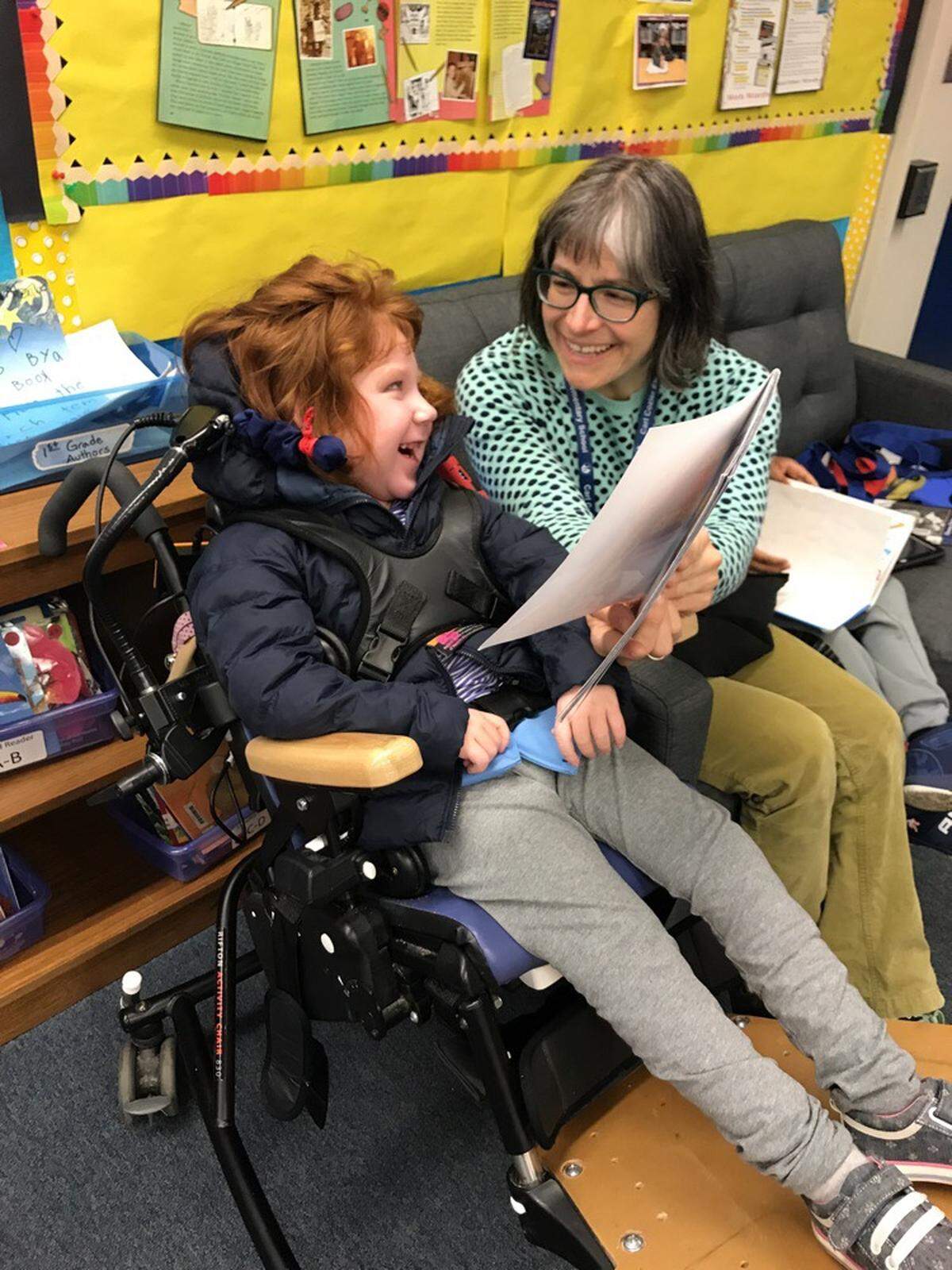
For Luella, a typical day in kindergarten involved spending part of it in a Life Skills class with different kids of differing abilities. And then she would go into her general education kindergarten class, where she did activities with the other students in her own unique ways, Mason explained.
Being with typical kindergartners was important for Luella and the other students, and the relationships they formed, Mason said, adding “we’d all be better people if we spent a significant amount of time with people who have different abilities.”
Of such exposure and relationships, Mason said: “They’re heartwarming and really important to creating spaces where people with disabilities are truly integrated.”
Luella had an aide with her each day to help her participate and engage, Mason said.
Different specialists worked with her to help her communicate, and there also was some physical therapy at school as well.
A great deal of that communication involved figuring out if there was a way for Luella to activate a switch — using her head or her hands — to say hello, yes, no or otherwise indicate choices.
Mason said she looked forward to Luella continuing that effort in the hope that she can communicate through different devices and technology.
As for what else she hoped for Luella, Mason said: “Like every other parent, my main hope for her is she’s happy and she has a great quality of life.
“One of the big things that school does is help her be a part of society and help her to be comfortable with other kids and other people.,” Mason said.
Learn more
▪ Peruse your school district’s special education section on its website.
▪ The Bellingham School District has a user-friendly site that includes a link to other resources in the community. Find it at bellinghamschools.org/programs/special-education.
▪ Office of Superintendent of Public Instruction at www.k12.wa.us/. Type “how special education works” into the search window.
This story was originally published August 30, 2019 at 8:37 AM.