There’s a NOAA boat zig-zagging Bellingham Bay. Here’s why
Bellingham Bay nautical charts are getting their first update since 2005 thanks to a National Oceanic and Atmospheric Administration crew zig-zagging across the bay.
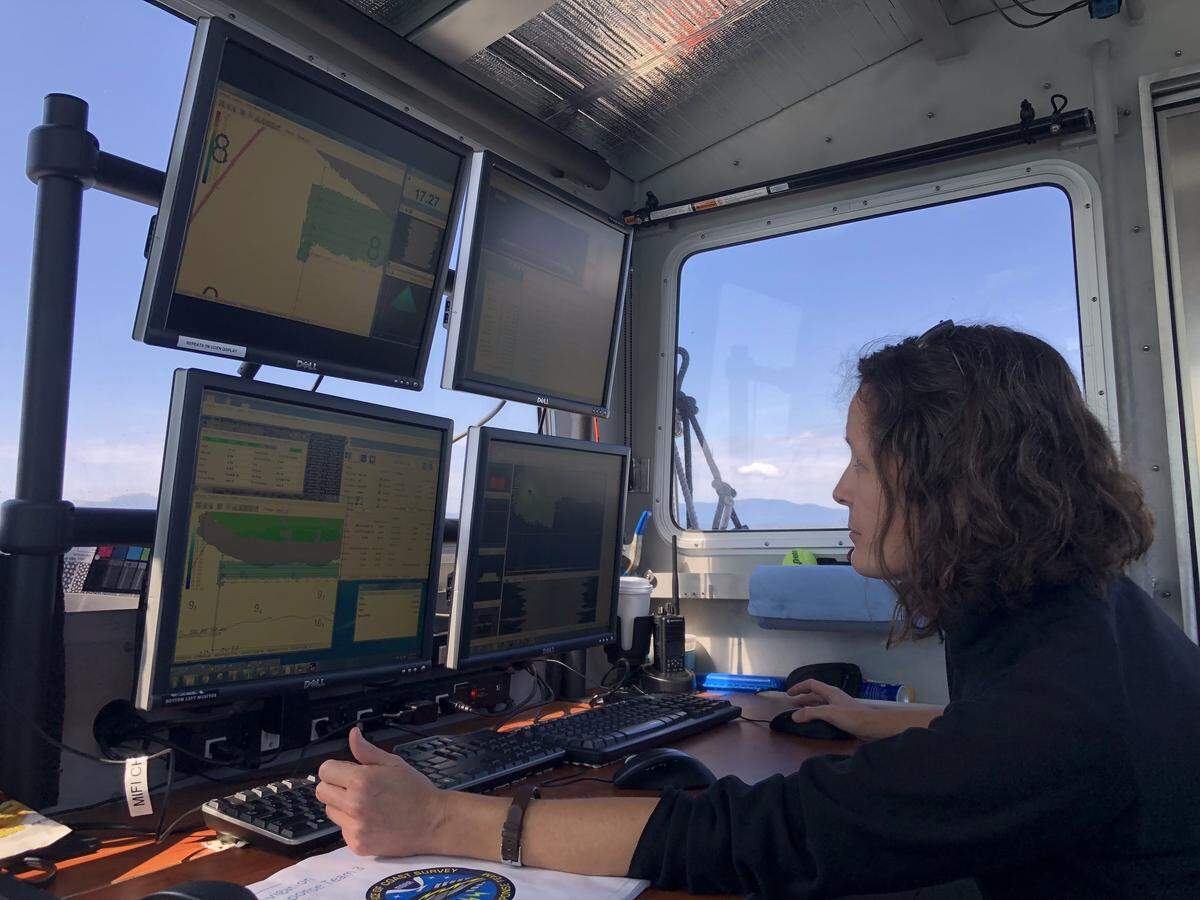
Over the summer, a team from NOAA is using sonar to measure the depth of the water from a 34-foot boat.
The survey, which began June 24 and should conclude Aug. 2, will provide data to update NOAA’s nautical charts. The charts will be available about two years after the survey is complete, with immediate hazards posted within 72 hours by the U.S. Coast Guard.
Lt. j.g. Michelle Levano, who serves as the officer in charge of NOAA’s Navigation Response Team-Pacific, told The Bellingham Herald that NOAA’s charts include everything from hazards, water depths and channel and pipeline locations to anchorage areas.
The charts help everyone from fishermen and recreational boaters to pilots navigate the region safely, Levano said. That’s why it’s important to contact NOAA’s regional navigation manager if you see a chart that’s out of date.
“How frequently they get resurveyed depends on the area,” Levano said. “Is it a steep and rocky area? Rocky areas don’t have a tendency to change as much as something that’s a sandy river.”
The survey is being completed at the request of the Puget Sound Pilots and the U.S. Coast Guard. It includes investigating several potential hazards across the bay, ranging from rocks and changes in the seafloor, to the bay’s explosives anchorage.
According to the Electronic Code of Federal Regulations, the explosives anchorage is reserved for vessels carrying explosives.
Once the survey of these areas is complete, the data is processed into two different formats: an electronic navigation chart and a raster chart.
According to Levano, the data can be used for other things, such as habitat mapping or regulating fishery enforcement areas.
When the NOAA’s Navigation Response Team - Pacific is not conducting routine surveys, the three-person team responds to vessel emergencies and natural disasters in Washington and Oregon, and is on call for the remaining western states.
This story was originally published July 15, 2019 at 5:00 AM.