What does your toilet paper choice mean for Mother Earth?
Don’t pooh-pooh it — but there’s a new report card for sustainable toilet paper from the activist organization Stand.Earth, aimed at shoppers who want to live a more Earth-friendly lifestyle.
“The Issue with Tissue” joins sustainability surveys such as Greenpeace’s “Guide to Greener Electronics” and the Monterey Bay Aquarium’s “Seafood Watch” to help buyers tread more lightly on Mother Earth.
Stand.Earth, which has an office in Bellingham, is known for activism regarding oil production in the Alberta tar sands and its opposition to fracking and logging in sensitive habitat.
What’s soft on the tushie is hard on the planet, the report says.
Getting flushed in Stand’s report are Procter & Gamble and Georgia-Pacific, whose Angel Soft and Quilted Northern brands were once made in Bellingham.
“Their competitor companies have made better commitments,” Stand’s Tyson Miller said. “This helps consumers make informed choices. There’s a lot of opportunity for consumers to use their dollars wisely.”
In partnership with the Natural Resources Defense Council, Stand ranked major TP products with a grade of A, B, D and F.
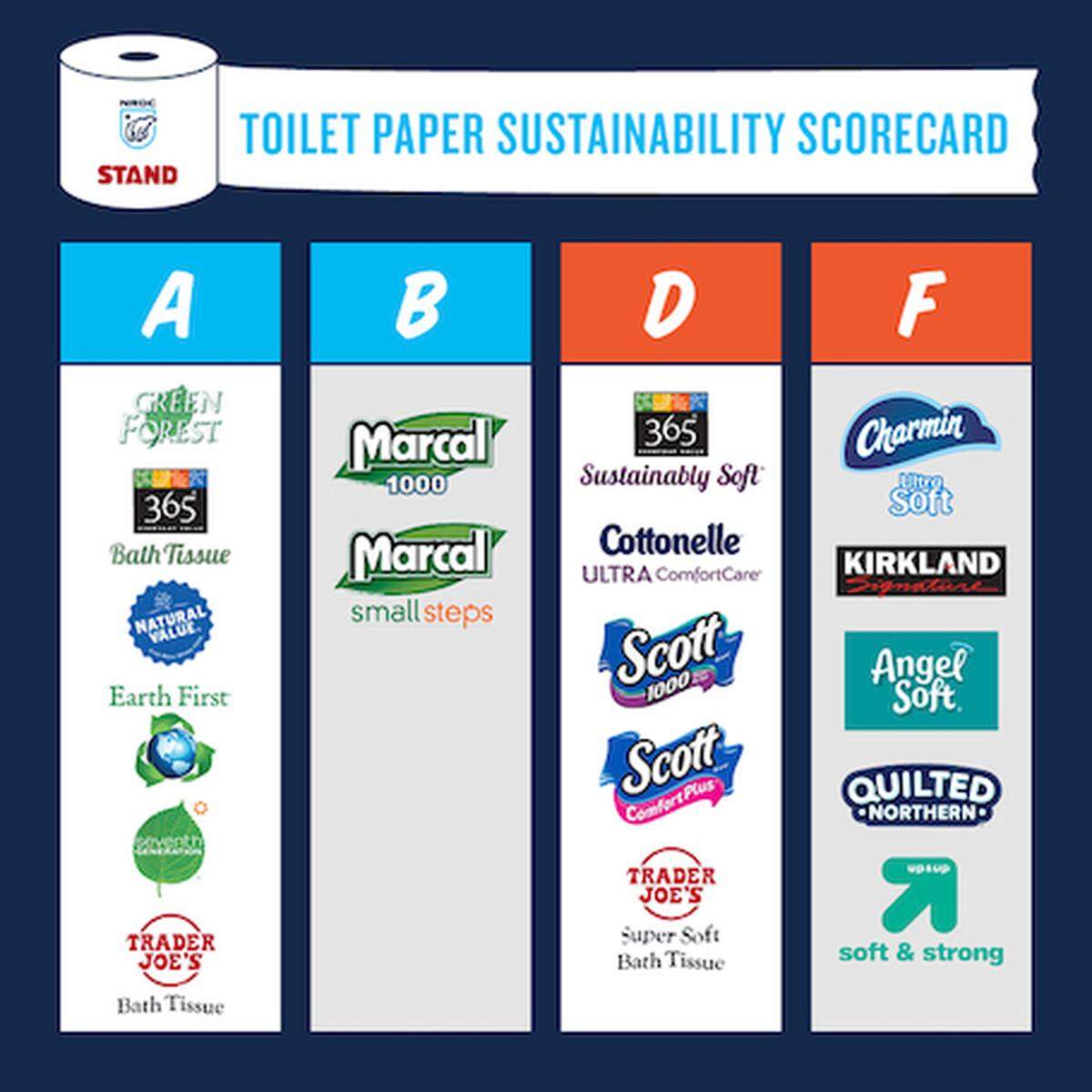
Among the best with an “A” grade are products like Green Forest, 365 Bath Tissue, and Trader Joe’s Bath Tissue.
Swirling down the drain with a big fat “F” as the worst products are household names including Charmin Ultra Soft, Kirkland Signature, Angel Soft, Quilted Northern and Up & Up Soft & Strong.
Procter & Gamble products include Charmin and “flushable” wipes that Bellingham officials said clog the city’s sewers.
Procter and Gamble sent an automated response to an emailed request for comment.
In a story published Thursday, the Cincinnati Business Journal said that P&G was reviewing the Stand/NRDC report.
Stand.Earth’s report gets to the bottom of a controversy that especially targets Procter & Gamble as among the worst for using trees clear-cut in the boreal forest of North America.
“The Canadian boreal forest is a really critical habitat,” Miller said. “The rate of loss is staggering. There’s massive amounts of industrial logging.”
Officials at Procter & Gamble refuse to use recycled material in its products intended for home use, Miller said in an interview.
“Charmin could be made with agricultural products like wheat straw” or recycled paper instead of new trees, Miller said.
This story was originally published February 22, 2019 at 11:40 AM.