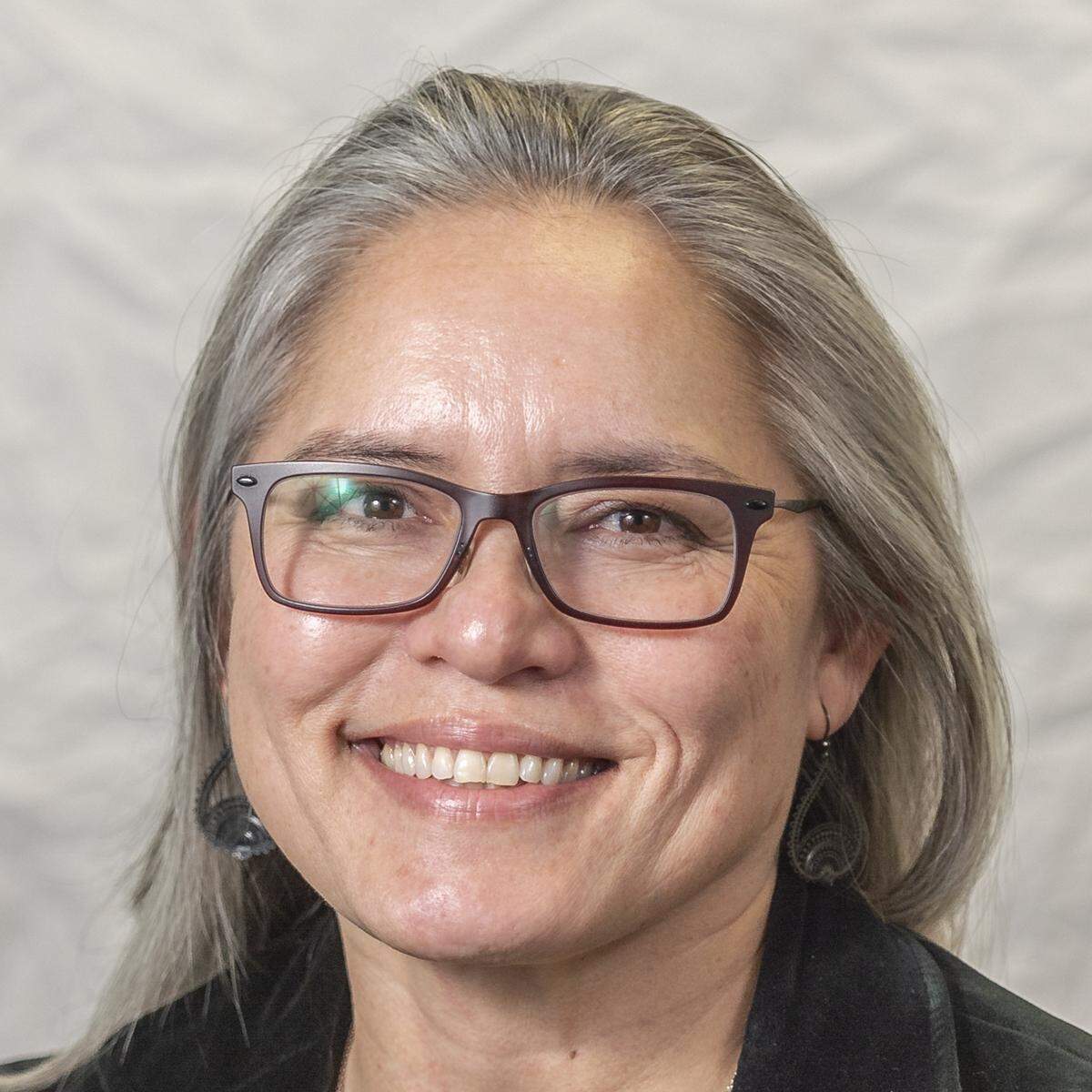
From housing to marriage, you need a photo ID for life today. What if you don’t have it?
If you don’t have a driver’s license in Washington state, or some other form of identification that proves you are who you say you are, you can’t open a bank account. You can’t rent a car or a hotel room. You can’t get a loan.
You can’t apply for a marriage license, and you can’t give blood. Getting a job will be difficult. If you’re homeless, you need an ID to get services that include housing and that may be a problem because many homeless have their IDs stolen from them.
So, what are you supposed to do if you’re among the estimated millions of U.S. citizens who don’t have a photo ID issued by a state, or other proof of your identity, such as a passport?
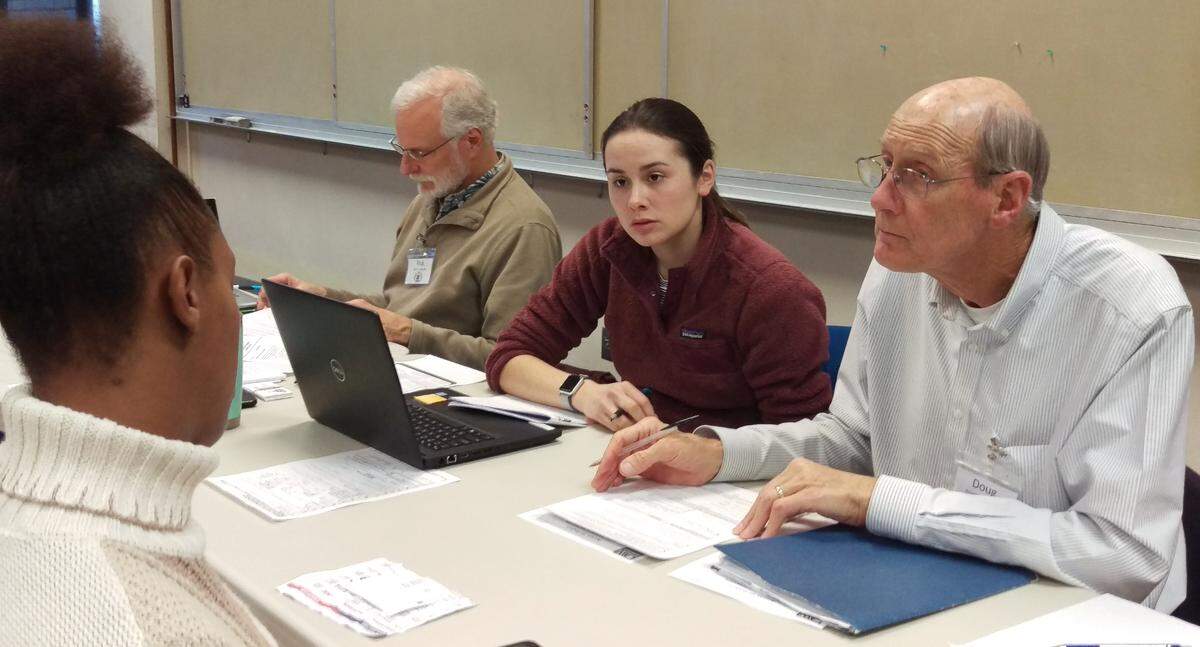
If you’re in Whatcom County, you go to the basement of the Bellingham Public Library on the Saturday afternoons the volunteers from the Access ID Project are there.
A program of the nonprofit LAW Advocates, the project has been around since 2010 and helps those who are homeless or low-income navigate the at-times confounding path to obtaining a government-issued ID.
“It can be intimidating and difficult,” said Rick Eggerth, a retired attorney who volunteers with Access ID. “There’s a lot of dead ends.”
Eggerth, a Bellingham resident, said he thought he could help people because he was familiar with navigating different agencies and requirements that can vary from county to county, state to state and agency to agency.
The Bellingham Herald obtained information for this story in emails and interviews this month and last.
“When you don’t have any ID at all, other than your face, it can be really difficult because even organizations that provide ID, sometimes, they want ID to give you their version of ID,” Eggerth said.
Since its start, the program has helped 1,200 people obtain ID — at an average of roughly 140 people a year. That’s while offering the service just six hours a month in one place, at the library.
“A lot of people who are looking for IDs are doing it because they are trying to look for jobs,” said Michael Heatherly, executive director of LAW Advocates.
Access ID Project isn’t alone in its efforts. IDignity, a program in Florida, has helped at least 20,000 people.
Think of the project and its volunteers as detectives who help retrace the legal paper trail that, in a way, defines modern life.
It’s a process that can be confusing and headache-inducing.
The problem
Whatcom County Councilman Rud Browne, who is concerned about people’s struggles to get ID, points to the many life events, what he calls milestones, that require, at a minimum, three documents — birth certificate, Social Security card and driver’s license.
“And if you don’t (have them) ... you can’t do any of it. It’s not that it’s more difficult. You just can’t do it, period,” Browne said, referring to milestones that include obtaining a marriage license, buying a home and opening a bank account.
If you lose any or all three of those basic pieces of identification for some reason, getting them back is a circular problem.
“In 38 states in the U.S. now, you cannot get a copy of your birth certificate unless you first produce photo ID. And you can’t get photo ID unless you first produce a copy of your birth certificate,” Browne explained. “I’ve heard lots of stories of people who have just been stuck at that point.”
How many people does this affect? For Whatcom County, it’s difficult to say. Advocates don’t have numbers for how many U.S. citizens here don’t have ID.
But a 2006 report from the Brennan Center for Justice at NYU School of Law estimated that as many as 7 percent of adults who are U.S. citizens don’t have ready access to documents — U.S. passports, naturalization papers or birth certificates — that prove they’re U.S. citizens.
And as many as 11 percent of U.S. citizens don’t have government-issued photo IDs, such as a driver’s license or military ID, according to the report.
The report was based on a survey of 987 randomly selected American citizens of voting age. The Brennan Center for Justice sponsored the survey.
What’s more, citizens who were elderly, low-income, black and Hispanic were less likely to have government-issued photo IDs, according to the report.
The fight against terrorism, identity theft and illegal immigration are the drivers behind tightening regulations that make getting ID, or replacing it, difficult, according to Browne.
Accessing ID
“We’re a society that not only depends on but demands you prove who you are. If you’re in the great mainstream of society, we don’t think about that very much. We all have our IDs. We have homes and cars and things and it doesn’t strike us as a problem,” Eggerth said.
Although Browne cautioned people against thinking this issue is someone else’s problem. After all, your documents could be wiped out in a fire, he said.
He advised people to obtain extra ID now, while they have photo ID and can do it more easily.
For others, such as the homeless — including youths who fled their homes or were thrown out and couldn’t grab their documents or weren’t even old enough to have a driver’s license — getting an ID can be difficult.
“Being homeless is tough enough. Being homeless without ID makes homelessness into hopelessness,” Browne said, “because there is no way out.”
Mike Parker, director of the Whatcom Homeless Service Center, said it can be common for those who are homeless to not have ID. They either lose them or have them stolen while living on the streets.
Without ID, those who are homeless can’t get into housing when it becomes available to them, Parker said.
Without ID, the homeless can’t help themselves in another way.
“It can be such a block to employment,” Parker said. “It’s a really common problem. But one that we feel, at least, we can make some headway with people.”
To Browne, helping people means giving them a chance at getting a job and getting off welfare. And it could mean keeping them out of a life of crime. All of which will save taxpayers money.
But starting in 2019, Access ID Project hopes to be able to help more people.
Whatcom County government has approved a contract with LAW Advocates for just under $40,000 for 2019.
That may allow the program to double the number of clients it can help each year, according to Heatherly.
The contract could be renewed for 2020 as well.
People who would be helped would be people like Ashley Ryles, who was at the Bellingham Library on Saturday, Dec. 1, to get help from Access ID volunteers.
Browne also was there that day to learn, and to help.
Ryles said she was at a Greyhound bus station in Louisiana when she put her wallet on a chair and turned to tend to her baby girl, who was fussing.
When the 25-year-old turned back around — it took all of two seconds, she said — her wallet was gone. So was all of her identification, including her Alabama driver’s license.
Ryles, who was then staying with her aunt in Bellingham, was being asked a number of questions by Browne, as well as volunteers Stephanie Clarke and Doug Bulthuis.
The service is confidential but Ryles was willing to talk about her experience.
Alabama won’t send Ryles another copy of her ID because she’s no longer in Alabama.
Ryles was born in California. They tried to order her birth certificate from that state but weren’t allowed to because Browne was trying to pay with his credit card.
So then volunteers were trying to figure out if they could track her life backward, asking her where she went to high school, middle school and elementary school. Volunteers have used pictures from high school yearbooks to help client’s re-establish their IDs.
They were trying to track down any paperwork on it that had Ryles’ name on it or her baby’s name on it. They called about medical records but were told Ryles would have to sign for them in person.
They worked through a laundry list of acceptable documents on worksheets.
Then Browne tackled the issue again, with Ryles, the next couple of days.
It took hours of calling around Alabama. They learned of a website where she could get her a duplicate ID followed by confirmation from a notary public, Ryles said. Then, she was able to get a temporary ID from Washington state.
She’ll take the IDs with her when she and her daughter move to Tennessee. Her mom lives there, Ryles said, and there’s a job waiting for her there.
Ryles leaves with a feeling of relief.
“I feel so much better. I feel at ease,” Ryles said. “That right there with my ID, that was a stress burden that was lifted off of my shoulders.”
Get a spare
If you think the struggle to get ID is an issue only for the homeless and other U.S. citizens who struggle with it, Browne said you should think again.
Your home could be burglarized or burn down with all your documents in it.
So while you still have a photo ID and, therefore, the ability to order new copies of your birth certificate, he recommends you order a second original. You can’t get a second driver’s license but you can get a state ID card.
Then take those documents, plus any expired ID, and put them somewhere else — at your parents’ home, in a bank safety deposit box or anywhere else so that you don’t lose all your documents when catastrophe strikes.
“I’m trying to drive home to people this is not just somebody else’s problem,” Browne said.
ID help
▪ Access ID Project: lawadvocates.org/access-id-project
▪ IDignity: idignity.org
▪ Washington State Department of Licensing: dol.wa.gov. Select “more driver and ID cards” on the homepage.