Destructive wind was a perfect storm of hot air, high tides and drought-weakened trees
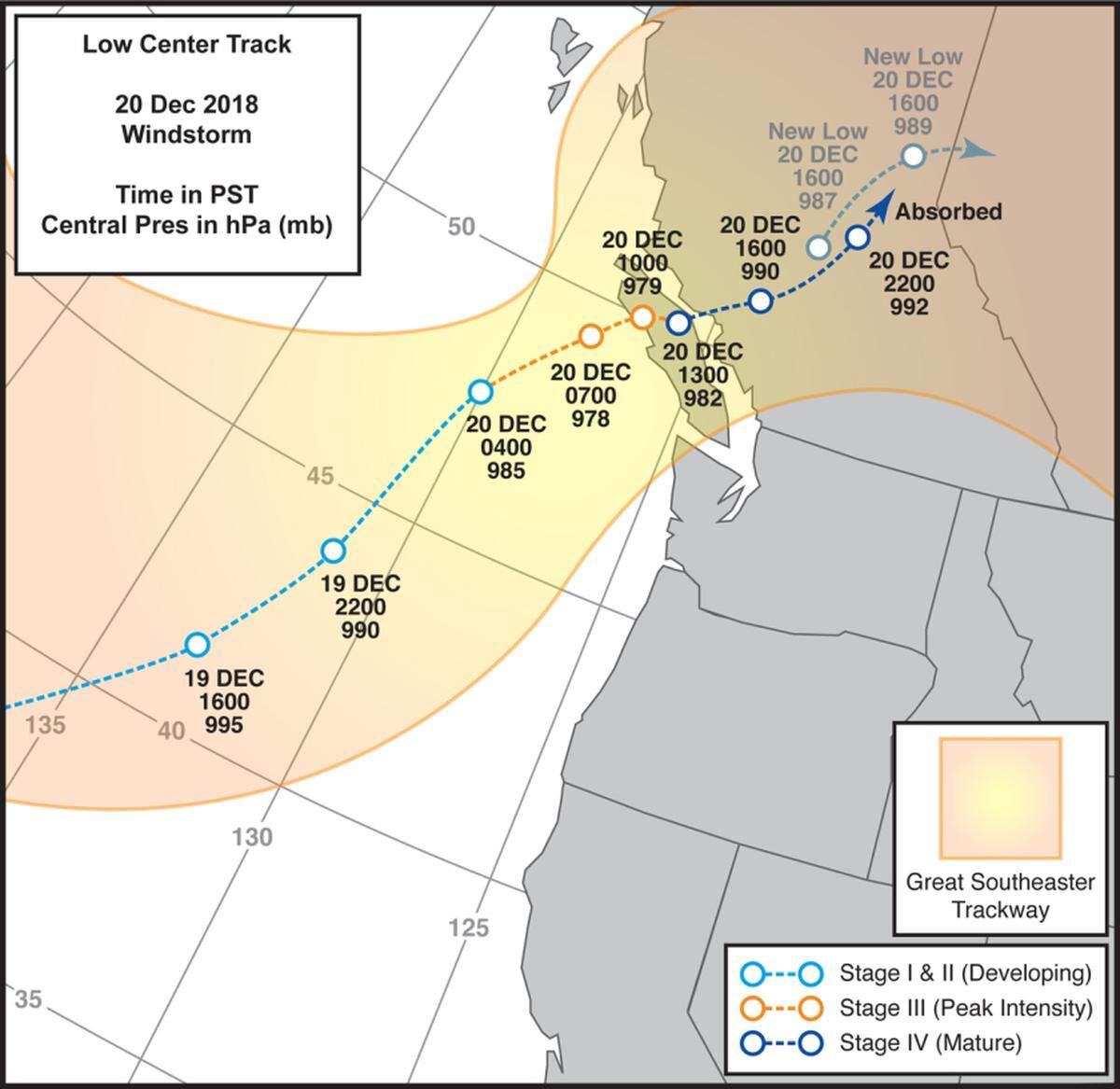
What’s now called the Solstice Eve Windstorm of 2018 began as a simple low-pressure system in the warm waters off Hawaii.
It was similar to any number of storms that pour heavy rain, blow strong winds and dump snow across the Northwest in late fall and early winter.
But as it churned in a broad arc from the South Pacific toward southwest British Columbia, this storm gained momentum and slammed headlong into a blast of arctic air, spawning a monster that meteorologists call an extratropical cyclone.
Aided by seasonal high tides and trees weakened by two years of summer drought, it caused widespread destruction as one of the worst winter storms to hit the Northwest in several years.
“This storm struck the region at near peak intensity, putting it in a rare category,” said Wolf Read, a geographer and an expert on the Northwest’s powerful windstorms.
It wasn’t nearly as bad as the Columbus Day storm of 1962, but it was the worst in a series of storms that pummeled Western Washington over a two-week period from Dec. 10 through Christmas — ones that packed winds of 30-40 mph with gusts to 60 mph and higher, and also were responsible for flooding, landslides and a tornado.
Read’s blog post analyzing the Dec. 20 windstorm and its effects drew praise from meteorologists at the National Weather Service in Seattle.
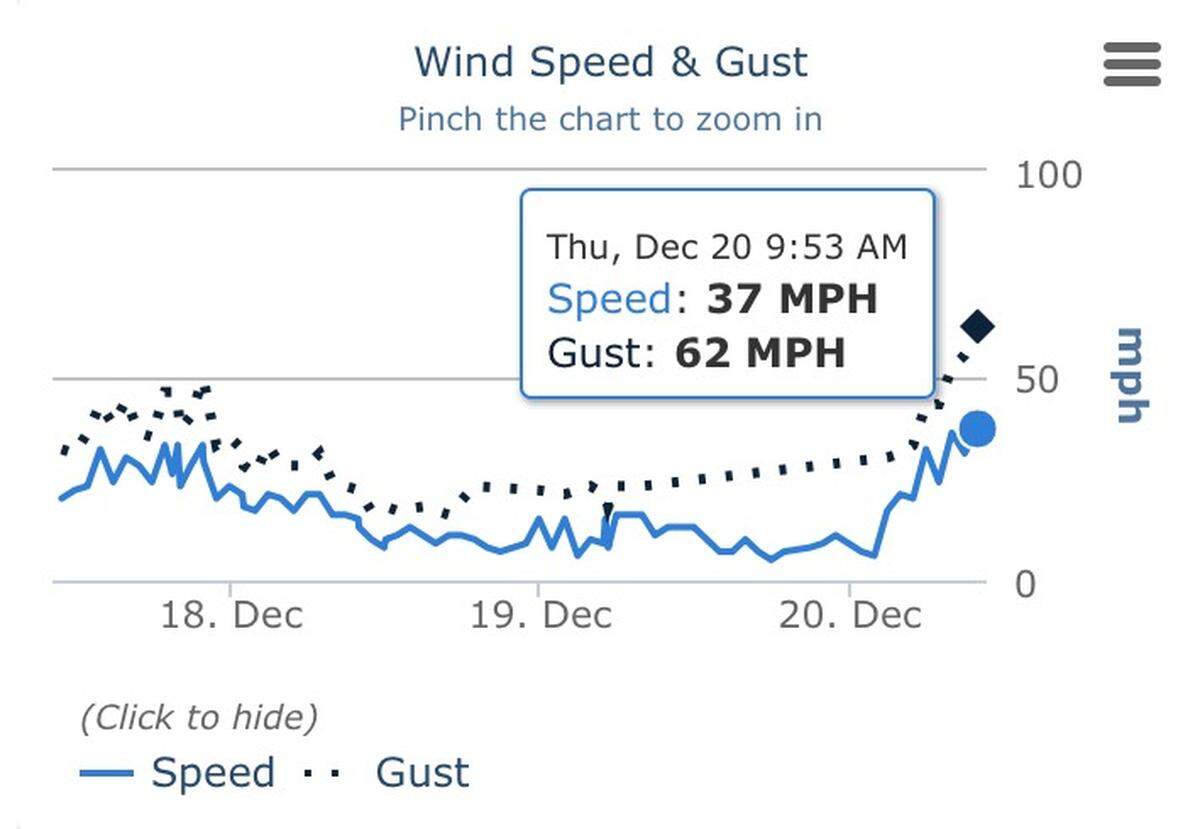
At the height of the storm’s ferocity, in the early afternoon of Dec. 20, sustained winds were nearly 40 mph at Bellingham International Airport, with gusts to 66 mph.
And it was warm — a high of 57 degrees in Bellingham, 2 degrees short of a record for the date and 13 degrees warmer than normal.
“A lot of our damage is the outcome of falling trees,” Read told The Bellingham Herald from his home in Port Coquitlam, B.C. “Once you start seeing gusting in the 60s you can see windows breaking, eaves tearing, trees are flexing.”
Trees in Whatcom County have suffered through two warmer than normal summers with lower than normal rainfall, according to National Weather Service records.
“When you combine heat with dryness, you stress trees,” Read said. “ It clearly caused a lot of attrition.”
Trees and branches fell into power lines and poles, crashed into buildings and blocked roads.
Trees fell across all lanes of Interstate 5 near Bow Hill Road, snarling traffic for hours south of Bellingham, according to a tweet from the state Department of Transportation.
“Whatcom County Public Works has essentially been working 24/7 since the 10th of December,” said John Gargett, deputy director of the Whatcom County Sheriff’s Office Division of Emergency Management.
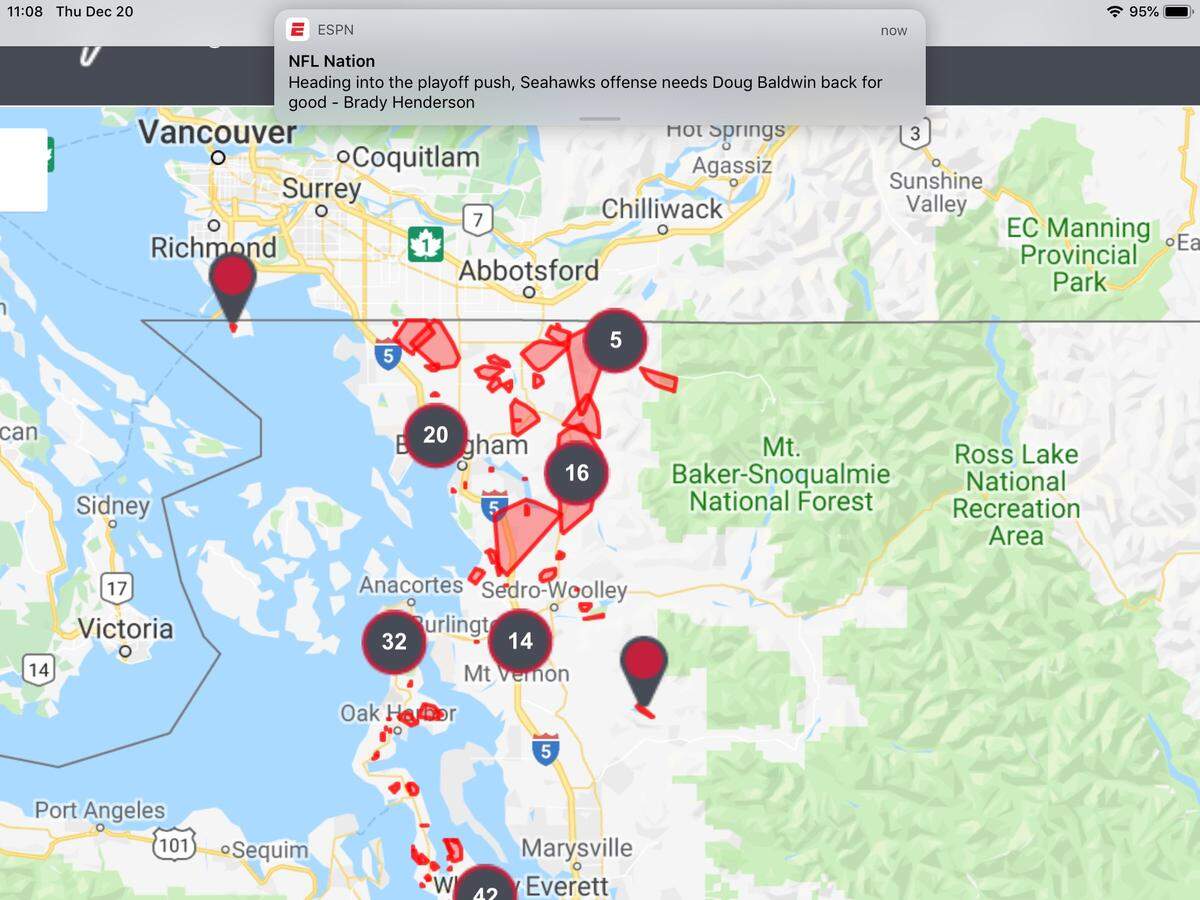
Puget Sound Energy reported on its website that 165,00 customers were without power across the Puget Sound region on the afternoon of Dec. 20.
BC Hydro reported that some 200,000 of its customers were affected, Read said in his case study of the storm.
At its worst, possibly tens of thousands of homes and businesses were without power across a wide section of rural Whatcom County — an exact number was unavailable — but most Bellingham residents were spared outages that stretched from several hours to five cold and miserable days.
PSE spokeman Andrew Padula said that 10,000 Whatcom County customers remained without power on Friday morning, Dec. 21, and all but about 100 customers had power by the morning of Dec. 24.
“With transformers on the ground and poles completely destroyed — that’s the kind of damage that takes longer to fix,” Padula said.
He said that PSE had 83 crews of two to four people working around the clock to repair the lines.
Often, downed trees and branches had to be cleared before crews could start repairs, Padula said.
Hardest-hit were Point Roberts and the foothill areas of Kendall, Peaceful Valley and Maple Falls, where power for some residents was out until Christmas Eve, and the coastal community of Birch Bay, where wind-driven waves and a seasonal high tide damaged homes and businesses and ripped apart a section of Birch Bay Drive.
“They took the brunt of the storm, as far as wind goes,” Gargett said. “It wasn’t a pleasant experience.”
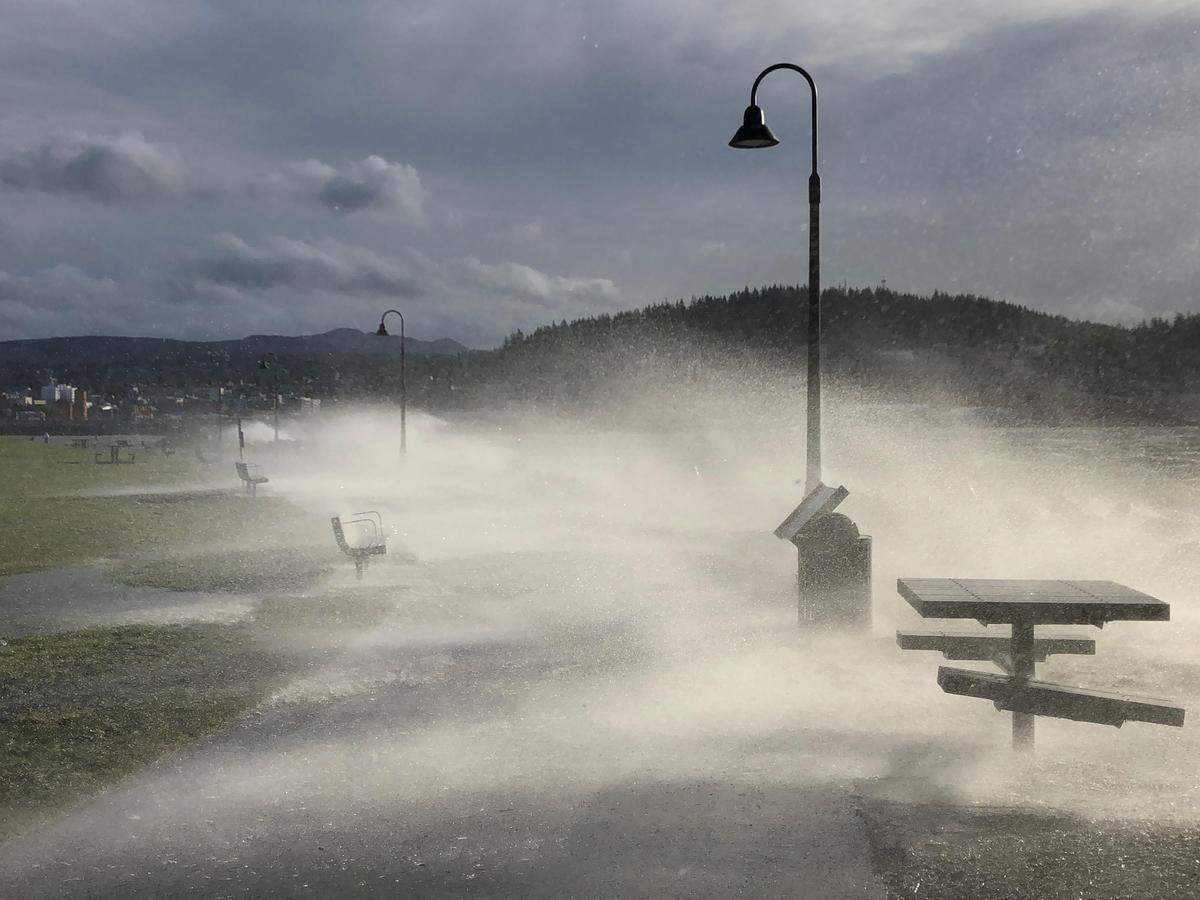
In Birch Bay, an afternoon high tide reached 9.5 feet and waves scoured waterfront Birch Bay Drive, ripping the asphalt to shreds and tossing utility poles, trees and other debris across the road.
One lane of Birch Bay Drive remains closed indefinitely between Harborview and Shintaffer roads.
By Friday, Dec. 28, damage reports across Whatcom County had risen to between $4.5 million and $5 million — and that figure was expected to rise as more claims were filed, Gargett said.
Statewide, emergency managers were assembling damage figures from each county in hopes of getting a federal disaster declaration, which would trigger FEMA aid.
On Thursday, the statewide damage figure was $10 million to $12 million and was expected to grow, Gargett said.
Gargett said that homeowners who suffered storm damage should call the Whatcom Unified Emergency Coordination Center Damage Assessment line at 360-788-5311 to start the process for damage assessment and possible aid.
“They got slammed, that region” near Kendall, Read said. “It was truly a storm of significance.”
Abbotsford, B.C, just a few miles north of Kendall, saw gusts of 70 mph, Read said.
“Those regions tend to get the brunt of these southeast windstorms,” he said.
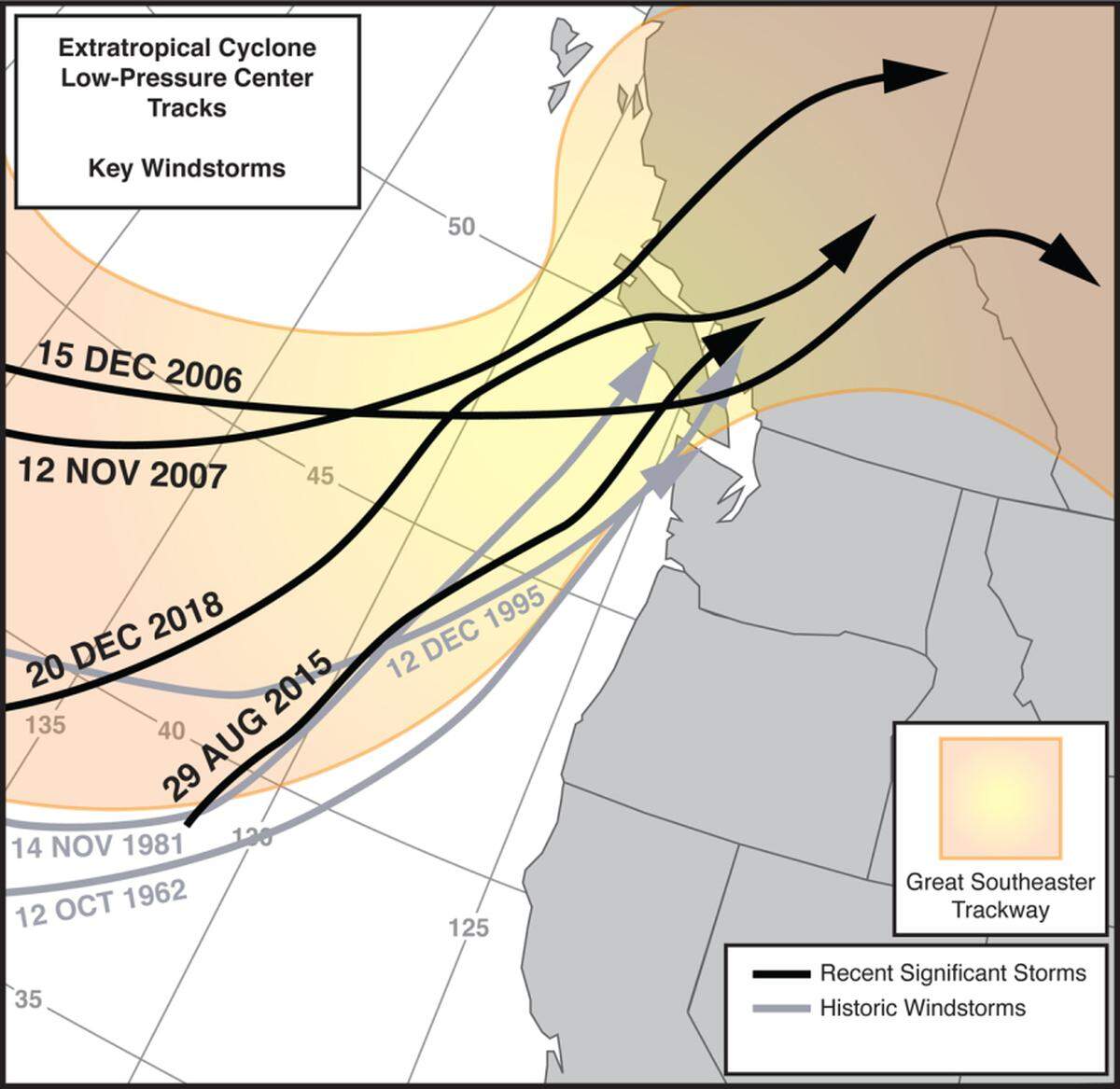
Northwesterners sometimes call it a Chinook, Read said. Meteorologists call it a foehn wind, one that gets its destructive force from compression as it blows down a mountainside.
Kelly Vogel of Kendall, who works at the East Whatcom Resource Center in Kendall, said the center opened to offer food and shelter for residents without power and heat.
Several dozen people passed through over the weekend for food and a warm place to sleep, she said.
“Most everyone was personally affected,” Vogel said. “I was one of the lucky ones, my power came back on Saturday night.”
And she got an early Christmas present from her parents, in the form of a room at a Bellingham motel with light and heat.