
At a road often blocked by border-crossing trains, residents sit and hope for a solution
A reprieve could be in sight for drivers repeatedly stuck in heavy traffic at a major intersection as freight trains crawl south from Canada past an inspection station in north Whatcom County.
Ever since U.S. Customs and Border Protection installed a scanner to check southbound trains for suspicious cargo 15 years ago, delays have been a frequent nightmare for drivers at Peace Portal Drive and Bell Road, south of Blaine.
“How many times have we had to call work to tell them we’re stuck at a train and we’d be late?” asked Lacie Sethney of Birch Bay, tagging her husband Justin Sethney in response to a social media inquiry from The Bellingham Herald last month. “And then never knowing how long the train would be, or if it was slowing down, if it would just go slow or actually stop?”
Backups are caused by trains inching past the federal government’s vehicle and cargo inspection system station, Customs and Border Protection spokesman Jason Givens said in an October email.
Called VACIS, it uses X-rays to scan the train cars for people, plus weapons, nuclear material and other contraband, according to the website of Leidos, which makes it.
BNSF spokesman Gus Melonas said the trains must slow to 7 mph during scanning, and sometimes they stop and reverse direction if it’s necessary to further examine the car.
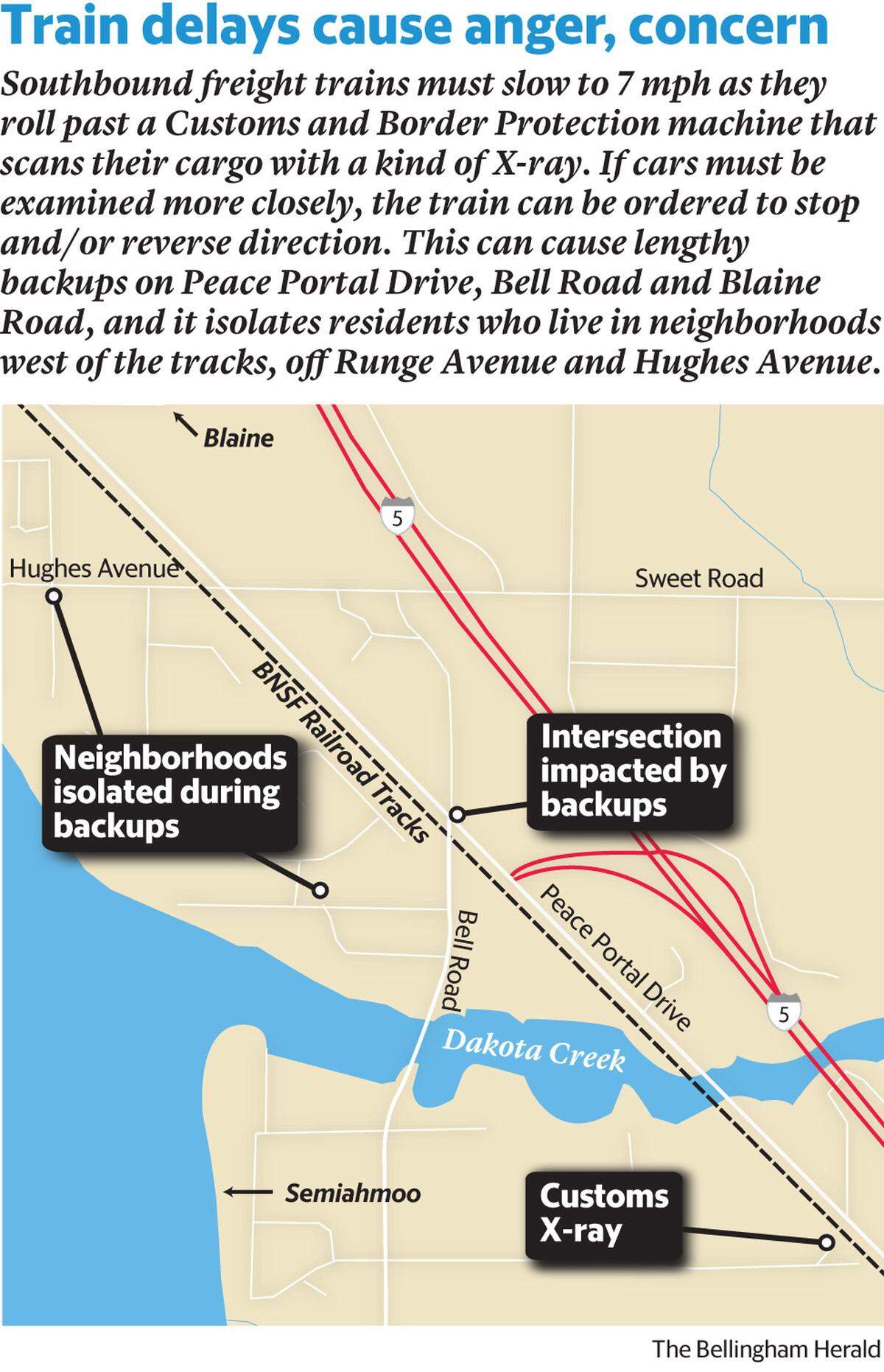
Although the VACIS is located along the tracks near the east end of Hall Road, trains block roads to the north, said Blaine City Manager Michael Jones.
“It’s a pretty heavily trafficked intersection,” Jones said in an October interview.
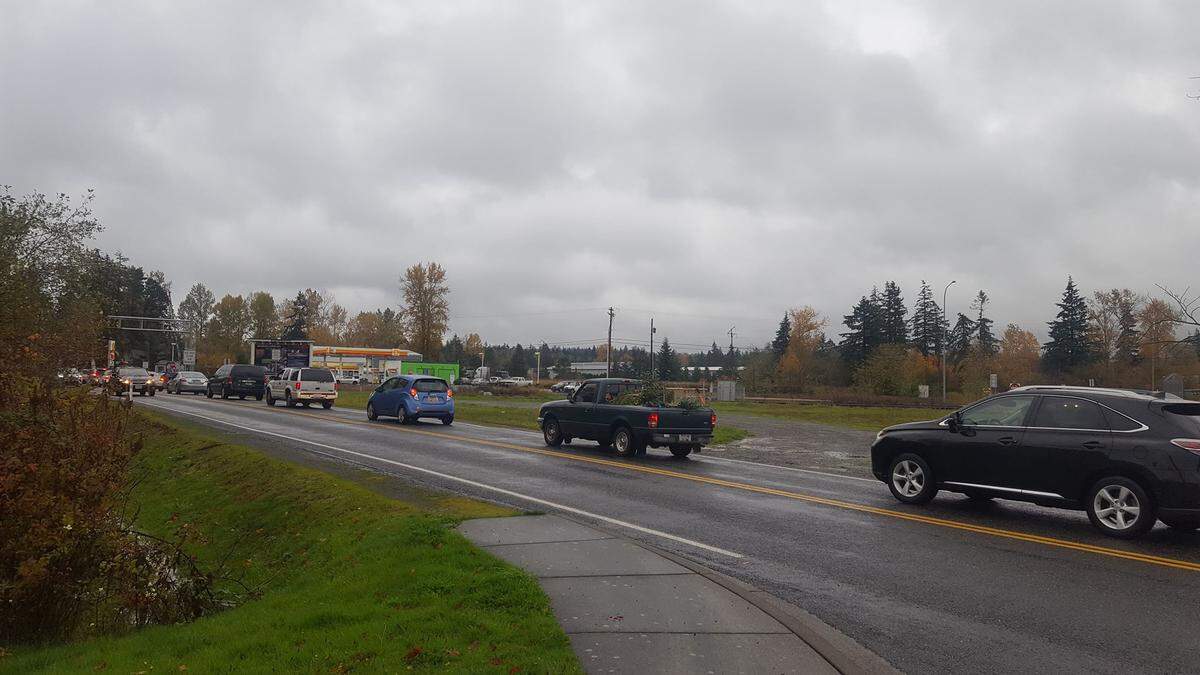
“The traffic will line up for over a half-mile at times and it can take up to a half-hour to clear. If they ever find anything, which happens from time to time, they actually have to stop the train,” Jones said. “That can be a long time. People often give up and go home.”
Peace Portal Drive and Bell Road are both one lane in each direction, so traffic backs up with any northbound driver waiting to turn left at Bell Road.
Southbound Peace Portal backs up for drivers turning on Bell Road, and Bell Road backs up both north and south of the tracks.
Residents said they sometimes wait 30 minutes on the way to jobs, school and appointments.
Others find they can’t return home.
“It usually happens when I’m in a hurry to get somewhere,” said Kevin Owens, a member of the Blaine Planning Commission who lives west of the tracks in a neighborhood that’s completely isolated by slow-moving or stopped trains.
The state Department of Transportation is spending $550,000 to study the design of a proposed overpass at the intersection, which would solve most of the problems, said Todd Carlson, who is WSDOT planning and engineering services manager for Whatcom, Skagit, Island and San Juan counties.
If an overpass is approved, it could take several years and $8 million to $15 million to complete, Carlson said.
Carlson said in a Tuesday interview the area’s state legislators have tried to secure funding without success, but that he’s more hopeful this time around.
Givens said Customs and Border Protection thinks an overpass is the best solution, but the federal government thinks funding should come from state or local sources.
“CBP believes the most viable solution is for the city to build an overpass,” he said. “Other cities along the northern border have successfully built overpasses to mitigate the impacts of rail inspections. However, CBP cannot make infrastructure decisions for the city nor can it fund infrastructure decisions made by the city.”
Even so, Carlson said the Blaine crossing isn’t even among the worst in the state, which is one reason that it hasn’t qualified for funding.
“We’ve clocked it for as much as 45 minutes,” he said. “You usually don’t see that except in siding yards.”
About seven freight trains and four Amtrak passenger trains pass through Whatcom County daily, Melonas said in an October interview.
Northbound trains rumble past at 35 mph and pass quickly, so traffic is less of an issue, he said.
“BNSF recognizes the importance of mobility for the public,” Melonas said. “We do all we can to make trains move safely over the border.”
Owens said delays are usually about 10 minutes, but they can be longer.
“It seems like an inconvenience because you can see this big, huge lumbering train, moving slowly in front of you. It’s like being in a traffic jam, and we don’t usually see traffic jams in Blaine,” he said in an October interview.
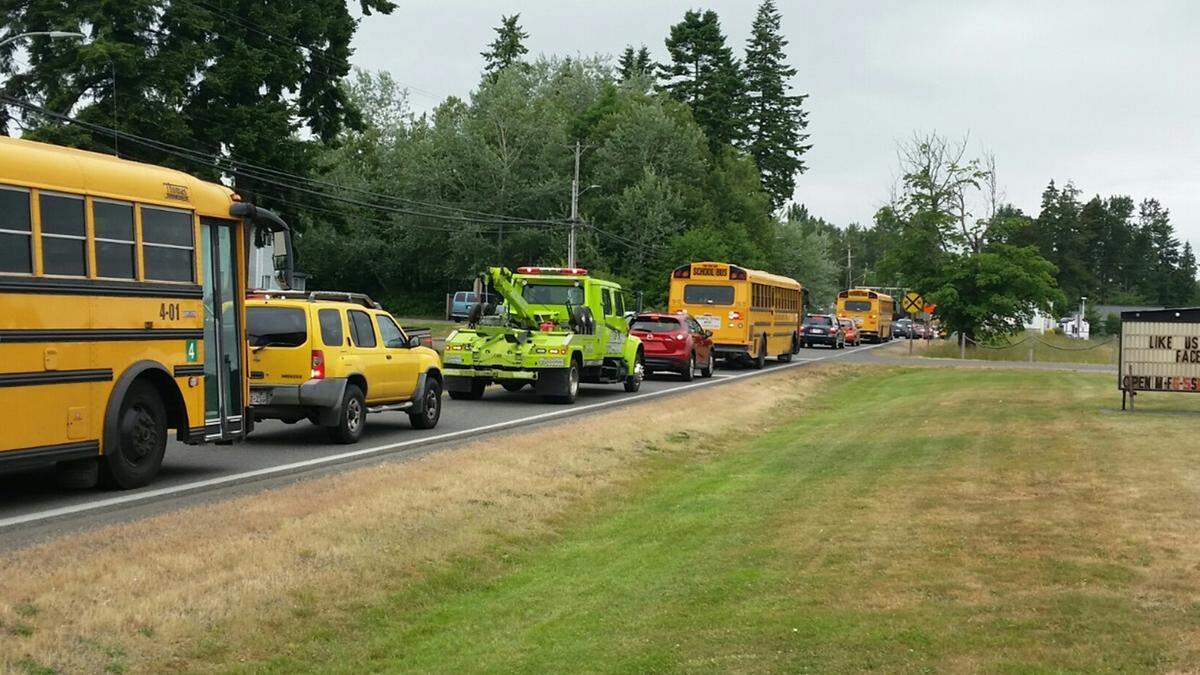
Backups create havoc for commuters, students on school buses miss the start of classes, and residents fear that firefighters or police could be delayed in the event of an emergency.
“It seems like an eternity. If one were in an emergency situation, 10 minutes can be a lot of time,” Owens said.
Jenna Schrengohst of Blaine was among a dozen drivers who vented their frustration on the Whatcom Incidents & News page on Facebook after a train about 6 p.m. Nov. 1 stopped traffic for more than 20 minutes.
“It’s a constant issue up here, though, kids are often late with school buses being stopped,” Schrengohst said via Facebook Messenger. “I think we all know it’s a part of living here, but we’d love to find some good solutions to the trains that actually stop or sometimes go back and forth blocking traffic.”
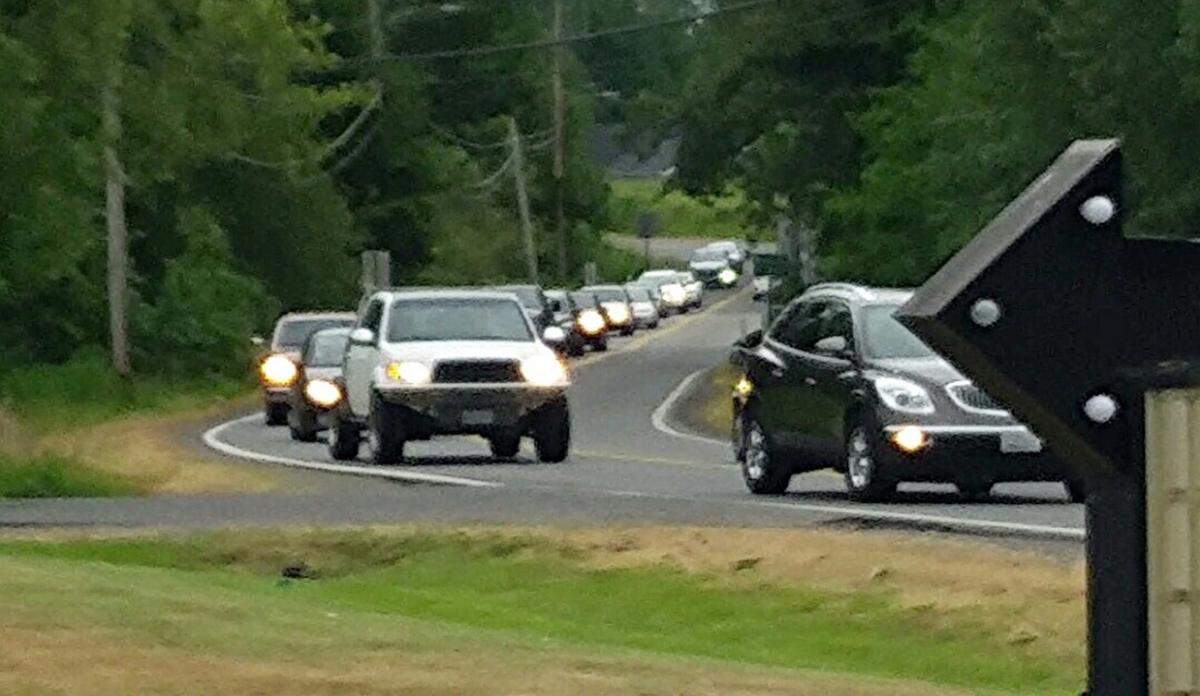
Fionna Sellinger of Blaine said it’s sometimes worse after the train passes, especially at the Bell Road-Blaine Road-Peace Portal Drive intersection. “I can honestly say I’ve been stuck waiting for a slow or stopped train for 20-plus minutes, Sellinger said in an email last month.
“It’s not only that the train goes extremely slow and is quite long, but it’s the aftermath that takes a long time to get through as well. The traffic builds up on all sides, making it take way too long to pass over the tracks long after the train has passed.”
Chief William Pernett of North Whatcom Fire and Rescue said in the five years that he’s been with the department he can’t recall a fire or medical call that was made worse by a train.
“It’s a common problem, and it’s not just us,” Pernett said in an October interview. “Certainly it can cause a delay. It’s something that we and the community have been discussing.”
He said if there’s an emergency in an area where access could be blocked by a train, 911 dispatchers send firefighters from two North Whatcom Fire stations — one in Blaine and one near Birch Bay.
Carlson said traffic problems arose immediately after the federal government installed the VACIS scanner in 2003.
Because it was a federal project with national security implications, it didn’t require the kind of public scrutiny that a business or state project would have faced.
“(WSDOT) might do things that people don’t like, but we do have a process that lets people voice their concerns,” Carlson said.
“It’s probably the best place to have located it,” he said. “They got the technical stuff right, they just didn’t communicate.”
Blaine Public Works Director Ravyn Whitewolf said she’s been studying the issue for several years, searching without success for a solution.
“It’s been a real problem for us, but we’re excited that we have some money to move forward,” Whitewolf said in an interview earlier this month.
Meanwhile, residents wait — especially those in several hundred homes west of the tracks.
“Whenever I leave my home it’s a total crap-shoot as to whether I get to my destination on time or sit and rot with 50 other cars as some train lumbers through,” resident Colleen Wenrich said in an email Oct. 18.