
Here’s one way to beat Bellingham’s tight housing market: Recycle one from somewhere else
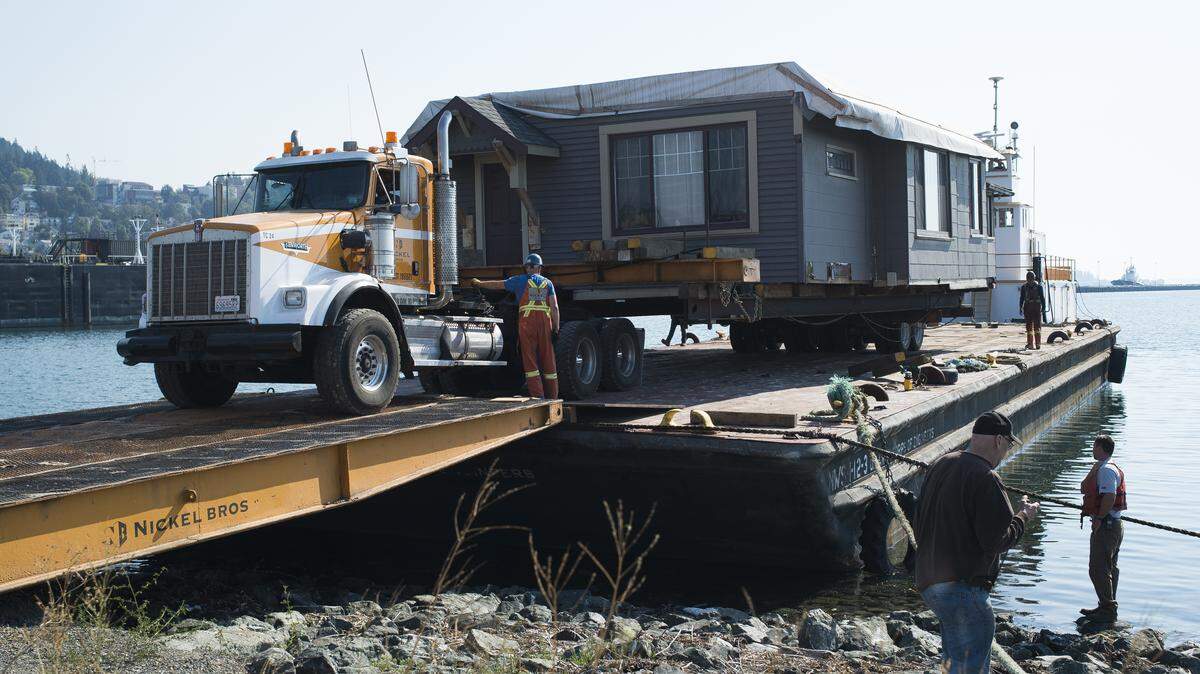
Here’s an interesting way to potentially avoid getting beat up by Bellingham’s tight housing market — bring one here from somewhere else.. By boat.
No, it’s not the same as flipping homes, and it’s definitely not like recycling newspapers, aluminum, glass and plastics.
Nickel Bros., Inc., which has offices in Vancouver and Nanaimo, B.C., as well as Seattle, will move older “up-cycled” homes to new locations for clients.
“We take homes that are going to be torn down, find people interested in buying them and move them to a new location,” Nickel Bros. Sales Manager Nick Carpenter said. “We up-cycle, because the house is going to be demolished.
’”We’re doing what we can to save building materials from being thrown away.”
And we’re not just talking about moving a mobile home down the street — Nickel Bros. transports full-sized houses to a barge, floats them to a new city, and places them at a new location.
Last year, Nickel Bros moved Everett’s historic 6,000-square-foot Weyerhaeuser Office Building about a mile, according to The Herald newspaper in Everett.
Though it’s a much, much smaller scale, Bellingham’s newest house arrived at the Landings at Colony Wharf Wednesday afternoon riding aboard a barge, courtesy of Nickel Bros.
An “up-cycled” two-bedroom, one-bathroom, 1,075-square foot house that used to be located in New Westminster, B.C., is now in the Happy Valley Neighborhood, at 1314 24th St.
The 30-ton house was offloaded from the barge by 4 p.m. Wednesday, and crews moved it to the Happy Valley Neighborhood early Thursday morning. In case you were asleep and missed it, the house’s route included F Street, Girard, Commercial, Magnolia, North State, Harris Avenue, 21st Street, Donovan Avenue and, of course, 24th Street — a slow 5.6-mile journey.
“There are a lot of logistics that go into these moves,” Carpenter said. “Very early on, we have to make sure there is a suitable barge site that can offload the building. Then we have to figure how to get the house from the barge site to the new destination.
“Then we’ve got to go out and check for any obstacles — everything from tree limbs to utility lines to parked cars to light poles, even mailbox obstacles. We measure the entire route from the water to the destination.”
Carpenter said planners then need to coordinate with the city, emergency services, public utilities, homeowners and anyone else the route might impact.
Seems like quite a bit of work, right?
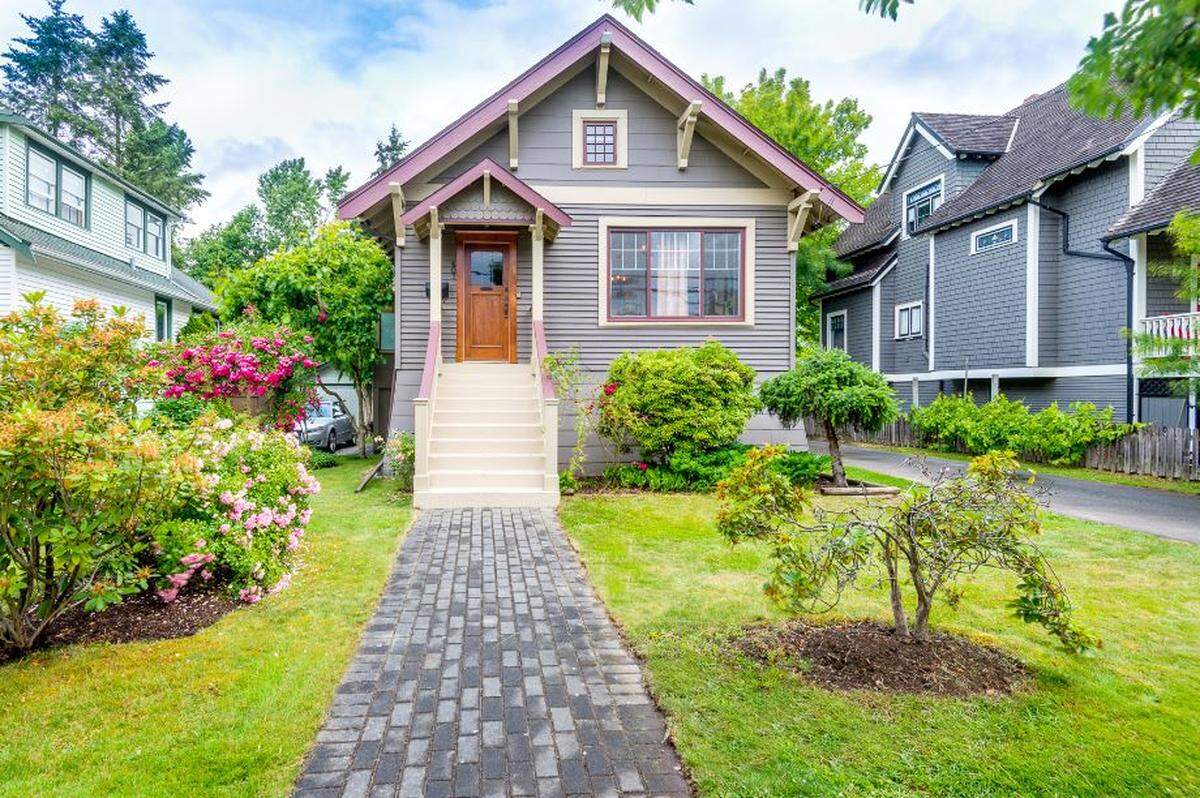
The price can make it worthwhile.
The house that moved to Bellingham, which Carpenter said was the first one his company has barged into the City of Subdued Excitement, was listed at $95,000 Canadian (approximately $72,300 U.S.), including moving costs.
Buyers still must pay for the land to put the house on, but it’s not a bad deal.
And before you ask, Carpenter said there’s almost no twisting or any other excessive forces put on the houses during moving.
“The worst we see is some cracks in the drywall,” Carpenter said. “We make sure we support it. We engineer everything, using hydraulics to level everything.
“The windows don’t break and tile doesn’t crack.”
Bellingham’s newest house had its roof removed to keep costs down with the move in Canada, Carpenter said, but all that did was make for an even easier move to its new home.
This story was originally published September 5, 2018 at 5:40 PM.