
Three reasons why you should look at the Whatcom sky tonight
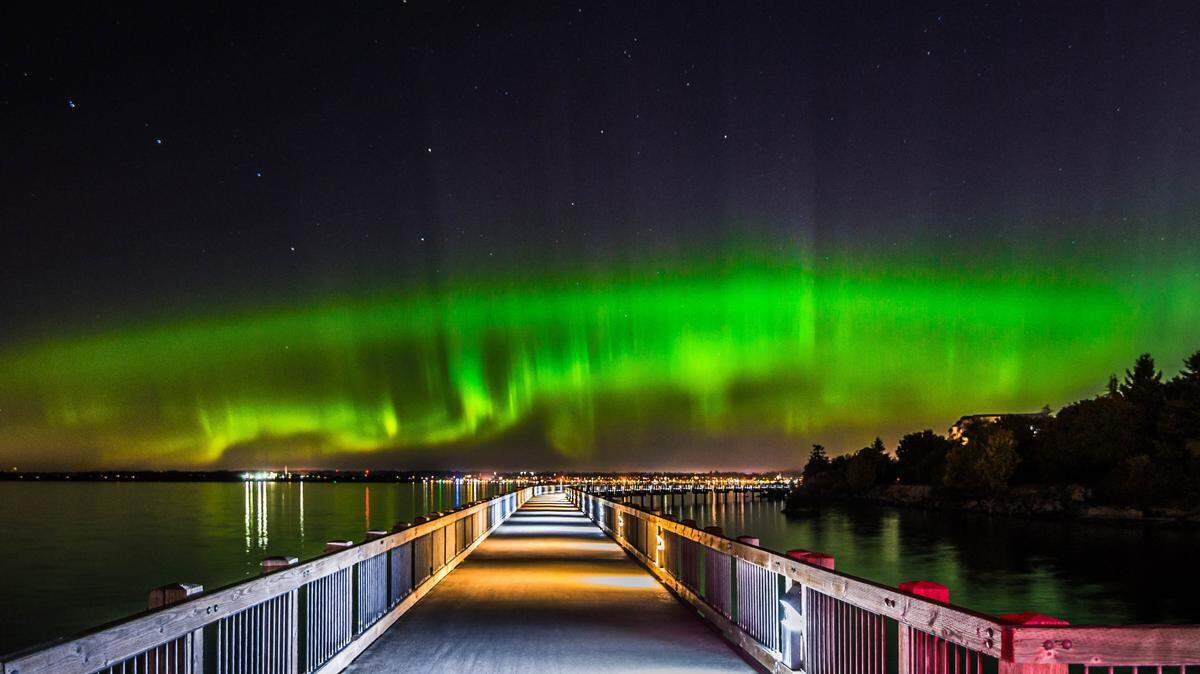
If you’re awake after sunset Monday night, remember to glance at the night sky — you might be in for a treat or two.
A geomagnetic storm is hitting the Earth, offering an increased chance of seeing the northern lights at lower latitudes, including possibly Bellingham.
“They expect a G1 storm. It should begin later today,” said Ni Cushmeer at the National Weather Service.
Cushmeer said a G1 is a relatively minor storm that could affect radio signals and GPS units.
“You may get lucky and see it at our latitude, usually low on the northern horizon,” she said.
According to NOAA’s Space Weather Prediction Center — yes, that’s a thing — the storm is caused by a “recurrent coronal hole high speed stream” of particles from the sun.
It’s solar wind, Cushmeer said.
Cushmeer said a G1 storm is relatively common event, but doesn’t always produce a visible aurora.
That’s because the solar particles sometimes hit the Earth during daylight, and the particles aren’t always directed at the Earth.
According to the Northern Lighthouse Project, G1 storms are recorded about 1,700 times per 11-year solar cycle —or about 155 times per Earth year.
In the Northwest, the best chance of seeing the aurora borealis — the astronomical term for the northern lights — is to get away from bright city lights and look low on the northern horizon, Cushmeer said.
An aurora is often a fleeting event, so there’s serious dedication and a bit of luck involved.
Perfect viewing spots would be atop Mount Baker or a boat on the Salish Sea, she said.
If you don’t see the northern lights, maybe you’ll see a shooting star that’s part of the Perseid meteor shower, an annual event that peaks this year on the nights of Aug. 11-12 and Aug. 12-13.
Perseid meteors are pieces of dust from the Comet Swift-Tuttle, and are named because they appear to originate from the constellation Perseus high in the northeastern sky.
Earth began passing through the comet’s tail last week.
If that’s not enough, the International Space Station will pass over Bellingham three times Monday night, at 9:27 p.m., 11:04 p.m. and at 40 minutes past midnight.
All three passes should be about 50 degrees high in the sky and the station will be moving from the south and west toward the north and east.
It’ll be brighter than the brightest star and move fairly quickly.