
This could be why the water off the coast has been reddish-brown in parts of Whatcom
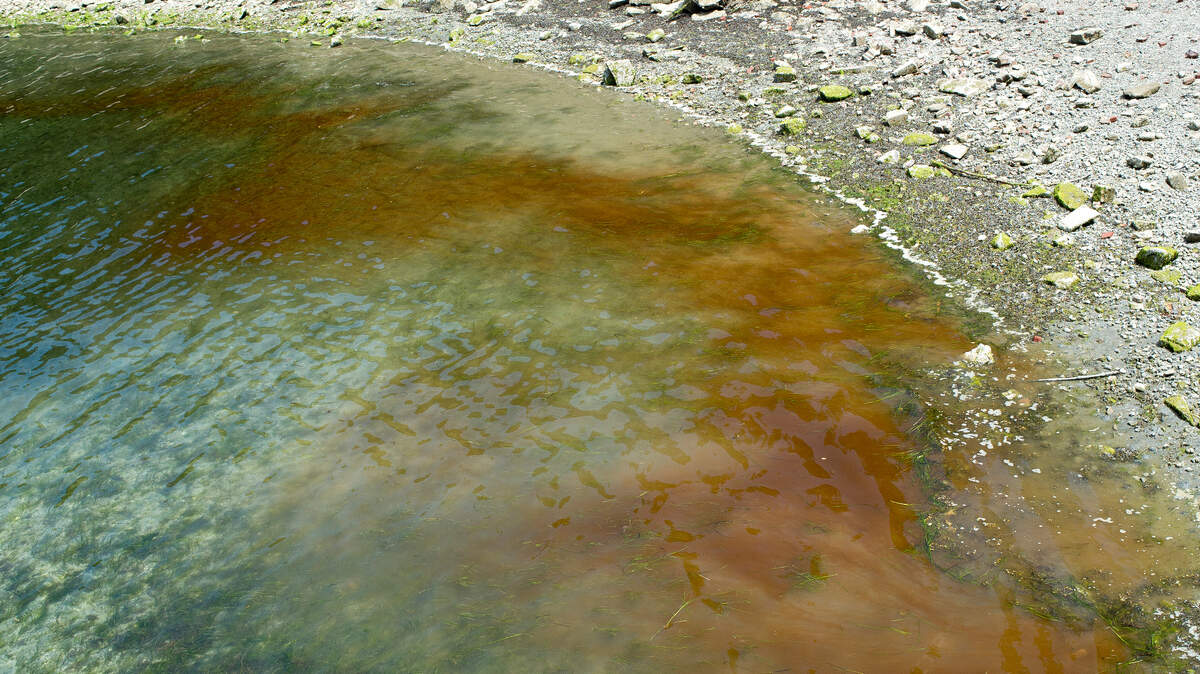
Wondering what’s causing the marine water in parts of Whatcom County to look strange — sort of rusty red or rusty brown?
The Whatcom County Health Department has been getting reports about it in Birch Bay and near Drayton Harbor, officials said, referring to the phenomenon as red-colored plankton blooms.
Plankton refers to organisms, mostly tiny, in fresh and marine water. They are usually plants or animals. A bloom is a whole bunch of them together.
Visitors to Wildcat Cove and Teddy Bear Cove noticed the unusual coloration earlier this week as well. At Wildcat, the water was inky in places. At Teddy Bear, there were bands of it near shore. There also were long bands of it on the sparkling water off Boulevard Park in Bellingham.
Looking at a photo provided by The Bellingham Herald, marine scientists at Western Washington University speculated that the color was caused by a type of plankton called noctiluca.
Such blooms are common in the Puget Sound and are nontoxic, according to the Washington State Department of Ecology.
The blooms are known for glowing in the dark when the water they’re in is disturbed, a phenomena called bioluminescence that is usually seen in mid- to late-summer here.
Noctiluca tend to form reddish blooms this time of year, said Brian Bingham, who is a professor in the Environmental Sciences Department at Western Washington University.
The blooms also could be bacterial, according to Suzanne Strom’s lab at WWU’s Shannon Point Marine Center in Anacortes. If they are, such blooms feel slimier and tend to be browner.
“Without a sample, it is impossible to say,” Bingham said, “but a best guess from the photo says it is one of these two possibilities.”
At the same time that the Whatcom County Health Department has been fielding queries about the coloration caused by the blooms, it has issued another warning to recreational shellfish harvesters about the danger of biotoxins.
This time, it’s the biotoxin that causes diarrhetic shellfish poisoning. Recent tests have shown unsafe levels of it, so public health officials are telling people to not harvest shellfish recreationally on beaches along Bellingham Bay south to the Skagit County line.
The beach closure includes all of Larrabee State Park. It does not affect Portage Bay or Lummi Bay.
Shellfish sold in restaurants and retail markets have been tested and are safe to eat.
For those who wonder, the Whatcom County Health Department said the recent blooms are not associated with biotoxin closures.
“Water color is not an accurate measure of shellfish safety. Algae that produce marine biotoxins can only be detected by laboratory testing. Toxic blooms can occur in clear water, and some non-toxic blooms can cause water color to change,” the health department said in a statement.
Because biotoxin levels can change quickly, harvesters should first check the Washington State Department of Health’s Shellfish Safety Map at https://fortress.wa.gov/doh/eh/maps/biotoxin/biotoxin.html or call its toll-free Biotoxin Hotline at 800-562-5632.
Shellfish safety conditions are updated daily.
As for the recent bloom, what if your skin comes into contact with it?
“The marine blooms that cause coloration in water, contact is not necessarily a health concern,” said Tom Kunesh, environmental health supervisor for the Whatcom County Health Department.
This story was originally published July 13, 2018 at 1:45 PM.