COVID infection rates climb in all 7 Whatcom regions, but all still in CDC’s ‘low’ range
The weekly COVID-19 infection rates in all seven Whatcom County school district regions increased last week, according to the most recent data, but all seven would remain in the “low” community level used by the U.S. Centers for Disease Control.
One week after seeing all seven regions post weekly infection rates below 10 for the first time since the Whatcom County Health Department began reporting regional data within the county, all seven regions now find themselves with double-figure rates, and one is knocking on the door of moving back over 100.
But as a whole, Whatcom County remained well within CDC’s “low” community level for a fifth straight week.
To be classified in the “low” level by the CDC, counties must have:
▪ Fewer than 200 new cases per 100,000 residents in the past seven days.
▪ Fewer than 10 new COVID-related hospitalizations per 100,000 residents in the past seven days.
▪ Less than 10% of staffed inpatient beds occupied by COVID-19 patients.
The CDC analyzed data March 24-31 for its latest community levels.
The Washington State Department of Health COVID-19 Data Dashboard showed Whatcom had a weekly infection rate of 54 new cases per 100,000 residents and a weekly infection rate of 2.2 new patients per 100,000 residents for the most recently completed epidemiological data March 15-21.
St. Joseph’s hospital in Bellingham reported it was treating seven COVID-related patients on Friday, April 1, which was unchanged from its last two reports and gave it an average daily snapshot of 6.1 patients over the past week. That represents 2.4% of the hospital’s 252 inpatient beds, meaning the county, as a whole, is well below all three thresholds used by the CDC to determine COVID community levels.
All 39 counties in Washington state and 94.9% of all counties nationwide were classified in the “low” community level by the CDC in its latest update.
Whatcom’s weekly regional data
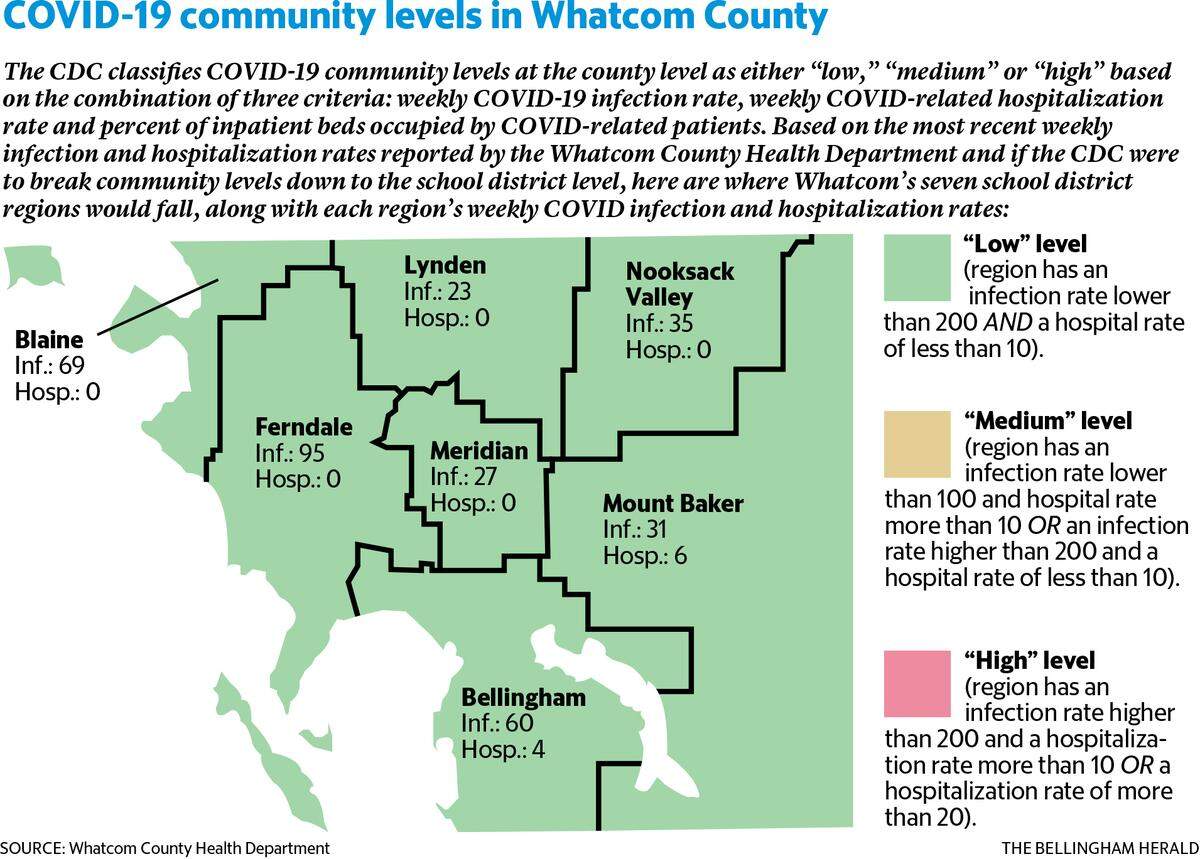
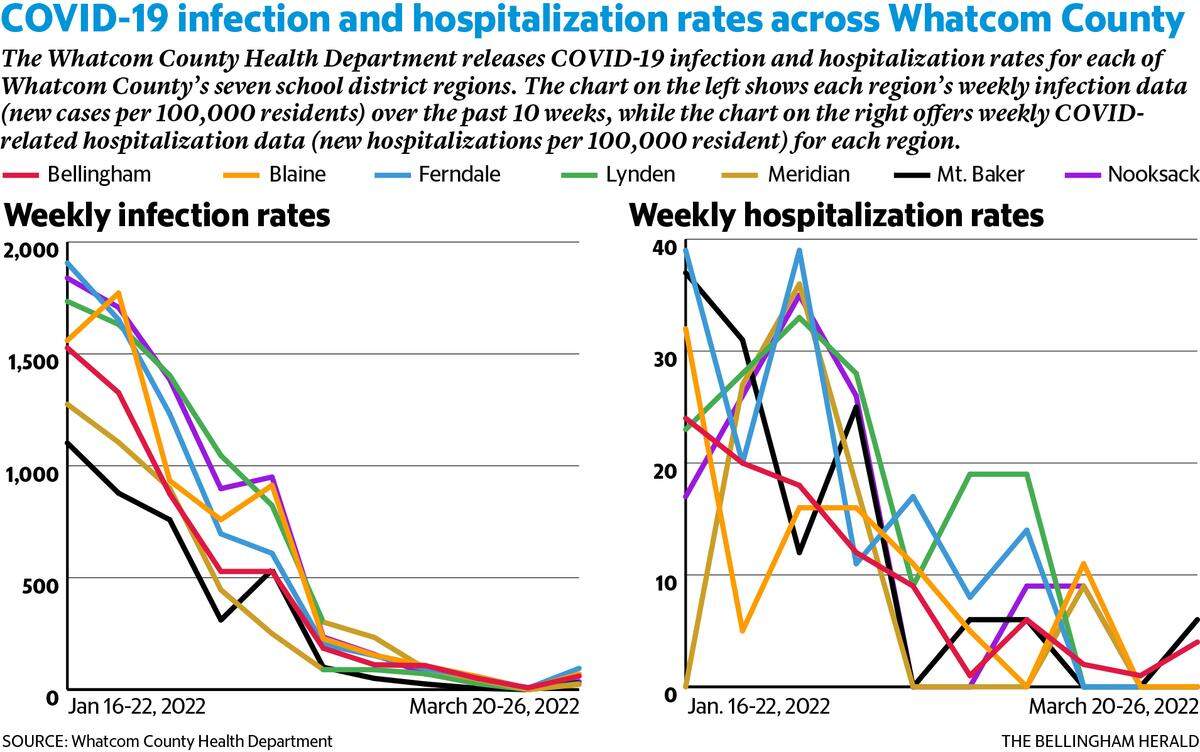
The weekly COVID-19 infection rate in the regions covered by the Bellingham, Blaine and Ferndale school districts climbed above rates of more than 50 new cases per 100,000 residents in the latest data released by the Whatcom County Health Department on Thursday, March 31, and the rate in Ferndale just narrowly missed moving back above 100.
But Ferndale was one of the five regions within the county to post a weekly COVID-related hospitalization rate of zero new patients per 100,000 residents.
The county health department releases weekly data on the location of COVID-19 cases using school districts as geographical boundaries, including each region’s number of total cases during the pandemic, infection rate, hospitalization rate, percentage of residents who have initiated vaccination and a breakdown of case rates by age. Data in this week’s report was through Saturday, March 26.
Overall, Whatcom County saw its pandemic total of cases increase by 330 between March 20 and March 26, according to the county’s data, which was more than the 30 cases reported one week earlier.
Here is what the health department’s latest data showed for the seven regions in the county:
▪ Bellingham: Had a weekly infection rate of 60 cases per 100,000 residents (up from eight a week earlier) with 164 new cases since last week’s report. The region’s hospitalization rate climbed to four COVID-related patients per 100,000 residents, and 83% of the region’s residents have initiated vaccination.
▪ Blaine: Had a weekly infection rate of 69 cases per 100,000 residents (up from five a week earlier) with 33 new cases since last week’s report. The region’s hospitalization rate remained at zero COVID-related patients per 100,000 residents, and 76% of the region’s residents have initiated vaccination.
▪ Ferndale: Had a weekly infection rate of 95 cases per 100,000 residents (up from six a week earlier) with 72 new cases since last week’s report. The region’s hospitalization rate remained at zero COVID-related patients per 100,000 residents, and 72% of the region’s residents have initiated vaccination.
▪ Lynden: Had a weekly infection rate of 23 cases per 100,000 residents (up from zero a week earlier) with 20 new cases since last week’s report. The region’s hospitalization rate remained at zero COVID-related patients per 100,000 residents, and 59% of the region’s residents have initiated vaccination.
▪ Meridian: Had a weekly infection rate of 27 cases per 100,000 residents (up from zero a week earlier) with six new cases since last week’s report. The region’s hospitalization rate remained at zero COVID-related patients per 100,000 residents, and 68% of the region’s residents have initiated vaccination.
▪ Mount Baker: Had a weekly infection rate of 31 cases per 100,000 residents (up from zero a week earlier) with six new cases since last week’s report. The region’s hospitalization rate climbed to six COVID-related patients per 100,000 residents, and 50% of the region’s residents have initiated vaccination.
▪ Nooksack Valley: Had a weekly infection rate of 35 cases per 100,000 residents (up from 35 a week earlier) with 15 new cases since last week’s report. The region’s hospitalization rate remained at zero COVID-related patients per 100,000 residents, and 56% of the region’s residents have initiated vaccination.
Whatcom’s age data
The health department’s latest data on Thursday also showed that two more COVID-related deaths in the county have been among people in their 30s.
Whatcom County has now seen the deaths of nine people under the age of 40 linked to COVID-19 throughout the pandemic, the data showed, including eight people in their 30s. The other was previously reported to be a resident between 10 and 19.
In total, 87% of the 290 COVID-related deaths included in Thursday’s report were among residents 60 and older, including 134 in residents 80 and older. There also have been 15 deaths among people in their 40s and 14 of people in their 50s.
This story was originally published April 2, 2022 at 5:00 AM.