COVID-19 stopped their day in court. And that’s not the only impact on justice in Whatcom
As victims and those accused of crimes saw jury trials resume last week after a nearly year-long hiatus due to the coronavirus pandemic, Whatcom County Superior Court is facing a backlog of unresolved cases.
While the overall number of cases filed in Superior Court in 2020 was down about 25% from 2019, felony criminal case filings were up by nearly 4%, according to data from the Washington State Administrative Office of the Courts analyzed by The Bellingham Herald. At the same time, case resolutions and trials decreased by nearly a third compared to the previous year, the data shows.
For prosecuting attorneys and public defenders, this means higher caseloads and for defendants and victims, it means delayed justice.
Several Whatcom County courts, including Superior Court, used emergency administrative orders to suspend jury trials in mid-March 2020 due to the COVID-19 pandemic. On March 3, 2021, Whatcom County Superior Court Judge Rob Olson announced that the court would resume 12-person jury trials starting March 15.
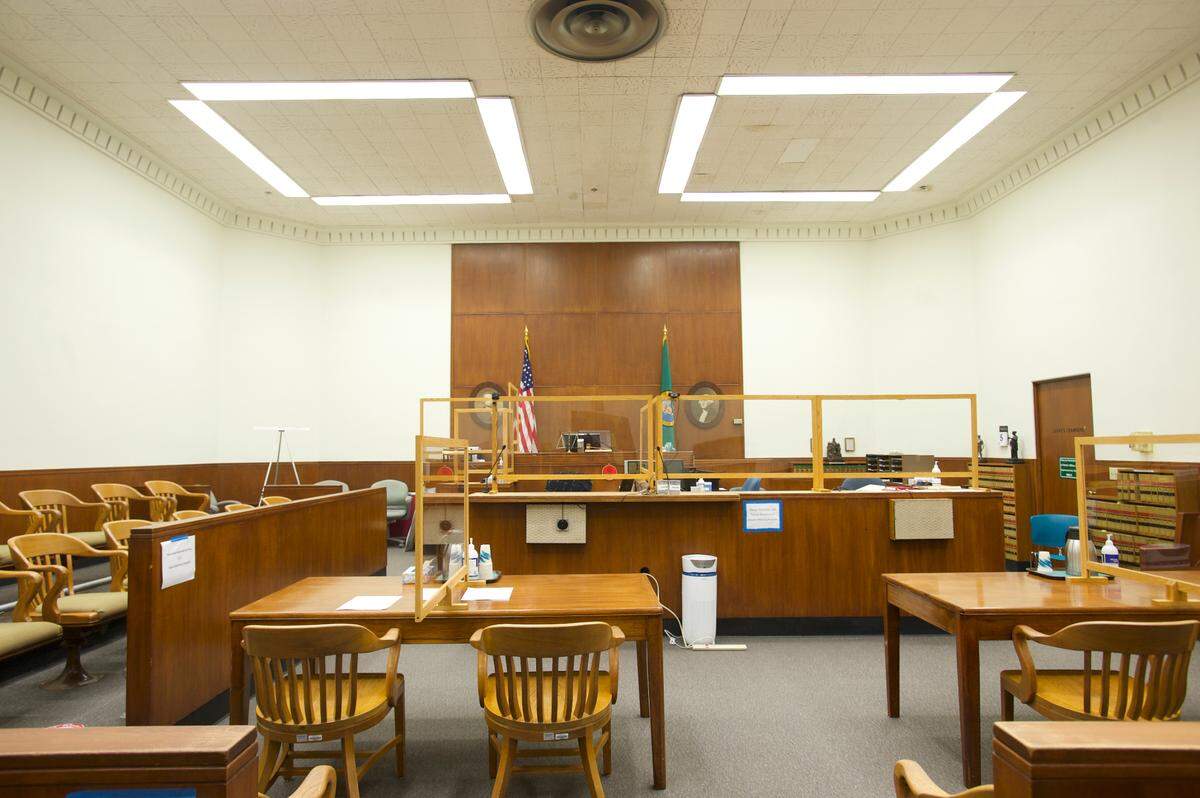
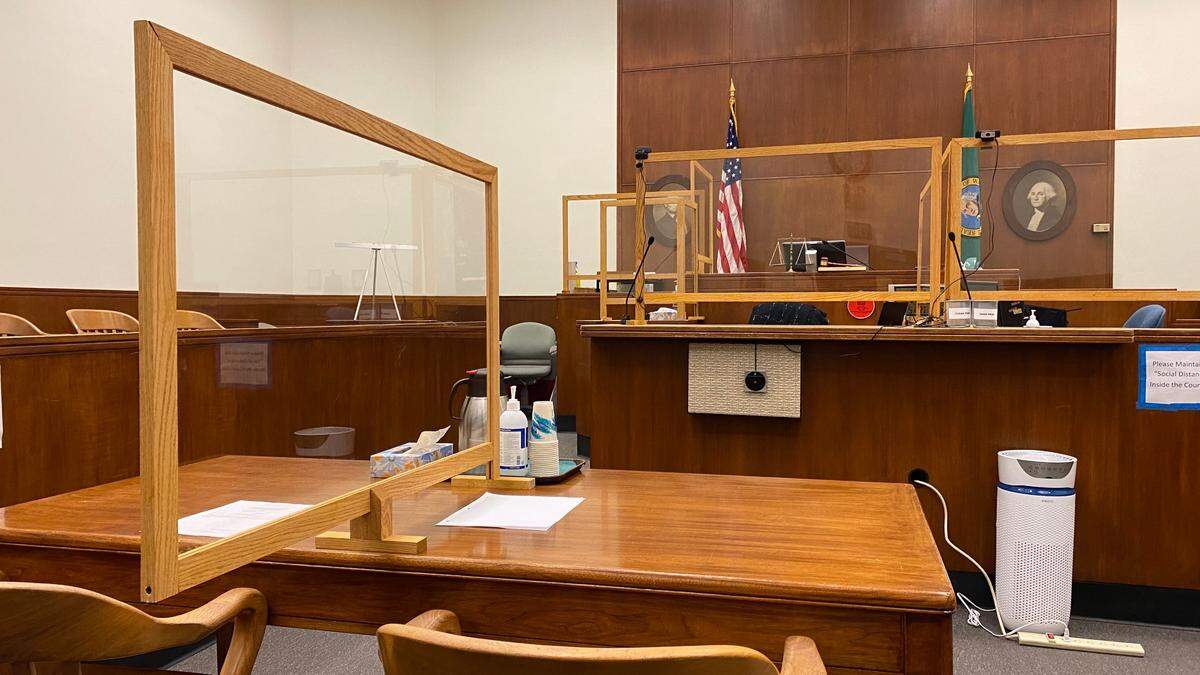
Once a jury is selected, one trial at a time will be conducted in Superior Court using both of the larger courtrooms, Department 1 and Department 3, on the third floor of the county courthouse. The trial will be conducted in one courtroom and the other room will be reserved and used for the jury to socially distance and deliberate when the court is in recess, according to Dave Reynolds, director of the Whatcom County Superior Court.
Unresolved cases
When jury trials came to a halt last year, the number of cases that would normally resolve at trial, by dismissal or plea bargain began to decrease.
Across all case types, there was a nearly 29% decrease in case resolutions in Superior Court in 2020 compared to 2019. And for criminal cases, roughly 36% fewer cases were resolved last year than the previous year, the administrative court data shows.
Whatcom County Prosecutor Eric Richey said without a trial date, some defendants didn’t have an incentive to address and handle their cases. The lack of ability to go to trial made people not want to enter drug court and not engage in efforts to resolve their cases in other ways, he said.
When the court was looking at resuming jury trials, there were around 58 cases on the docket, but about a third of those cases have now resolved in plea bargains due to trial dates being set, Richey said.
“Normally we would resolve a bunch of cases as they come in, but with COVID-19, it wasn’t happening. But with trials just starting, and with something imminent on the horizon, people are pleading guilty and resolving cases again,” Richey said. “It brought the parties together to finally reach a resolution and someone is being held accountable. It’s not necessarily the trial that’s needed, but the trial date. ... That’s how we get through the backlog, we give people a time when decisions need to be made, and that’s a trial date.”
There were nearly 400 fewer guilty pleas in 2020 in criminal cases that didn’t go to trial compared to 2019, the court data shows. Put another way, that’s a 43% decrease in guilty pleas compared to the previous year.
In May 2020, six criminal cases in Superior Court resolved through a guilty plea compared to 83 cases that resolved through a guilty plea during the same month in 2019, according to the data.
Roughly the same number of criminal cases were dismissed in both years, the administrative data shows.
Starck Follis, director of the Whatcom County Public Defender’s Office, echoed Richey’s statements. Follis said defense attorneys have had to tell clients, both in and out of the Whatcom County Jail, that they can’t have jury trials and that they don’t have a right to a speedy trial because of the pandemic.
Follis said it’s tough for people who are in custody, in a cell 23 hours a day, to wait a year to get to trial.
“Definitely people are very frustrated that they’ve had to wait. … Their case is continued and continued over and over again. You see that in court when they voice their frustration that they’ve had to wait so long to have their day in court,” Follis said.
Olson, the judge, said while the court will only be able to offer one jury trial at a time, the hope is that it will still have an impact on the pending cases and the backlog will begin to ease.
Addressing their own backlog
At the start of the pandemic, the prosecutor’s office addressed their own backlog of cases.
Richey said his office made a decision to file charges on older cases that had yet to be addressed while the attorneys were unable to be in court due to the pandemic restrictions. Richey said his office was able to address a lot of cases, which has now added to the backlog currently faced by the court.
Richey said his eight felony prosecutors had caseloads of roughly 150 open cases before the pandemic. They now have around 250 cases each.
While the overall number of Superior Court cases decreased by roughly 24% in 2020 compared to 2019, close to 60 more felony criminal cases were filed in 2020 compared to the previous year, according to the administrative court data.
Richey said he hopes with jury trials resuming, the backlog resolves itself quickly.
BEHIND THE STORY
MOREHow and why we did this story
The Bellingham Herald is committed to covering the COVID-19 pandemic and its repercussions, including the county’s criminal justice system.
For this story, our reporter reviewed and analyzed hundreds of pages of statewide administrative court data, requested public data from local officials and agencies, and interviewed multiple sources working within the criminal justice system.
Rising pending cases
Like the prosecutor’s office, the public defenders have seen their caseloads rise dramatically. The pile of pending cases Follis’ felony defense attorneys have has reached an unmanageable level — and each case represents a person, he said.
The Washington State Supreme Court sets caseload standards for how many cases public defenders can take in a year. For Whatcom County, it’s roughly 12.5 felony cases a month, but Follis said they try to average 10 new cases per attorney per month. The standards have never accounted for pending cases, though, Follis said.
His office can comply with the standards but, with ongoing cases, attorneys are working more cases each month.
As fewer cases were resolved and more were filed while jury trials were suspended, cases have piled up, Follis said.
Of the 11 felony attorneys on staff, including Follis, each one has a caseload of about 100 or more cases. Some attorneys now carry twice their pre-pandemic caseloads, he said.
“There’s an old saying that justice delayed is justice denied and there’s a certain amount of truth to that. Victims don’t want to wait for cases to be resolved, defendants don’t want to wait for cases to be resolved, and the more pending cases you have in front of you, the less time you have to spend on any one particular case. There is nothing good that comes from a backlog,” Follis said.
A months-long effort
Olson said court officials have been working since June to resume 12-person jury trials.
He said the biggest struggle was trying to find a space large enough to accommodate dozens of people for jury selection. He said court officials were unsuccessful in finding an off-site location.
Olson said the new protocols for jury trials have been developed with the help of an industrial hygienist and the courts have followed other state department of Labor & Industries requirements to make sure trials happen safely.
“All of those things are coming together. Our sense is our community is more responsive and has a greater level of understanding of the importance of social distancing, and we feel it’s appropriate to move forward,” Olson said.
Olson said it’s been a balancing act between providing the fundamental right to people to have a jury trial, while also ensuring that the community will be safe within the courthouse.
Court officials are doing everything possible to keep people safe, which is why until social distancing guidelines can be relaxed, it’s likely that only one jury trial will happen at a time, Olson said.
“I hope members of the public recognize that we are taking all the steps we can to be safe by socially distancing, mandating masks, screening before court each day. We hope people look forward to jury service because we really need members of the community to step forward when they are summonsed,” Olson said.