A year into COVID pandemic, Whatcom health director expecting a ‘long tail of recovery’
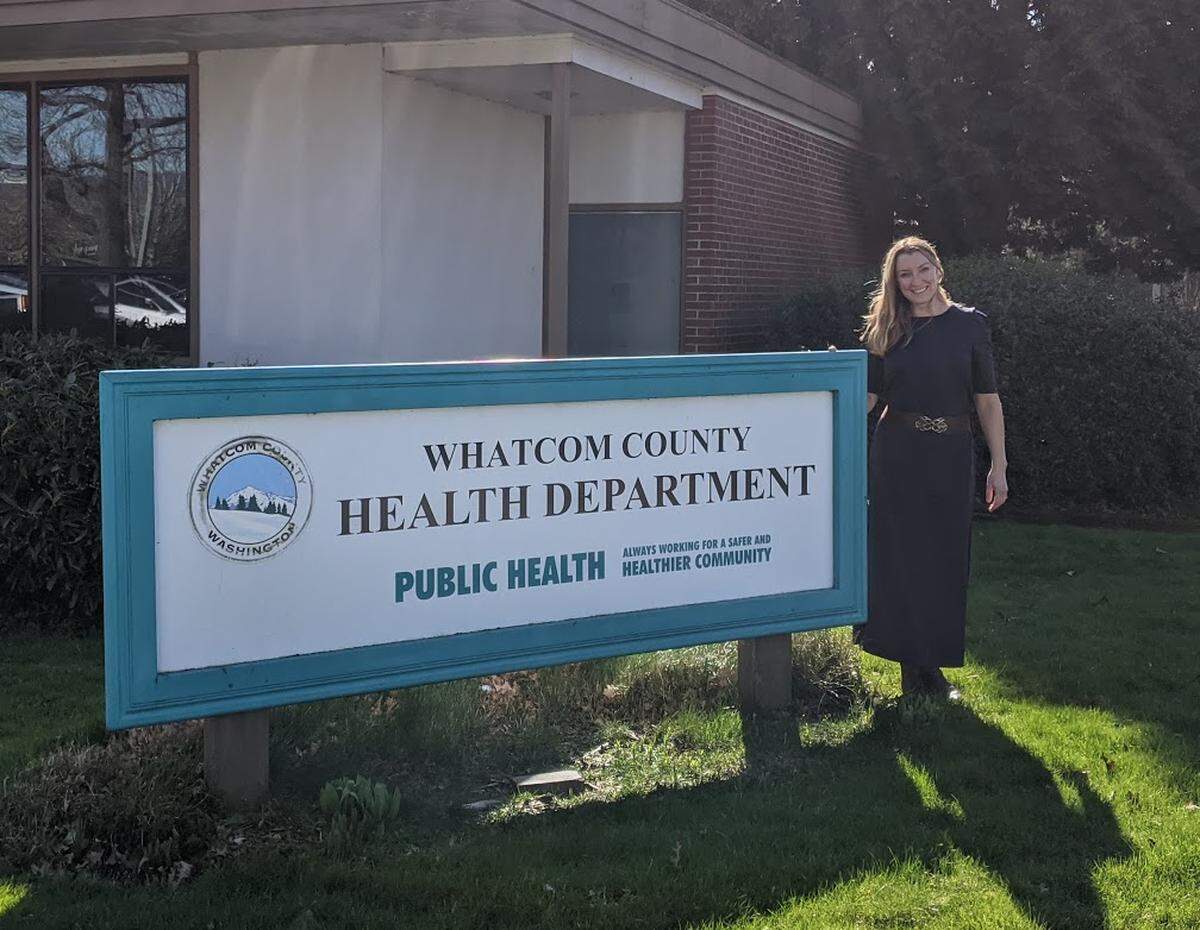
As Erika Lautenbach took over as Whatcom County Health Department Director on March 18, 2020, Whatcom County was just beginning to feel the effects of COVID-19.
The county reported its first confirmed case on March 10 and reported its first death related to coronavirus on March 19, a day after Lautenbach started her new job.
Sure, we were all washing our hands extra well at that point and learning what it meant to social distance, but we had no idea how much our lives were about to change.
Four days after Lautenbach started, on March 23, Gov. Jay Inslee would issue his “Stay Home, Stay Healthy” order, and life in the Evergreen State would dramatically change and the impacts will likely be felt for years to come.
“It’s really hard to sum up a year, and this year in particular,” Lautenbach told The Bellingham Herald as she discussed where the county is a year into the pandemic, where Whatcom succeeded and failed as it tackled the previously unthinkable and where she hopes the community is headed.
Question: What has the past year been like for you after assuming the role as Whatcom County Health Director just as the county was seeing its first cases?
Answer: Though Lautenbach said she knew many of the people she would work with at the health department from her tenure as assistant health director, she hadn’t met or built relationships with many people outside the building, including council members, elected officials and community partners or even the health board.
“I had never met (Bellingham Mayor) Seth Fleetwood before I started the job,” Lautenbach said. “We have developed a great relationship. He is someone I call on when I need moral support or a great brain.
“That all happened at warp speed. The relationships I built in the last year would have taken at least five years in normal time. But we had no time for pleasantries — no time for gradual starts. We were all jumping in together and learning and trying to build trust and work together.”
Lautenbach said she also needed to learn to trust herself, even though she had run divisions and larger organizations before assuming the role as the county’s health director.
“I’d never been where the buck stopped,” she said. “It was a challenge in leadership for me to make decisions with incomplete information and imperfect options — to make decisions on behalf of staff and leadership and try to do that even as I’m trying to very quickly learn the role and the ever-changing guidances and deal with all the different personalities in government and in our community.
“It was trial by fire — both internally and externally — for me.”
Lautenbach said she learned to develop thicker skin and not base her self-perception on the good or, all too often, bad news of the day, and she also learned that taking care of herself — physically and mentally — was one of the best things she could do.
“It’s been a long, hard road,” Lautenbach said. “Yes I’m sharing my experience, but I know my coworkers and many others have had very similar experiences. This is not just me as the health department director. I have empathy for that. It was a long year for all of us.”
Question: What have you learned about our community in some of its most difficult times?
Answer: “I’ve learned that Whatcom County is just chock full of incredible, kind, giving, empathetic people who want to help, who want to be part of solutions,” Lautenbach said. “I meet them all the time, and I see them all the time. ... I believe in the intentions of people that want to do the right thing that really made a lot of sacrifices of the last year.
“I loved this community before I took this job, but I have found an even deeper love for the people and the place where I live.”
Lautenbach said she saw that love demonstrated most among the county’s volunteers — many of whom worked the equivalent of full-time jobs for months with no pay just to help their community get through the pandemic.
That being said, Lautenbach said she also quickly learned that there is a lot of skepticism of government and its agencies in Whatcom County — something she and her team had to work hard to breakthrough.
That became even more important, as false information and misinformation flooded the community. It was difficult to limit that noise, Lautenbach said, as the health department traditionally has been a “feared agency” for its regulatory role, rather than a trusted information source.
“It was imperative that we try to build trust in any way we could — give the information that we had, even if it was incomplete, try to share the perspective and try to bridge the gap, because there was a lot of conflicting information and false information,” Lautenbach said.
Question: What have been some of the county’s greatest successes since the first confirmed case of COVID?
Answer: “There are a lot of bad news stories about COVID, and rightfully so,” Lautenbach said. “It’s been devastating for our community and many others.”
But in spite of all that bad news, Lautenbach said she’s seen a number of positives, including:
▪ The leadership the county has seen from its elected officials, Whatcom Unified Command and the county’s executive board. “They’ve been stalwart supporters and problem solvers and good thinking partners on how we get through something that none of us were really prepared for,” Lautenbach said.
▪ The collaboration and cooperation shown by a number of different agencies and businesses, such as Northwest Laboratories, which worked with the health department and Whatcom Unified Command to expand COVID testing in Whatcom County and create low-barrier testing sites. “We went from having about 100 tests a year ago to regularly testing 2,000 a week,” Lautenbach said. “Anyone who wants to be can get tested now. That’s a big success.”
▪ That cooperation and collaboration also was seen, Lautenbach said, in the ability to move the Lighthouse Mission’s Drop-In Center to Bellingham High School and then set up Base Camp to help provide some of the county’s most vulnerable residents a safe and expanded shelter under new COVID guidelines.
▪ More recently, Lautenbach said she’s been impressed with the cooperation between area health providers, pharmacies and the nursing schools at Bellingham Technical College and Whatcom Community College to build a system for vaccine delivery and mass vaccination. “That is such a success for our community, and is a real testament to the willingness to partner and work together for the greater good of our community,” she said.
Question: What have been some of the toughest lessons learned over the past year?
Answer: “The first tough lesson, especially in the beginning, was the extent of the misinformation and minimization of this pandemic that really drove the early months of the response,” Lautenbach said. “Coupled with the lack of coordination and a national strategy, it made the response incredibly disjointed, confusing. The ever-changing information created a loss of trust, even though we were just learning about the disease.”
An example, she said was going from the advice that nobody should wear masks to help save them for healthcare workers on the front lines to mandates that everybody must wear them.
“The ever-changing guidance was really tough to keep a hold on and continue to have folks stay engaged and trusting in what we were trying to do as a health department with our response,” Lautenbach said.
Additionally, she said the toll the pandemic has taken on Whatcom County and communities everywhere has been extensive, and we’re still learning about the impact COVID has had and will have, even after everyone is vaccinated.
“The tail to this is very long, and the damage to families, to peoples’ economic situations and their mental health ... all of that damage, you just can’t snap your fingers with a vaccine and undo,” Lautenbach said. “It’s going to take a lot of work on our part.”
Perhaps the most difficult part of her job, Lautenbach said, was making tough decisions she and other public officials felt were best for public health even though they were incredibly tough on the community.
“There were literally no good choices, and it was hard to knowingly make choices for the good of public health and our disease rates and death rates, knowing that they would have lots of unintended and frankly intended consequences based on the restrictions and the measures,” she said. “That was really hard.
“I did not anticipate or sign up for public health to be an exercise in minimizing negative outcomes of decisions I was making. I signed up for a public health that was for removing barriers and removing challenges for people, not for creating them. From a moral and ethical perspective, it was really difficult to balance those choices.”
Question: How would you rate where the county is at, nearly one year after the first confirmed case of COVID in our community?
Answer: “Of course we all hoped this wouldn’t last as long as it has,” Lautenbach said. “I remember when we recommended to cities that they cancel their large signature parades, festivals and events for the summer, and a lot of them came back and said, ‘OK, but is that until August or September?’ We all had these hopes the summer would eradicate this disease, and then it just got worse and worse and worse.
“I think this was an exercise in patience for all of us, but when you step back and think about the magnitude of the pandemic and how impactful it was, it is amazing — it is a modern miracle of science — that we’re vaccinating people a year later. We are starting to pave the way for recovery.
“Once we knew and settled into the idea that this was not going to go away and that it was going to be a challenge and a struggle, we were talking about years.
“It’s been a year, but we’re not talking about years. We have a vaccine. We didn’t have to wait five years for a vaccine. We’re on the pathway. We’re getting people vaccinated and we’re on the road to recovery.”
Question: What more can be done to help marginalized communities during the pandemic? Are mobile services needed?
Answer: “We don’t always need to help marginalized communities. Sometimes what we need to do is just show up and be able to leverage the strengths that they already have in partnership with the people in those communities.
“Our community is learning more about public health and equity. But equity really isn’t just giving the same thing to everyone. It can mean correcting the instances where people with more resources have an unfair advantage to start with. In some cases, yes, mobile services are the best way to get testing or vaccine to vulnerable or marginalized populations.
“I think with mobile clinics, those are really effective, for example, with home-bound seniors who would not be able to access vaccine if those were not brought to their homes. Potentially farmworkers and other vulnerable populations that may not have transportation or access or may be working seven days a week and can’t get there during hours when testing is offered. Those are a couple of examples where vaccine mobile clinics would be the best way to get to groups.
“But other things that we are doing is outreaching through organizations and groups that work with the communities. For example, we worked with non-profits and coalitions that serve seniors, and especially seniors that did not have internet access. We were able to hold slots at our community vaccination centers specifically for those folks. ... A lot of our work is just finding the helpers and the groups that are already connected.”
Question: How is the county planning to help, as medical providers have been warning about increases in substance abuse and alcohol consumption as people self-medicate to deal with the stress of the pandemic and other mental health issues?
Answer: “We are social beings, and it’s not in human nature for us to separate ourselves physically from other people,” Lautenbach said. “We’ve seen that with our seniors who have been cooped up in long-term care and skilled nursing facilities. We’ve seen it in friends and family. This only gets harder. It’s not something that will all of a sudden become human nature. The isolation and uncertainty have been unique and it’s been significant for people.”
Though that stress and anxiety is abnormal for them, Lautenbach said they are not abnormal responses, adding that even she has felt levels of anxiety that are not typical for herself.
“The range of uncertainty is profound,” she said. “We have stood up additional services as a health department. We have noticed the calls to the care crisis line have increased significantly. We just want to make sure people know about the services available because it is not a character flaw — it’s a wise decision.”
Lautenbach said the crisis line’s online chat is available at imhurting.org, and Whatcom Has Hope (whatcomhope.org) has been expanded to address some COVID-related substance abuse and consumption concerns.
“This is part of that long tail of recovery,” Lautenbach said. “These are not problems that just a website or a phone number will solve. We have chronic shortages of behavioral health providers in the county, and we need to do work on that over the coming years. We don’t have enough support for families and kids, and we need to work on that over the coming years.
“We know that options for recovery, both substance abuse recovery and behavioral health recovery, are not readily available in the county, and that is an area we can work on, as well.”
Question: How well prepared was our health department and others around the state and nation for an event of this magnitude? What changes would help in the future?
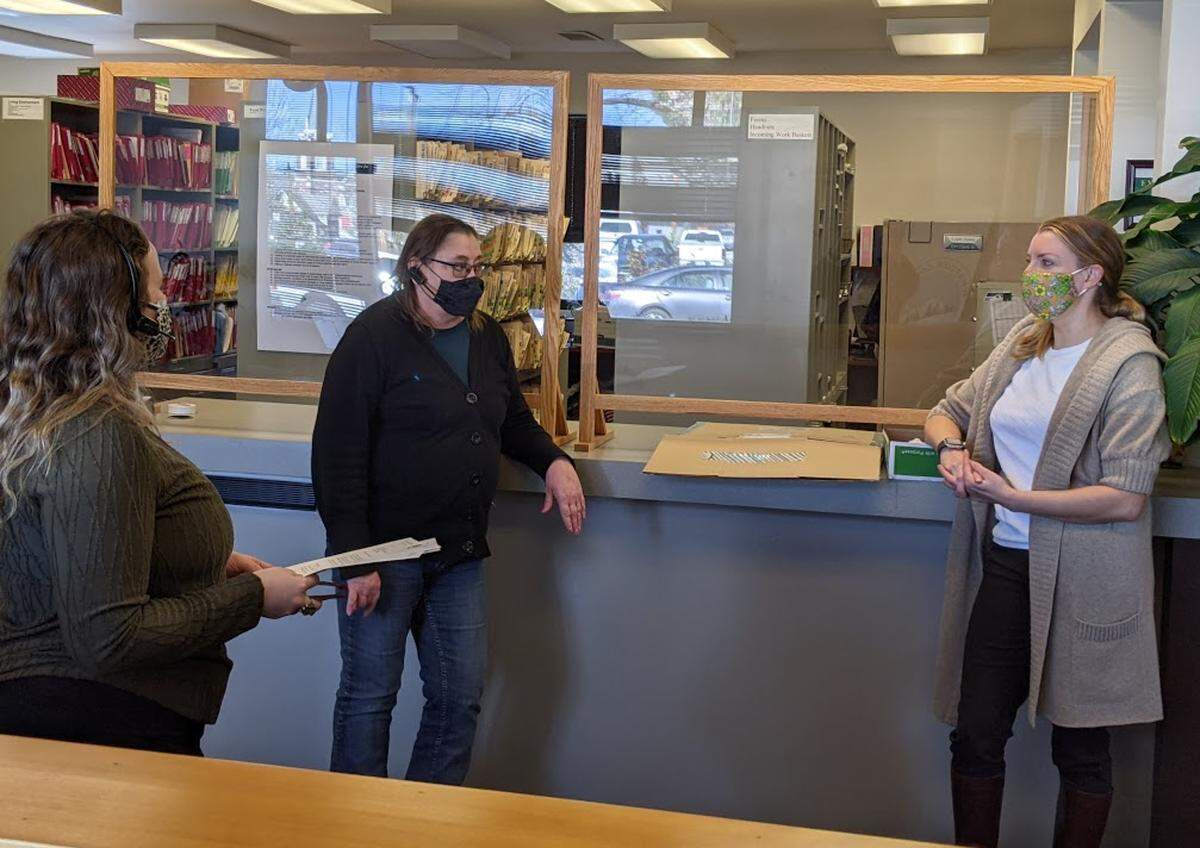
Answer: Lautenbach said the health department has a full-time emergency preparedness specialist, who leads drills and table-top exercises on pandemics and other public health emergencies several times a year.
Additionally, she said the state and federal public health systems have systems set up for disease surveillance to monitor and alert local agencies of potential problems. More locally, she said the Whatcom County Health Department was prepared with strong relationships with the area’s health care community and hospital and has trained case contact managers.
“Even with all our training and preparedness, it’s hard to be prepared for anything of the scope and scale of the COVID pandemic,” Lautenbach said. “For example, when we have had measles outbreaks, they were generally limited to our county and we could request mutual aid from other counties. That has always been part of planning and preparedness.
“With a global pandemic, there is no mutual aid. We are all strapped, and there is no requesting aid or services from other counties or the state or the federal government, for that matter. I don’t know how we could have been prepared for that, with the scale and scope unlike anything we’ve seen in our lifetime.”
Despite that, she said there are areas that can be improved, including eliminating the conflicting guidance between federal and state governments.
And the underfunding of the public health care system at all levels is a continued problem, she said.
“We didn’t have a lot of the resources available to quickly ramp up our efforts,” Lautenbach said. “It’s an arduous effort to go through our legislative branch and request funding. It was often weeks too late for us to be nimble. We just didn’t have the capacity to ramp up in the way we would if public health system was funded the way it needs to be.”
Question: There has been a lot of news about all the bad that has come out of the pandemic. What good have you seen come out of it here in Whatcom County?
Answer: Lautenbach said the pandemic has forced conversations at the state and federal level to address what she called the “historic underfunding of public health” and steps are being taken in Washington state to rectify that.
“Also, I think this has highlighted how resilient our community is,” Lautenbach said. “I laugh, sometimes, because I’ll drive around downtown Bellingham and there are all these huts set up outside of restaurants. If I were someone coming from outer space or a different point in time, I would say, ‘Why are people so fixated on eating outside? Why are these little huts set up all over the place? This is so strange in the middle of winter.’
“It’s because our business community was nimble. They pivoted. They were creative. I can’t tell you how many great phone calls we got from businesses at the health department saying, ‘OK, if we wanted to do this, how could we make this work? How can we save our business and keep the customers coming?’ I think it just shows a resourcefulness and resiliency that is really cool.”
In that same vein, Lautenbach highlighted the role of Whatcom County’s Employer Support Task Force in helping create unique ways to help Whatcom’s business community and the community as a whole, regardless of whether they were competing for business or not, often sharing best practices.
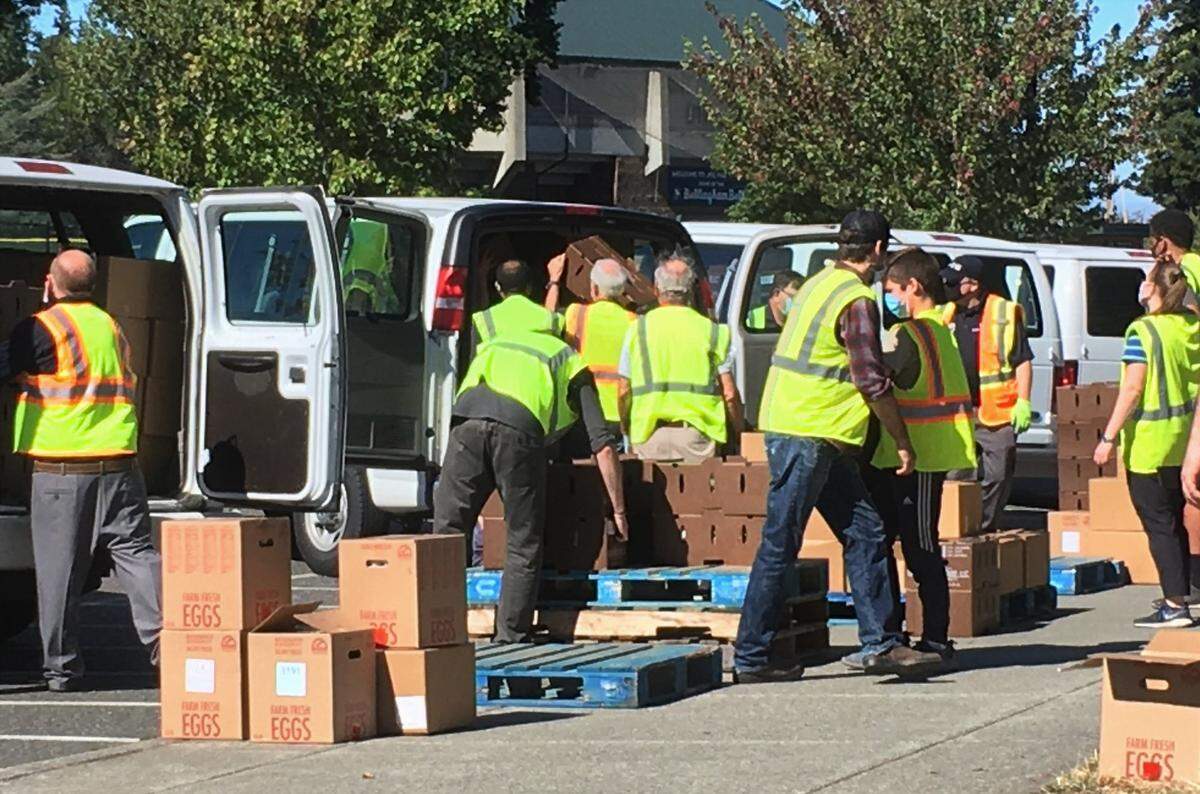
“I think about the neighborhood groups and our food security task force that quickly recognized that people were going to need and there was going to be more need for our food banks — these coalitions that formed to quickly solve these problems together and quickly create systems that last,” Lautenbach said. “There are examples like that all over our community about people who said, ‘This isn’t about me. This about us. How do we move forward together?’”
Question: How have you felt the first stages of vaccination have gone? Has Whatcom County gotten the help it needs to be successful?
Answer: “What’s gone well is what’s happening within Whatcom County,” Lautenbach said. “All of the enrolled providers, the sharing with our enrolled providers every week. They’re collaborating. They’re sharing. They’re exchanging information. They’re making transfers to each other when someone needs vaccine in order to make sure their clinic is full. They partnered with us on this large-scale clinic — just really, really good collaboration in our community that I would love to see continue in other ways, as well.”
“The rollout has been — on the national and state level — really rough, and it’s been inconsistent. The communication has been challenging. The rationale behind the doses has been opaque, and the state is really working on this.”
But Lautenbach said there are still a lot of questions about why Whatcom County received more than 11,000 doses one week and 1,800 the next week.
She said she recognizes the state was attempting to re-balance, but she wonders why it couldn’t be more leveled out.
“We don’t want to go crazy ramping up and then have nothing to give,” Lautenbach said. “The rollout has been rocky, and it’s complicated. We have a lot of empathy for our state partners at the Department of Health. There is a lot of pressure and demand to get that vaccine out and to do in a way that is equitable. We recognize that there is a lot we don’t know about that process.
“But it’s been really hard on our providers — really hard on our providers, who spent a lot of money hiring staff, identifying and renting locations to ramp up and getting 150, 100 doses. They’ve had staff waiting on standby because they can’t fill appointments, because they can’t fill clinics.
“It’s been hard. I’m hopeful in a few weeks this will be behind us, but right now it’s a struggle.”
Question: When do you anticipate Whatcom County will return to “normalcy” and how do you envision how that might differ from what we remember “normal” actually being?
Answer: “I do not want to return to normalcy, because normalcy did not work for a lot of people in our community or a lot of families,” Lautenbach said. “There were people struggling before COVID, and I don’t want to return to a state where people continue to struggle.
“I would like to move forward to a state that enables more prosperity in our community and more resiliency in our community and have the support structures in place that allow for more resiliency of individuals and families in our community.
“That being said, it’s going to be years before we reach that state.
“On the nuts and bolts side of normalcy — wearing a mask, social distancing, those kinds of things — I imagine we will reach a point where we have a saturation point of people who are vaccinated, and there will be some return to normalcy, in terms of behaviors around infection control.
“I hope that people will continue to wash their hands — I hope that doesn’t go away. And I hope that when people are sick they consider wearing a mask, because we know it works to protect other people. I think it could become a more common practice when you have a cold and you still have to go to the grocery store that if you’re coughing and sneezing you’ll wear a mask to protect other people.
“Our ability to protect others and have good infection control measures for not only COVID, but other diseases, could be enhanced. I think that would benefit all of us.”