
These caregivers offer many options for Whatcom County breast cancer patients
Options have never been better in Whatcom County for women diagnosed with breast cancer.
Even so, as the five local providers who talked to The Bellingham Herald all stress, the chances for successful treatment increase exponentially with the early detection made more possible than ever with improved mammography.
Dr. Cary Kaufman, the nationally noted breast cancer surgeon who is founder and medical director of the Bellingham Regional Breast Center, points out that the county’s breast cancer mortality rate has decreased by more than 25% in the past 25 years since the center’s founding.
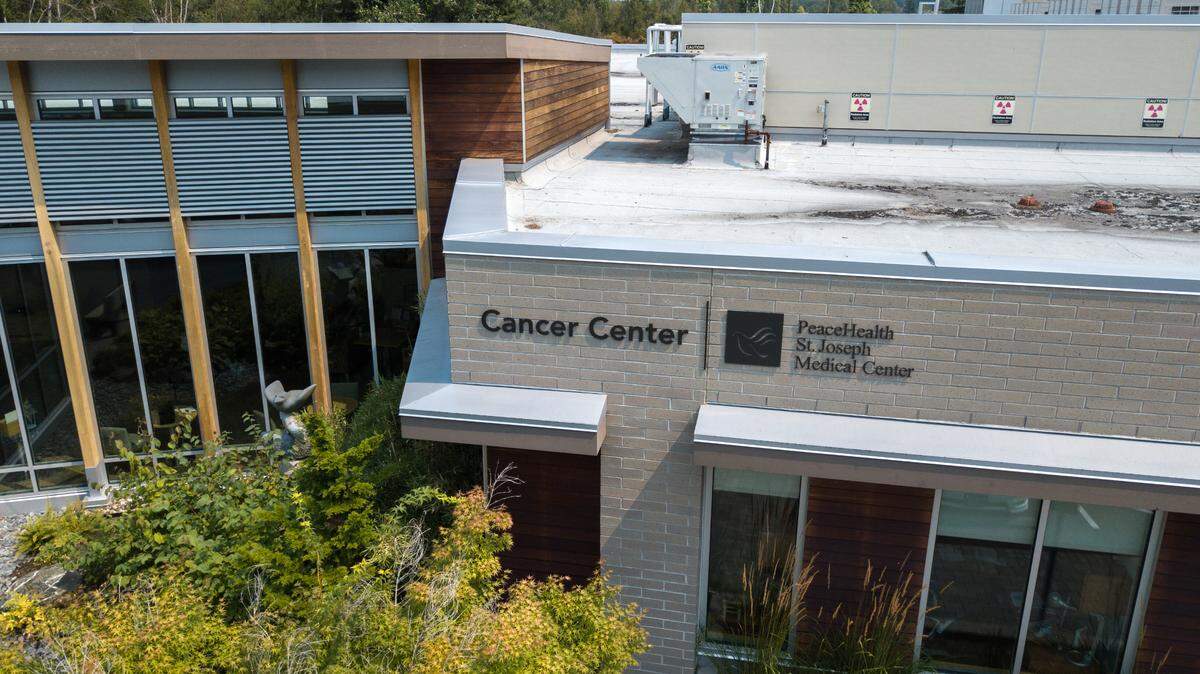
Dr. Chanudi Weerasinghe, an oncologist with the dedicated PeaceHealth St. Joseph Cancer Center, says from 200 to 220 women per year in Whatcom County are diagnosed with one of the many forms of breast cancer. Breast cancer ultimately impacts one in eight American women and is the second-most frequently occurring cancer behind skin cancer.
“For those whose cancer is detected early (in contrast to cases of stage four and metastatic breast cancer), treatment is 95% to 98% successful,” she says. “In Whatcom County, we (in the local medical establishment) have everything needed for treatment of breast cancer.”
Dr. Valerie Behrndt, director of breast imaging at Mt. Baker Imaging — Women’s Diagnostic Center, could not be more enthusiastic over the development in recent years of 3D breast imaging, also known as digital breast tomosynthesis, and the 1998 state law that requires insurance companies to cover this potentially life-saving technique.
Kim Moses, a Registered Nurse for 24 years, is delighted to have established in the past eight years at Peace Health St. Joseph a program for Nurse Navigators (also known as Patient Navigators). They provide invaluable step-by-step help and counseling once unheard of for those with a breast cancer diagnosis.
Courtney Van Dyk, a Registered Nurse who serves the Cancer Center as an infusion nurse, is thrilled to play a part in the treatment and recovery of the many women who undergo chemotherapy.
Mammography
Behrndt offers several points about mammography at Mt. Baker Imaging — Women’s Diagnostic Center, which the American College of Radiology has officially designated a “Breast Imaging Center of Excellence” by the Commission on Quality and Safety and the Commission on Breast Imaging. Mt. Baker Imaging is accredited in mammography, stereotactic breast biopsy, breast MRI, breast ultrasound and ultrasound-guided breast biopsy.
Screening mammograms: “Breast cancer is best diagnosed as early as possible, when treatment choices include less aggressive options. Yearly screening mammography achieves this goal, reducing the mortality of breast cancer by 40% and, equally important, reducing the impact of subsequent breast cancer treatment. An important key in finding breast cancer is the detection of subtle changes over time. When you participate in yearly screening, you increase the likelihood of having small subtle changes detected. Many organizations recommend yearly mammograms beginning at age 40.”
3D mammography: “This new technology detects breast cancer slightly better than a 2D mammogram and reduces the need for additional studies/callbacks. During the mammogram, the breast is gently compressed and multiple images are acquired as the machine moves in a 15-degree arc. This data is processed and displayed in thin, 1-millimeter sections. This is similar to the difference between a chest X-ray and a CAT scan.”
Washington state legislation: “In 2018, the state Legislature passed a bill requiring all insurance companies to cover (3D mammography) with no out-of-pocket cost-sharing, according to your insurance plan’s policy for 2D mammography.”
Breast density: “Your breast density is not determined by a physical exam, but rather by the appearance of the mammogram based on the ratio of glandular tissue to fat. Four categories are used to describe breast density. Women with dense breast tissue are at a slightly higher risk of breast cancer. Dense tissue may obscure or hide some findings on the mammogram. Using 3D mammography is particularly helpful in women with dense breast tissue. If a woman has dense breast tissue and a strong family history or a specific known gene mutation, additional screening tools such as breast ultrasound or MRI may be added. Your breast density is listed on the letter you receive following your mammogram.”
Prevention: “Over 80%t of all breast cancers occur in women with no family history of the disease. There is no single cause of breast cancer and no definite way to prevent it. However, studies show there are lifestyle choices that will decrease a woman’s risk: Be physically active; limit or avoid alcohol; maintain a healthy weight; limit post-menopausal hormone therapy; eat a healthy diet, rich in vegetables and fruits.”
Breast Center
The center, which recently moved to the Barkley Medical Building, is now at the same site as the Bellingham Ambulatory Surgery Center where advanced intraoperative imaging technologies exist. The Bellingham Regional Breast Center was the state’s first breast center to be accredited by the National Accreditation Program for Breast Centers.
Kaufman, an Associate Clinical Professor of Surgery from the University of Washington, is among 84 Washington state surgeons who are fellows of the American College of Surgeons performing breast cancer care.
Kaufman co-edited the 2019 textbook “Breast Cancer: Global Quality Care” from Oxford University Press and has authored more than 35 peer-reviewed journal articles and book chapters and breast cancer care.
Surgical procedures emphasize oncoplastic surgery (blending aesthetic concerns with oncologic principles); “imaging surgery” (intraoperative imaging to find the smallest cancers and adequately remove them without removing unnecessary tissue); and working with plastic surgeons who provide innovations with implants, flaps and free flaps during immediate breast reconstruction and nipple-saving mastectomy.
“There’s no way you can predict who’s going to get breast cancer. Five percent have a genetic predisposition we can check for and 15% will have a family history. But 80% of the people with a diagnosis (men are about 1% of those diagnosed with breast cancer) feel ambushed,” Kaufman says. “They have no family history of breast cancer and no predictor other than being a woman.”
“We encourage regular mammograms because two-thirds of women under 50 (who are diagnosed) develop an aggressive form of breast cancer. We need to match the treatment with the degree of malignancy.” He also notes that the use of 3D mammography has enabled a lesser rate of tissue loss for optimal results.
Kaufman recalls a turning point in treatment.
“We used to do a lot more mastectomies. In 1991, the National Cancer Institute validated the concept of a lumpectomy with radiation to be equal (in effectiveness) to a mastectomy. Now we partner with radiation oncologists to complete the treatment when we perform a lumpectomy. I’m not a plastic surgeon, but I frequently work with plastic surgeons,” he says, noting how some surgeries can result in far better aesthetic results for women who desire them.
St. Joseph Cancer Center
Dr. Weerasinghe and nurses Moses and Van Dyk all stress treating the whole person and know every case of breast cancer is different.
Weerasinghe expressed pride when she talked of local (treatment) options.
“We have all possible treatments available for breast cancer. What we do, we do well,“ she says. “We have seven surgeons in Bellingham and they can do any surgical procedure required to treat breast cancer. We have several radiation oncologists.”
She notes that local cancer specialists “have a very good working relationships with doctors at larger institutions (in Seattle). If a trial is available and appropriate for a patient, we can facilitate that.”
She feels strongly about screenings: “Screenings should start at age 40. And I don’t ever want to see anyone with a lump in her breast not to seek help because she doesn’t have insurance. We have financial advocates and referral specialists to handle financial needs.”
Moses, a graduate of Michigan’s Calvin College, describes her labor of love as a Nurse Navigator this way, regarding the necessary order of steps along the way:
“The diagnosis of cancer is very stressful for both patients and caregivers. In addition to medical procedures, office visits and medications, many patients must also handle insurance, financial and family-related issues. At times it can seem overwhelming. A Navigator is a professional whose clinical nursing experience proactively assists and guides patients, families and caregivers in dealing with the complex problems associated with a cancer diagnosis to informed decision-making; collaborating with a multi-disciplinary team to allow for timely cancer screening, diagnosis, treatment and increased supportive care across the cancer continuum. This person is dedicated to the individualized assistance (for everyone) to help overcome health care system barriers and facilitate timely access to quality medical and psychosocial care.”
Van Dyk takes pride in her counseling role, as well.
“I do a lot of do a lot of teaching appointments, going over with patients what to expect (from chemo),” she says “By the time they get to me, patients have talked with the oncologist, talked about the treatments.”
Van Dyk says she enjoys informing patients about activities such as art, meditation, massage, acupuncture and participation in a wig bank.
“All of our services are in the same building and our program has grown tremendously,” she says. “Every patient is unique. If you had twins with the same genetic makeup and same diagnosis, they still will not respond in the same way.”