Why are eggs so expensive? Whatcom farmers weigh in on bird flu outbreak, U.S. shortage
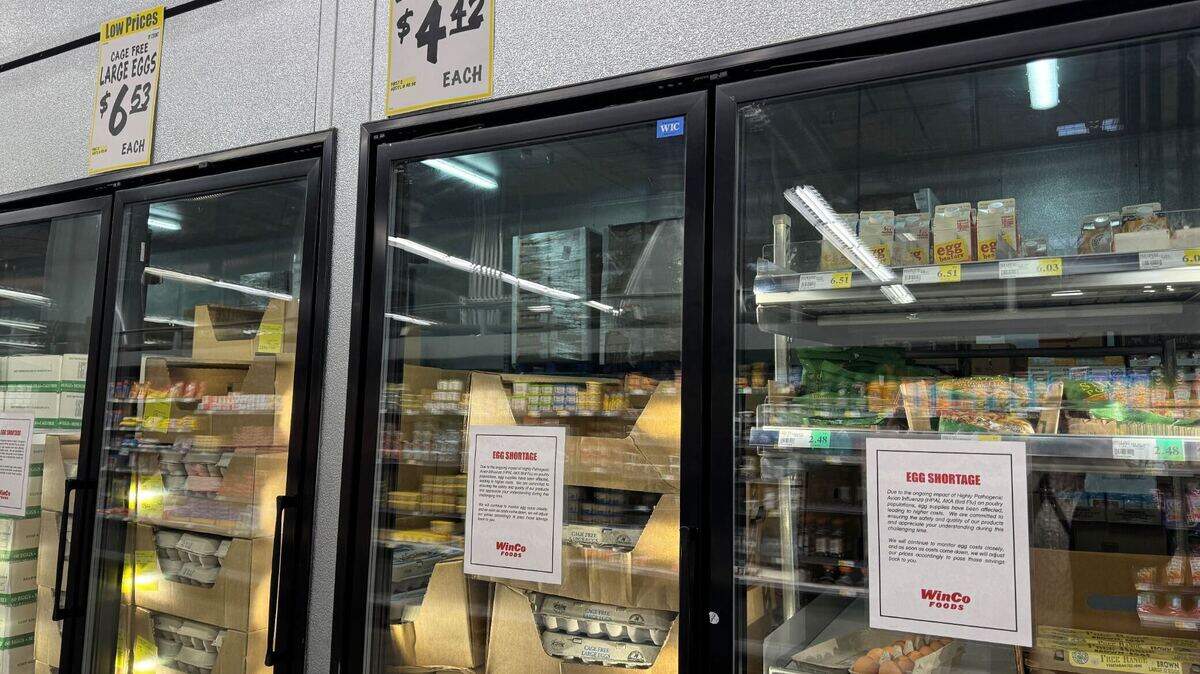
Bellingham grocery stores are warning shoppers of an egg shortage as egg prices steeply increased compared to last month.
Egg prices at Bellingham stores in December ranged from $2.47 to $5.29 per dozen. By Jan. 2, the same brands ranged from $3.49 to $6.99.
The egg shortage and price increase is blamed on a recent bird flu outbreak, according to the U.S. Department of Agriculture.
“Supply remains the greatest challenge in the marketplace as highly pathogenic avian influenza (HPAI) continues to impact commercial table egg layer flocks into the new year,” according to the USDA’s Jan. 10 Egg Markets Overview report.
The current egg production rate is 11% below last year’s, according to the report.
Bellingham’s Winco Foods and Haggen at Barkley Village also posted notices across the stores about an egg shortage.
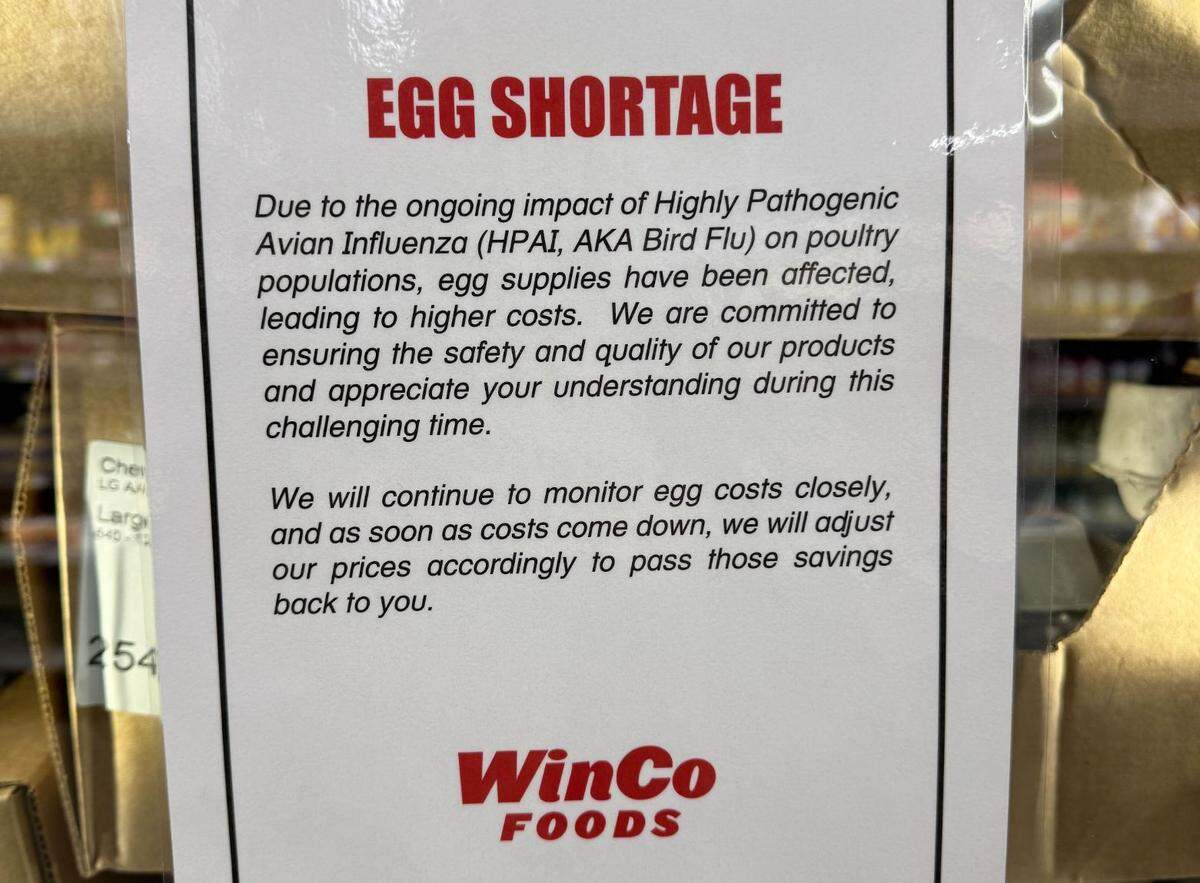
“Due to the ongoing impact of Highly Pathogenic Avian Influenza (HPAI, AKA Bird Flu) on poultry populations, egg supplies have been affected, leading to higher costs,” a recent notice at WinCo Foods stated. ““We will continue to monitor egg costs closely, as as soon as costs come down, we will adjust our prices accordingly to pass those savings back to you.”
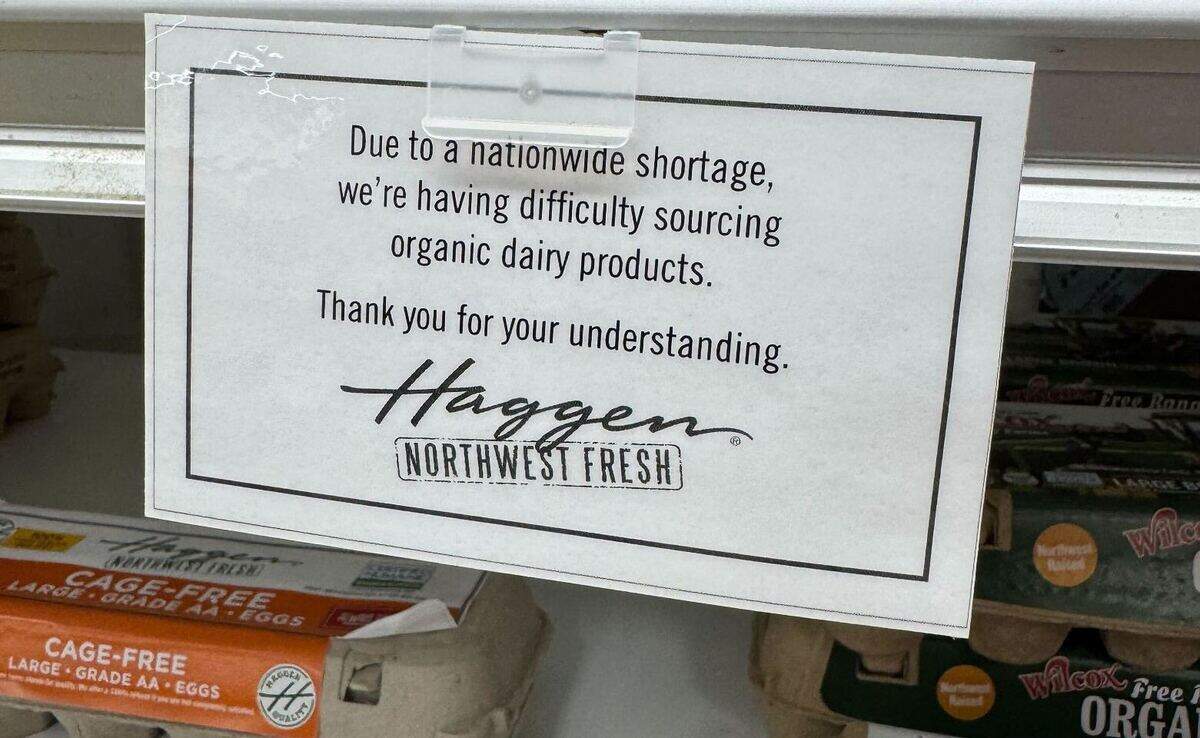
Haggen’s egg shortage notice did not mention the bird flu or rising egg costs.
Egg prices ranged from $4.49 to $9.69 in Washington, Idaho, Montana, Oregon and Wyoming, according to the USDA’s Weekly Retail Egg Feature Activity for Monday, Jan. 6, “ as HPAI remains a concern for egg supply and retailers limit egg features,” the report states.
For Whatcom County farmers, the recent bird blu outbreak hasn’t affected their flocks and egg production.
“Bird flu emerges each winter, and this is nothing new since the disease was first described in Northern Italy in 1878,” Anna Martin, co-owner of Osprey Hill Farm in Acme, told The Herald. “Currently our farm has not been impacted by the bird flu. However, we are taking proactive measures by closely monitoring the health of our flock, limiting traffic on the farm, and keeping a vigilant eye on any outbreaks in the area.”
“As a pasture-based operation, we have some advantages in managing bird flu risks,” Martin said. “Local farms and thriving local communities are the answers to a lot of the problems that we’re facing. Just like we saw during the COVID pandemic, local farms are nimble, we’re creative, and our network is very resilient as a whole. Please support your local farms not just in tough times, but also in good times. By doing so, you help ensure we can continue operating and be there to feed the community when challenges arise.”
Eggs at Osprey Hill farm currently cost $8.75 per dozen and have not increased during the shortage, Martin said.
“Each year in April we review our production costs and adjust pricing as needed. We haven’t increased our pricing since April 2024, and we’re planning to review our enterprise budget again in April 2025 and make any price adjustments based on cost increases,” Martin said.
Ferndale livestock facility Oak Meadows Farm has seen an increase in egg sales during the shortage.
“The only affect the bird flu has had on our farm is higher-than-normal egg sales. ... We have not raised our price because of bird flu. We do not feel we should raise prices just because of a shortage,” owner David Whittaker said.
Oak Meadows Farm eggs cost $7.50 per dozen.
“I do not claim to be an expert on the egg shortage or why the cost of eggs is going up, but to me the main cause seems to be too much consolidation in the egg industry so that even if just a handful of farms get bird flu, it has huge ripples through the supply chain,” Whittaker said.
“If there were hundreds of thousands of small farms each raising a few thousand chickens on pasture instead of a few hundred farms with millions of birds, bird flu would not be such a big deal,” Whittaker said.
The Herald’s most recent grocery survey, conducted Jan. 2, identified the most affordable egg prices at Trader Joe’s for $3.49 per dozen.