How Whatcom is honoring MLK’s legacy amid the pandemic
Whatcom County and the nation prepare to honor Rev. Dr. Martin Luther King Jr. Monday, Jan. 18, amid a global pandemic and a renewed focus on racial justice sparked by the killings of George Floyd, Breonna Taylor, Ahmaud Arbery and other people of color at the hands of police and vigilantes.
Bellingham has celebrated King’s life for 30 years, and it’s been a federal holiday since 1986.
Locally, King Day usually features volunteer service activities capped by a celebration with speeches and song.
But because of the pandemic, Bellingham’s Jan. 18 King Day event is moving online and city officials are urging residents to find their own ways to mark the slain civil-rights leader’s legacy.
“I’d like somebody to mention that day that Martin Luther King, Jr., tried to give his life serving others,” King said in a prophetic sermon just two months before he was assassinated.
Many area residents paid tribute to King in their own way throughout 2020, as they marched in rallies for Black Lives Matter, or attended teach-ins and “listening sessions” highlighting racial equality.
Whatcom County — whose chief executive is a South Asian immigrant — approved a measure declaring racism is a public health crisis, and is forming a new Racial Equity Commission.
Bellingham — whose acting police chief is a Black woman — cut its police budget by one officer and the City Council is examining an unarmed 911 response program.
The Bellingham Herald reached out to several Whatcom County residents about what they think about Martin Luther King Jr. Day this year.
‘We all want peace’
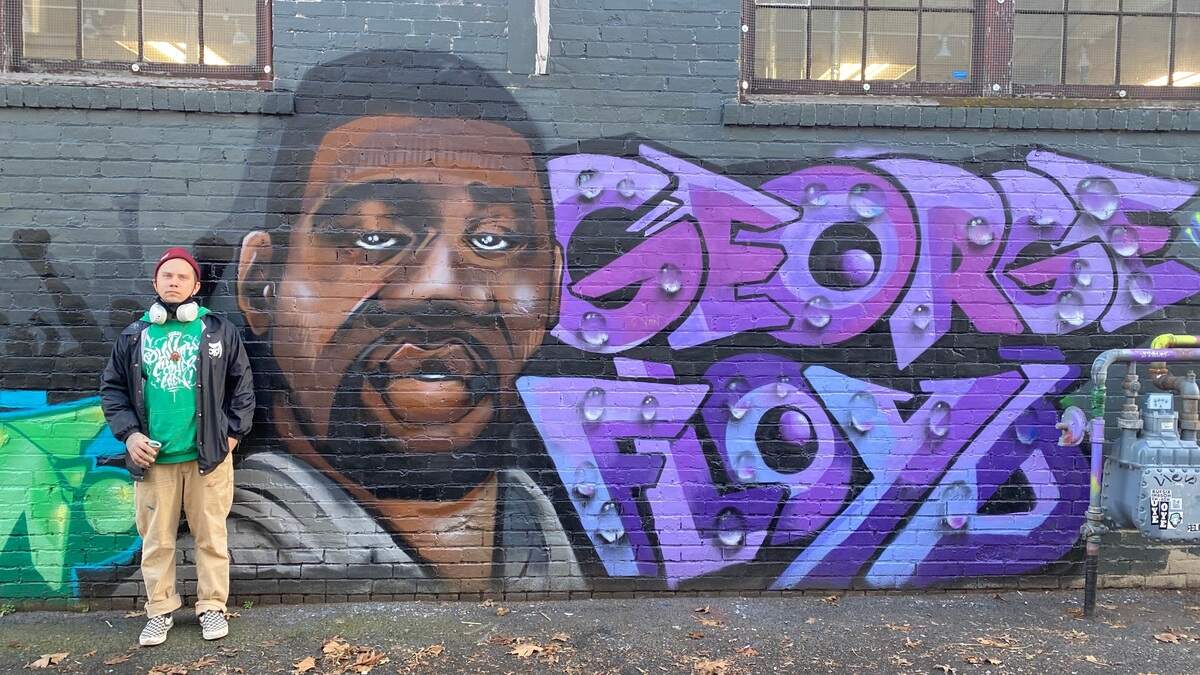
Taj Williams never spoke at any of the rallies or marches last year, but his voice is heard daily by those who see his art.
“I didn’t give a speech, but I do feel I speak through the paint,” said Williams, a muralist known for his vibrant spray colors, depictions of animals and geometric designs.
His work is most visible on the streets — along the construction wall near Waypoint Park, and the painting of George Floyd in an alley north of Magnolia Street between Railroad and Cornwall avenues.
“I’ve always wanted to make a stand with my art,” Williams told The Herald in an interview.
Williams’ family is friends with former Western Washington University art professor Ed Bereal, whose confrontational works explore racism and social issues.
“I was looking for a way to express myself. I just thought it was time,” he said.
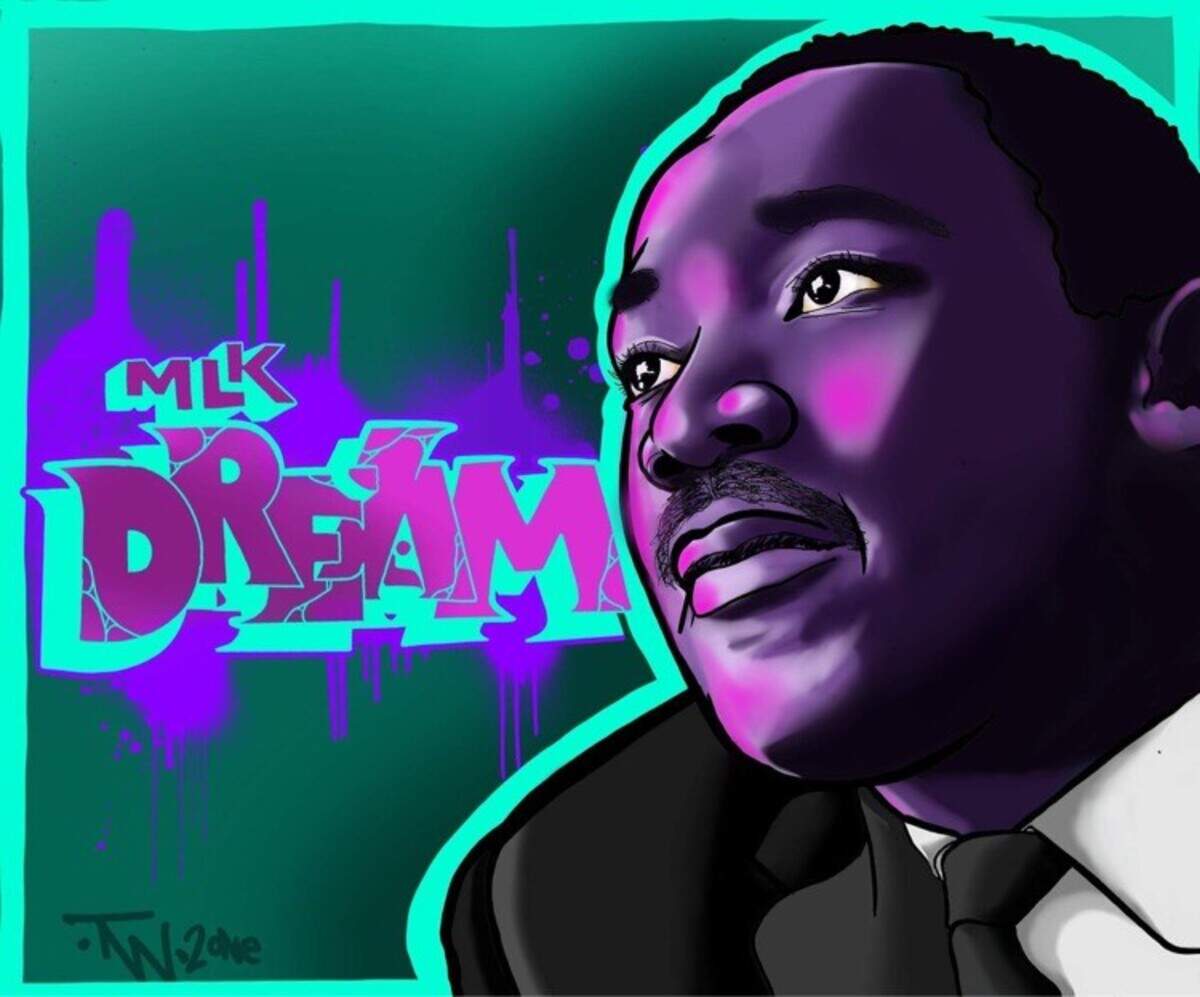
He painted the Floyd mural over a coronavirus piece in the alley off Magnolia, next to a friend’s painting of King. And he’s thinking of adding a tribute to Breonna Taylor, a Black woman killed by police who stormed her apartment with a “no-knock” warrant based on erroneous information.
“The streets are our gallery,” Williams said. “I want people to get out and see them and to think about it. This has been happening for a long time. Maybe it took the pandemic to get people going.”
Williams, who is multi-racial, grew up watching his father — a music teacher — read King’s writings, and a portrait of King was in their home.
“Martin Luther King was important to me. He was a peaceful man, and they still killed him,” Williams said.
“We can be loud, and we can speak our mind, but at the end of the day, we all want peace,” he said. “Art is a peaceful way to speak our mind.”
But Williams’ art drew critics in the form of racist vandals who defaced his murals.
“I somewhat expected it because of the content,” Williams said. “I wasn’t surprised. I know there’s people like this, even in Bellingham.”
Making every life better
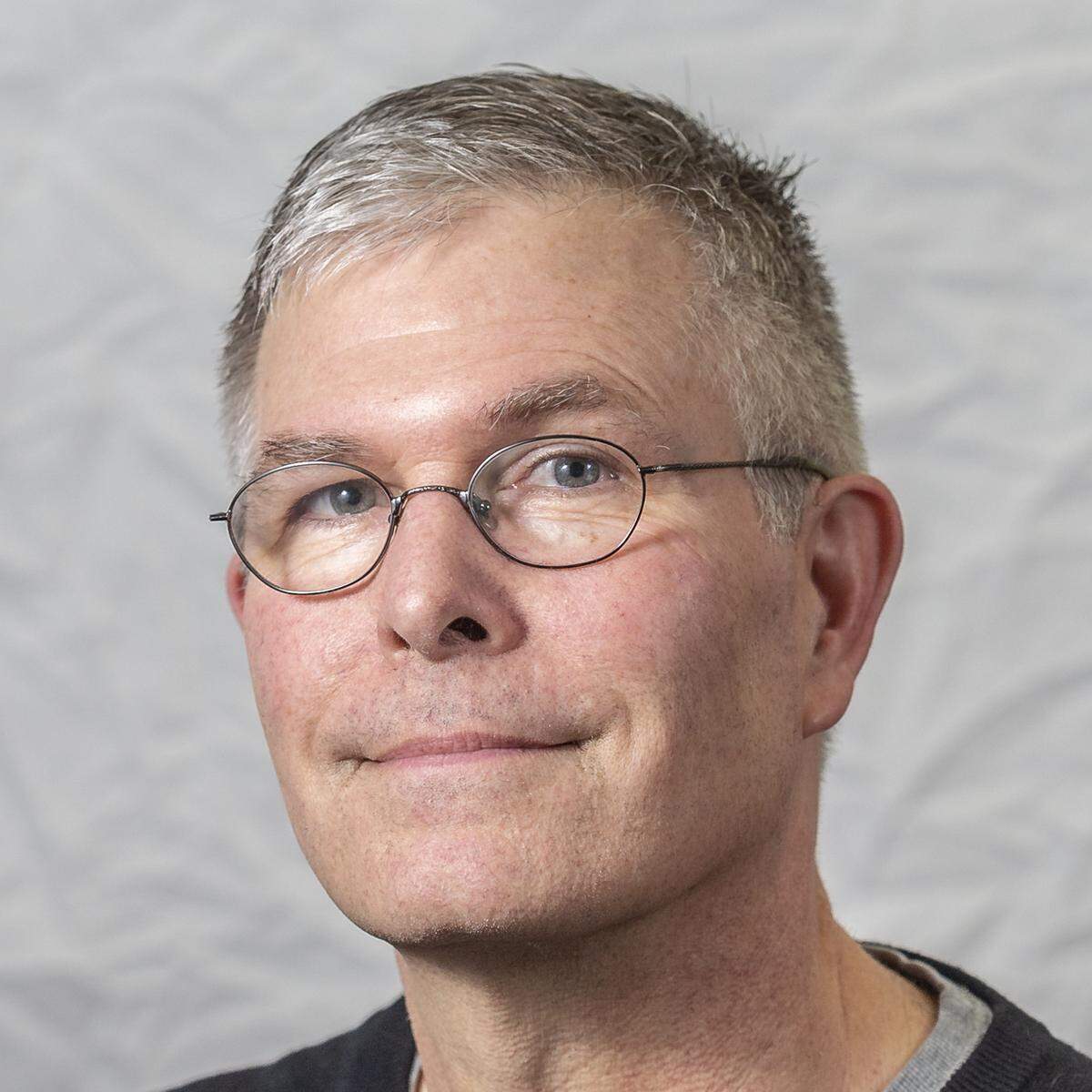
Azizi Tookas, co-owner of Brandywine Kitchen in Bellingham, said what he has always admired about Martin Luther King is that the power of his words can inspire justice even beyond the fight for racial equality.
“When he said ‘Every man must decide whether he will walk in the light of creative altruism or in the darkness of destructive selfishness,’ it reminds me to think about the needs of my community along with my own self-interest,” Tookas said in an email to The Herald.
“I believe that when a community values health and compassion, it makes every individual’s life better.”
— Dave Gallagher, dgallagher@bhamherald.com
‘A deeper malady’
People who hadn’t yet heard of Whatcom County artist Ed Bereal likely did after his retrospective exhibition at the Whatcom Museum, one that received a New York Times article about the provocative and thought-provoking nature of his work.
“WANTED: Ed Bereal for Disturbing the Peace,” which ended in January 2020, was the 83-year-old artist’s first museum retrospective, and people who saw it received a decades-long and politically charged eyeful about America from the vantage point of a man of Black, Native American and Mexican heritage.
As he considered questions about the Black Lives Matter movement and Martin Luther King Jr. Day and their significance, especially after months of protest that started last summer following the killing of George Floyd, a Black man, by a white officer in Minneapolis, Bereal said the focus was too narrow.
“Black Lives Matter is the result of the problems that are obviously rampant in the United States,” he said, before launching into a story about Martin Luther King Jr. making a trek to India and learning of that country’s caste system, where members in the lowest groups were referred to as untouchables.
“He was told by the oldest caste system alive in the world that the United States is also a caste system, a very old one, and that he, Martin Luther King Jr., is among the American untouchables,” Bereal said in an interview with The Bellingham Herald.
“When you start talking about Black Lives Matter, or the other question about Martin Luther King Jr., I think it’s within the context of the American caste system and the problems of maintaining a caste system,” he continued.
“That’s why when you ask me about Black Lives Matter, it’s a fairly narrow question about a very wide problem and situation that we like to pretend is not something that is going on in our day to day lives, every day, ever since the founding of this country,” said Bereal, who lives on a farm in Whatcom County.
Bereal’s retrospective at the Whatcom Museum included a piece in which his version of “Miss America” nails a citizen’s head on upside-down and backward, which represents the way Americans think, he said.
“We have been in denial,” Bereal said. “We’ve been distracted.”
— Kie Relyea, krelyea@bhamherald.com
Equality, hope resonate
“Reverend Dr. Martin Luther King stood for freedom, equality, and hope for our nation. He never wavered from that dream, not once. The words in his speeches, their meaning to this nation, and their continued necessity in our lives are as relevant now as they were during his lifetime,” Interim Bellingham Police Chief Flo Simon said in an email to The Herald.
“His undying belief in freedom, equality and hope resonates in me and weaves through all for which I stand and the work I do.”
— David Rasbach, drasbach@bhamherald.com
‘Fight for the right that we matter’
After a summer of protests against systemic racism and racial injustice, Dimetriez Walker said he thinks things are at a turning point.
Walker, 28, attended the early June Solidarity Rally at Maritime Heritage Park in Bellingham that drew thousands of people. Walker, who is Black, said this summer brought heightened awareness to issues that have always existed and that people of color have always known existed.
In the past, civil rights movements have had to rely on the media to portray what was happening with racial inequality, but with advancements in technology, more people have their own cameras and ability to document and shed light on the injustice people of color experience, he said.
“Now we can really show what is driving people to hit the streets and they’re able to see the passion and real fear. Before, we had to rely on other people to show that for us,” Walker said in an interview with The Herald. “It’s a huge difference in this movement.”
Walker said racial and social justice movements happen in cyclical patterns. He said there has been a civil rights movement that has happened roughly every decade in some form, and that many laws and changes have come from those movements. But, movements often die down before things slowly build again, he said.
“There are so many areas and so much institutional racism that exists that we’re not even close to touching and we’re barely scratching the surface. Take Black Lives Matter, there are still people who don’t agree with that specific fact. It’s hard to dig deep to solve systemic issues when some of us have to fight for the right that we matter,” Walker said. “There are real issues happening in these communities we live in.”
Walker said part of the reason for the cyclical pattern is that America has racial issues, but also class issues. Walker said the communities people of color have been forced into in turn produce poor education, a poor healthcare system and a lack of work opportunities. He said once people are pulled out of poverty, there is the ability to solve the deeper systemic issues and break the cyclical pattern.
“We will have more Black doctors, more Black engineers, more Black professors because kids are aiming higher once their basic needs are met, when our communities are safe, when our education system is well-funded and we have Black teachers who understand the trauma and what has happened to Black people the past 400 years” Walker said.
Walker said he believes Martin Luther King Jr. Day is an important holiday for all Americans. All of the social justice movements are linked, because at their core it’s a human movement that aids all who are suffering from injustice, he said.
“MLK Day is a huge holiday for me and everyone. It is a holiday for everyone. MLK fought for everyone and most of these movements do fight for everyone at their core,” Walker said.
Walker said he hopes more white people will stand up against white supremacy and hate that is present in the community so that everyone can feel safe. Walker said he would like to see Whatcom County integrate the varying cultures present in the community more. While there is a small Black population here, it’s not non-existent, he said.
“Once we’re able to really enjoy and benefit from those cultures and really be able to include all individuals in the way the community operates and not force people to assimilate, we’ll be able to see the real beauty and flavor and how much it adds color to our communities,” Walker said. “We say all the time that privilege is European history is mandatory and Black history is an elective. I think that should change because Black history is American history. … The sooner children hear that, each person contributes more. We really need understanding and togetherness.”
— Denver Pratt, dpratt@bhamherald.com